
Listen to this Post
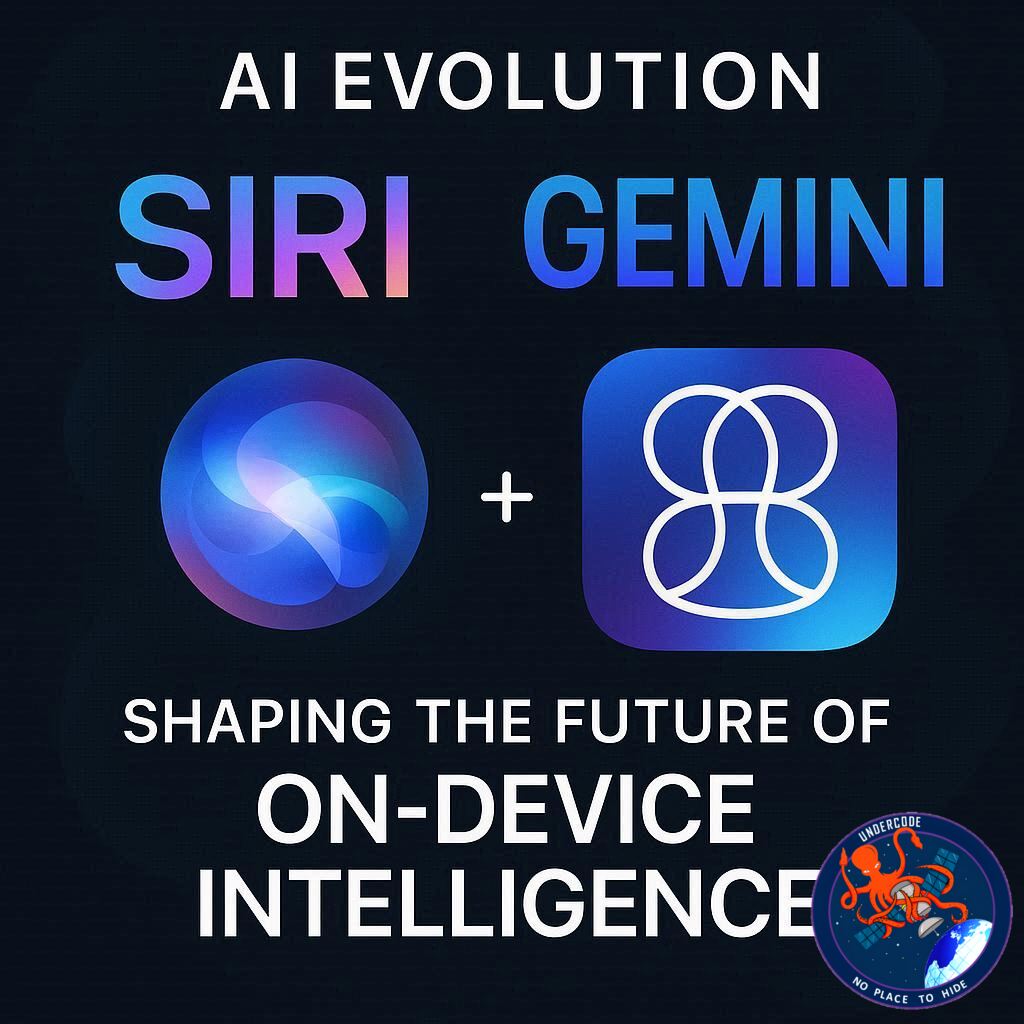
Apple is gearing up for a transformative leap in Siri’s capabilities with iOS 27, and the latest insights reveal a much deeper collaboration with Google than previously known. Beyond improving Siri’s responsiveness, Apple’s access to Google’s Gemini AI models could redefine how artificial intelligence functions directly on devices, making virtual assistants smarter, faster, and more context-aware.
Inside Apple’s AI Strategy
Apple’s partnership with Google is reportedly more flexible than earlier speculated. According to The Information, Apple now has extensive freedom to use, adapt, and distill Google’s Gemini models within its own data centers. This means Apple can create smaller, efficient models derived from Gemini, specifically optimized to run directly on Apple devices. This process, known as distillation, allows knowledge from a large language model (LLM) to be transferred into streamlined models capable of executing specific tasks faster and with far less computational demand.
These smaller, distilled models are particularly valuable for on-device applications. By mimicking the internal computational logic of Gemini—not just its outputs—Apple can develop Siri’s AI to deliver near state-of-the-art performance without relying on cloud-based computing. This makes Siri more responsive, secure, and energy-efficient.
Apple’s approach also highlights a balancing act. While distilling Gemini models offers efficiency, Apple’s internal Foundation Models (AFM) team continues pursuing in-house AI development. Their objectives remain somewhat opaque, but they are likely focused on custom solutions aligned with Apple’s long-term goals for AI and privacy.
The report also notes that Apple is preparing significant updates to Siri for WWDC in June, including features like remembering past conversations and offering proactive suggestions, such as leaving early to avoid traffic for airport pickups.
What Undercode Says: Strategic Implications of Apple’s AI Moves
Enhanced On-Device Intelligence
Apple’s ability to run distilled Gemini models on-device is a game-changer. Smaller models mean faster response times for Siri, lower latency, and less dependency on cloud servers. For users, this translates to a more seamless, responsive, and privacy-conscious experience.
Competitive Advantage in AI Control
By having full access to Gemini, Apple can tailor AI performance to its own ecosystem. This flexibility allows Apple to innovate with Siri while maintaining a technological edge over competitors who rely entirely on external cloud AI solutions.
Efficient Resource Utilization
Distillation not only improves speed but also reduces computational overhead. Apple devices may handle complex AI queries without draining battery life or requiring heavy network access, setting a new benchmark for energy efficiency in AI-enabled devices.
Bridging Internal and External AI Capabilities
Apple’s dual approach—leveraging Google’s AI while developing internal models—shows strategic foresight. External collaboration accelerates feature development, while in-house research ensures proprietary technology remains competitive and aligned with Apple’s privacy standards.
Challenges in Model Alignment
Despite these advantages, integrating Gemini’s capabilities with Apple’s goals is complex. Gemini excels in general AI tasks, whereas Apple may require highly specialized on-device optimizations. Successfully aligning these models with Siri’s use cases will be key to achieving a consistent user experience.
Siri’s Evolving Role
The upcoming Siri updates signal a shift from a reactive assistant to a proactive one. By remembering interactions and anticipating user needs, Siri moves closer to an AI that can seamlessly integrate into daily life, offering convenience without sacrificing privacy.
Market Impact
Apple’s AI strategy positions it to redefine user expectations for virtual assistants. As competitors like Google and Amazon rely heavily on cloud-based AI, Apple’s on-device approach may become a unique selling point in hardware and ecosystem loyalty.
Long-Term AI Vision
The combination of distilled models and internal research suggests Apple is laying the foundation for a self-sufficient AI ecosystem. This could eventually extend beyond Siri to augmented reality, health tracking, and other device-integrated AI functions.
Security and Privacy Advantages
On-device AI minimizes data sent to cloud servers, aligning with Apple’s privacy-first philosophy. Users benefit from both advanced AI capabilities and stronger protection of personal information.
Innovation Cycle Acceleration
Partnering with Google accelerates Apple’s development timeline while keeping core IP in-house. This hybrid strategy can result in faster feature rollouts without compromising proprietary advancements.
Implications for Developers
Smaller, efficient AI models could empower app developers to integrate advanced AI features without relying on extensive cloud infrastructure, fostering innovation across the Apple ecosystem.
Ecosystem Synergy
The distilled AI models could also enhance interoperability between devices, improving continuity features like Handoff, Smart Home integrations, and multi-device AI learning.
Consumer Expectations
As Siri becomes more capable, user expectations will rise. Apple must balance sophistication with simplicity to ensure AI remains approachable for a broad user base.
Brand Differentiation
By offering high-performance, privacy-focused AI, Apple differentiates itself from rivals who emphasize cloud computing, potentially strengthening brand loyalty.
Technical Expertise
Managing and distilling Gemini models requires significant AI expertise. Apple’s ability to handle this reflects its growing internal AI capabilities and positions it as a formidable player in AI innovation.
Potential Pitfalls
Despite progress, challenges remain in model efficiency, integration, and predictive accuracy. Misalignments between user expectations and model performance could hinder adoption if not carefully managed.
Future AI Innovations
Apple’s strategy sets the stage for future AI breakthroughs, including personalized AI assistants capable of complex multi-tasking, learning user behavior, and offering contextually relevant suggestions.
Device Performance
Distilled models reduce dependency on cloud processing, potentially extending battery life and improving device longevity.
Enterprise Applications
On-device AI can also appeal to enterprise users seeking secure, high-performance solutions without cloud reliance.
AI Personalization
Smaller, flexible models allow for tailored experiences, potentially enabling Siri to adapt to individual user habits and preferences more effectively.
Cross-Platform Synergies
Apple may integrate AI across iOS, macOS, and watchOS more seamlessly, creating a more unified ecosystem experience.
Long-Term Industry Impact
If successful, Apple’s approach could push the industry toward more on-device AI, emphasizing efficiency, privacy, and real-time responsiveness over purely cloud-based solutions.
🔍 Fact Checker Results
✅ Apple has access to Google’s Gemini models, allowing on-device experimentation and distillation.
✅ Distillation enables smaller, efficient models that replicate larger AI performance with less computing power.
❌ Specific AFM team goals remain unclear; Apple has not publicly confirmed the full scope of internal AI development.
📊 Prediction
Apple’s iOS 27 release will likely showcase a Siri that is faster, more context-aware, and capable of proactive suggestions. This could redefine user expectations for on-device AI, giving Apple a significant competitive advantage in virtual assistant technology. The strategic partnership with Google ensures rapid development while maintaining proprietary control, potentially influencing the broader industry trend toward efficient, privacy-focused AI.
🕵️📝✔️Let’s dive deep and fact‑check.
References:
Reported By: 9to5mac.com
Extra Source Hub (Possible Sources for article):
https://www.reddit.com
Wikipedia
OpenAi & Undercode AI
Image Source:
Unsplash
Undercode AI DI v2
Bing
🔐JOIN OUR CYBER WORLD [ CVE News • HackMonitor • UndercodeNews ]
📢 Follow UndercodeNews & Stay Tuned:
𝕏 formerly Twitter 🐦 | @ Threads | 🔗 Linkedin | 🦋BlueSky | 🐘Mastodon


