
Listen to this Post
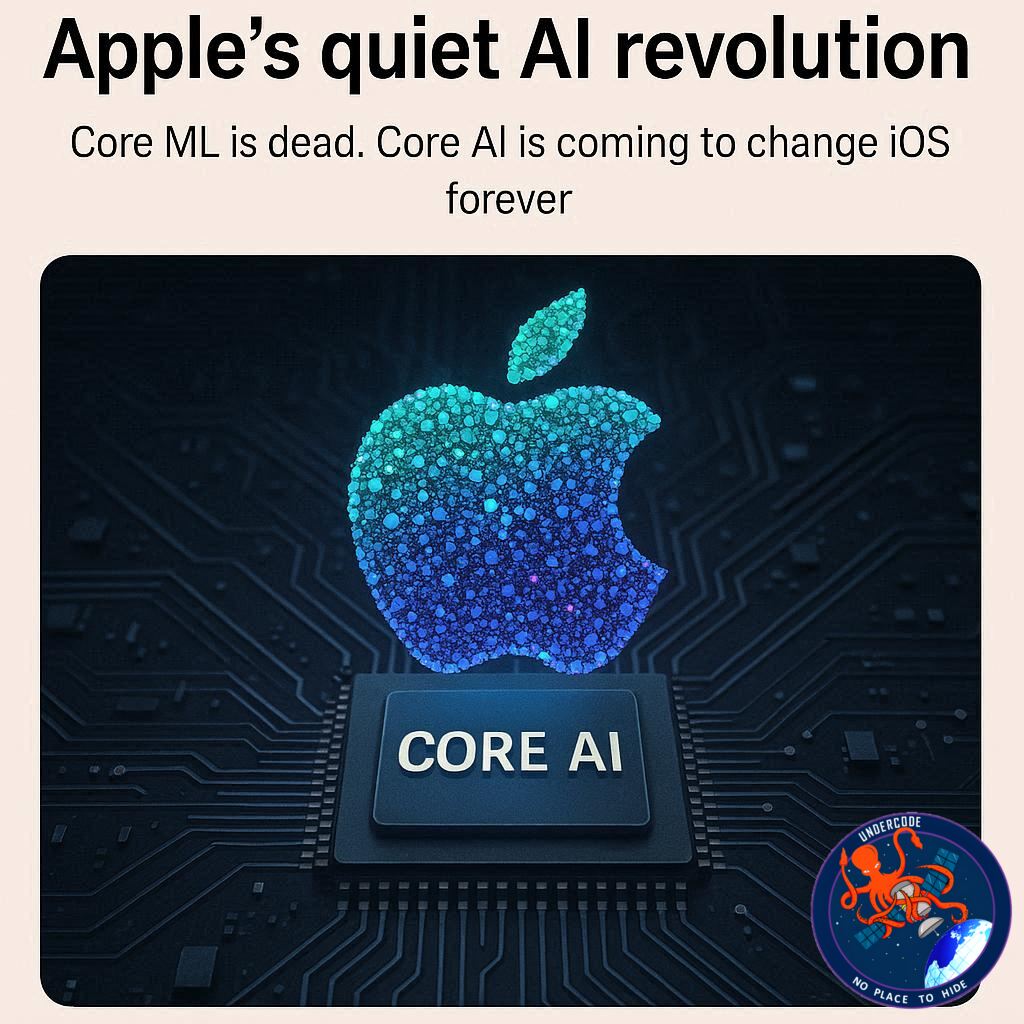
Introduction: Apple Prepares a Major AI Reset
Apple is quietly preparing one of its most consequential developer-facing changes in years. According to recent industry reporting, the company plans to retire its long-standing Core ML framework and replace it with a new, modernized system called Core AI, expected to be unveiled at this year’s Worldwide Developers Conference. While the move may sound like a simple rebrand on the surface, it signals something far bigger: Apple’s acknowledgment that artificial intelligence has outgrown the narrow definition of “machine learning” and now demands a broader, more flexible foundation across iOS, iPadOS, and macOS—starting with Apple’s next major platform update, iOS 27.
the Original Report
A new report suggests Apple is preparing to replace Core ML with a newly designed Core AI framework, reflecting a strategic shift in how the company approaches artificial intelligence on its platforms. The information comes from Bloomberg, where well-known Apple analyst Mark Gurman detailed the change in his Power On newsletter.
According to the report, Core AI will act as a modern successor to Core ML, which has been Apple’s primary on-device machine learning framework for years. The transition from “ML” to “AI” is not accidental. Apple reportedly believes the term “machine learning” no longer resonates with developers or consumers, especially as generative AI, multimodal models, and agent-based systems become the industry standard.
Despite the name change, the core purpose remains familiar: enabling developers to integrate external AI models into their applications efficiently and securely. However, the new framework is expected to offer expanded capabilities, simplified tooling, and deeper system-level integration, reducing the need for third-party SDKs and custom infrastructure.
The renaming alone suggests Apple is investing heavily in this framework for 2026 and beyond. For developers, this could unlock faster deployment of AI features without building everything from scratch. For users, it points toward more capable, intelligent experiences across Apple devices.
The company is expected to reveal more details at WWDC in June, when it traditionally previews its next-generation operating systems. In parallel, Apple is also preparing long-delayed improvements to Siri and Apple Intelligence, reportedly powered in part by Google’s Gemini models. These upgrades could arrive as early as iOS 26.5, following ongoing developer and public testing of iOS 26.4.
What Undercode Say: Apple’s Naming Change Is a Strategic Admission
Apple’s decision to move from Core ML to Core AI is less about branding and more about narrative control. For years, Apple leaned heavily on “machine learning” as a safe, academic-sounding term that aligned with its privacy-first messaging. In 2026, that language feels outdated. Developers are no longer building narrow ML pipelines—they are integrating conversational agents, vision-language models, and generative systems that don’t fit neatly under the ML umbrella.
By adopting “AI” outright, Apple is conceding that the industry has moved on, and it cannot afford to lag behind competitors who openly market artificial intelligence as a core product feature. This is especially important as rivals normalize AI-first platforms and APIs.
From a developer perspective, Core AI could be Apple’s attempt to regain trust lost during the slow rollout of Apple Intelligence. If the framework truly simplifies model integration, supports modern architectures, and offers better performance on Apple Silicon, it may reduce reliance on cloud-only solutions and expensive third-party SDKs.
There is also a defensive angle. Apple has historically preferred tightly controlled, first-party frameworks rather than allowing external platforms to dominate its ecosystem. Core AI may serve as a counterweight to cross-platform AI stacks, ensuring developers stay within Apple’s tooling instead of defaulting to external AI runtimes.
However, expectations should be tempered. Apple tends to roll out foundational technologies gradually. Core AI’s first iteration will likely focus on infrastructure rather than flashy features, with real breakthroughs arriving over multiple iOS cycles. Still, the framework’s very existence suggests Apple understands that AI is no longer an optional enhancement—it is the operating system’s next core layer.
Most importantly, this shift hints that Apple is aligning its internal teams around a unified AI vision. When Apple changes terminology, it usually reflects organizational change behind the scenes. Core AI may be the clearest sign yet that Apple is restructuring its platforms for an AI-native future rather than retrofitting intelligence onto legacy systems.
🔍 Fact Checker Results
Framework Replacement: ✅ Bloomberg confirms Apple is planning a Core ML successor named Core AI.
Naming Motivation: ✅ The shift from ML to AI aligns with industry-wide terminology changes.
WWDC Timing: ⚠️ Official confirmation is still pending until Apple’s June event.
📊 Prediction
Apple will introduce Core AI at WWDC as a developer-focused framework with limited consumer visibility in year one. By iOS 28, Core AI will likely become central to system features, third-party apps, and a fully re-architected Siri—marking Apple’s delayed but decisive entry into the AI-first platform era.
🕵️📝✔️Let’s dive deep and fact‑check.
References:
Reported By: 9to5mac.com
Extra Source Hub (Possible Sources for article):
https://www.stackexchange.com
Wikipedia
OpenAi & Undercode AI
Image Source:
Unsplash
Undercode AI DI v2
Bing
🔐JOIN OUR CYBER WORLD [ CVE News • HackMonitor • UndercodeNews ]
📢 Follow UndercodeNews & Stay Tuned:
𝕏 formerly Twitter 🐦 | @ Threads | 🔗 Linkedin | 🦋BlueSky | 🐘Mastodon


