
Listen to this Post
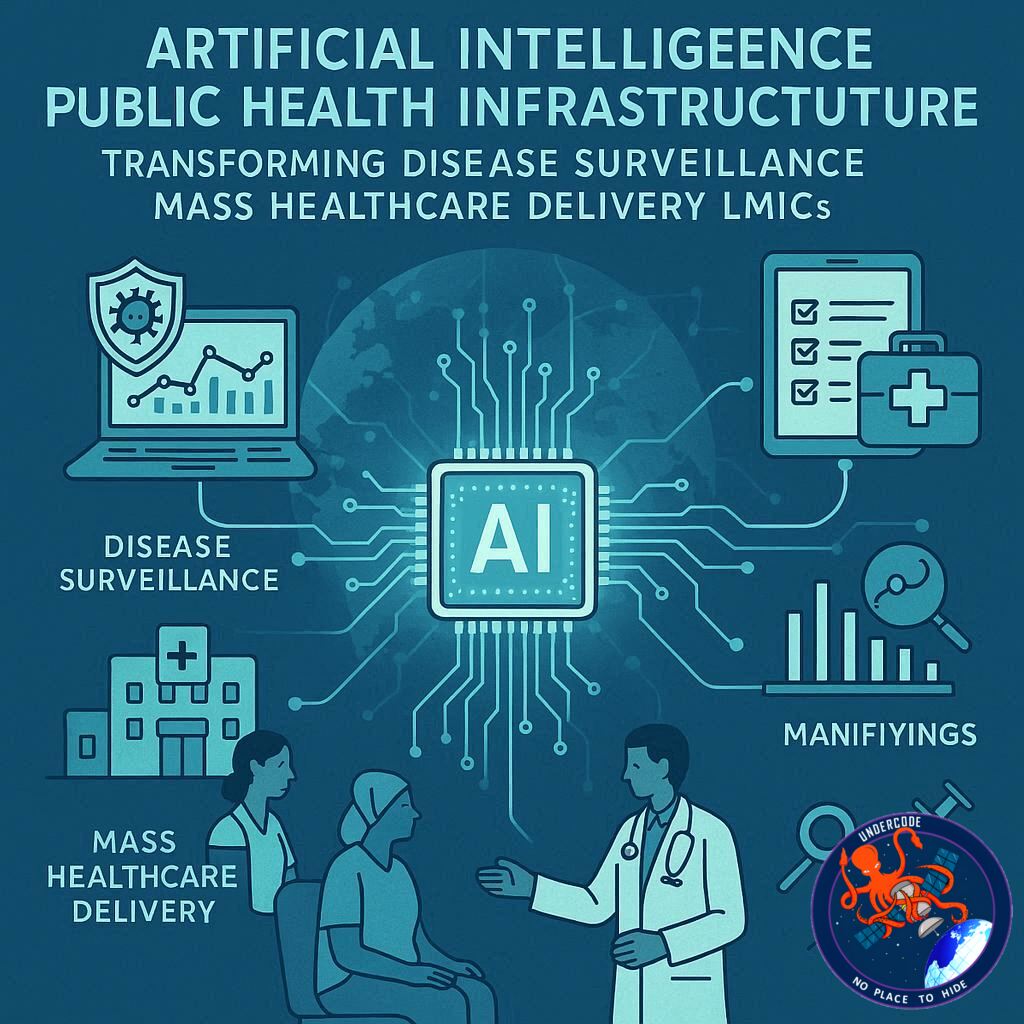
Artificial intelligence is no longer a futuristic promise hovering at the edges of medicine. It is steadily moving from pilot projects and isolated diagnostic tools into the very bloodstream of national healthcare systems. Over the next two to five years, AI is expected to evolve from a supportive diagnostic assistant into a foundational layer of public health infrastructure. This shift will be especially critical in high-burden, resource-constrained environments such as India and other low- and middle-income countries, where health systems are under constant pressure to serve massive populations with limited personnel and funding.
The transformation is not about replacing doctors or nurses. It is about embedding intelligence into the system itself, allowing early detection, continuous disease surveillance, and large-scale healthcare delivery to operate more efficiently and more equitably. The vision is clear: AI must function as an invisible but powerful engine within national health frameworks, not as a standalone experiment.
AI’s Shift from Diagnostic Support to System-Level Infrastructure
In the coming years, artificial intelligence will move beyond simply assisting clinicians in diagnosing individual patients. It will become part of the core architecture that supports public health decision-making. Instead of reacting to illness after symptoms escalate, AI systems will continuously monitor patterns, flag risks early, and generate real-time insights for policymakers.
In countries with high disease burdens, this transition is not optional. Tuberculosis, respiratory infections, and other communicable diseases continue to strain public health resources. Traditional surveillance methods often rely on delayed reporting, fragmented data, and manual record-keeping. AI offers a structured, automated alternative capable of processing enormous volumes of data at scale.
Population-Scale Screening Through AI Imaging Tools
One of the most powerful examples of this evolution lies in AI-powered screening platforms such as qXR. These tools autonomously interpret chest X-rays, detect patterns consistent with tuberculosis and other lung diseases, and prioritize high-risk cases for further evaluation.
In practical terms, this means thousands of screening sites can operate with standardized reporting and reduced diagnostic variability. Instead of waiting for a radiologist to manually assess every image, AI systems analyze them in seconds, flagging abnormalities and ensuring that suspected cases are escalated quickly. This dramatically increases the speed and consistency of early detection efforts.
For countries like India, where tuberculosis remains a significant public health challenge, such tools can mean the difference between delayed intervention and timely treatment. AI does not merely accelerate diagnosis; it creates structured workflows that reduce oversight and human error at scale.
Extending AI Beyond Imaging into Primary Healthcare
The second track of AI’s evolution moves beyond radiology into frontline healthcare delivery. AI-powered co-pilots designed for health workers in low- and middle-income countries are expanding the scope of intelligent assistance.
These systems support digitized symptom collection, ensure adherence to clinical protocols, and provide real-time decision support during patient consultations. By guiding frontline workers through standardized pathways, AI reduces variability in care and improves overall quality.
Importantly, this does not reduce the human element in medicine. Instead, it frees up time that would otherwise be spent on repetitive documentation. Health workers can focus more on patient interaction while the AI system ensures that no critical steps are overlooked.
Automating High-Volume and Repetitive Healthcare Tasks
Healthcare systems are burdened by repetitive, high-volume tasks: image interpretation, triaging patients, documenting symptoms, and organizing data. These processes are essential but time-consuming. AI excels precisely in these domains.
When integrated into routine national programs, AI becomes a continuous surveillance mechanism. It identifies risk patterns early, aggregates district-level insights, and provides national authorities with actionable intelligence. This intelligence can guide resource allocation, outbreak response, and strategic planning.
Instead of operating as a series of disconnected clinics and hospitals, the health system becomes a coordinated network powered by real-time analytics. The result is faster response times and improved disease control.
Building Predictive and Accountable Systems at Scale
Looking ahead, the goal is not merely automation but prediction and accountability. AI systems must be capable of forecasting disease trends, identifying emerging hotspots, and measuring the effectiveness of interventions.
By combining screening intelligence with embedded clinical decision support tools, AI can operate seamlessly across rural primary health centers and national disease programs. This layered integration ensures that early detection, patient management, and public health planning are connected in a single ecosystem.
Scalability is essential. In countries with populations exceeding hundreds of millions, solutions must function reliably across diverse geographies and infrastructure levels. AI offers the possibility of delivering standardized, high-quality healthcare at a population scale that traditional systems struggle to achieve.
What Undercode Say:
The promise of AI as public health infrastructure is both exciting and sobering. It signals a shift in how governments conceptualize healthcare delivery. Instead of focusing solely on hospitals and specialists, the emphasis moves toward data architecture, algorithmic governance, and system-wide integration.
Yet ambition alone does not guarantee success. Embedding AI into national health systems requires robust digital infrastructure, reliable connectivity, and standardized data collection. Many low- and middle-income countries still struggle with fragmented health records and inconsistent reporting mechanisms. Without foundational digital reform, AI risks becoming another isolated innovation rather than a transformative force.
Another critical factor is trust. Health workers must see AI as an ally, not a threat. Policymakers must ensure transparency in algorithmic decision-making. Communities must feel confident that their data is secure and used ethically. Public health infrastructure cannot function effectively if stakeholders question its integrity.
There is also the question of accountability. If AI systems prioritize cases or recommend interventions, who bears responsibility when errors occur? Governments must establish clear regulatory frameworks to oversee algorithm performance, data governance, and quality assurance.
Financial sustainability presents another challenge. While AI can reduce long-term costs through efficiency gains, initial implementation demands significant investment in hardware, training, and system integration. Countries must weigh short-term expenditures against long-term public health dividends.
Despite these challenges, the long-term trajectory appears inevitable. AI’s ability to process massive datasets, detect subtle patterns, and operate continuously makes it uniquely suited for disease surveillance. In high-burden settings where human resources are stretched thin, the alternative is often delayed diagnosis and reactive policymaking.
If implemented responsibly, AI can bridge inequality gaps. Rural communities with limited access to specialists can benefit from automated diagnostics and decision support. Standardization can reduce disparities in care quality between urban and rural regions.
The deeper implication is that healthcare may gradually resemble other data-driven sectors, such as finance or logistics, where predictive modeling shapes strategic planning. Public health could move from episodic crisis management to continuous monitoring and proactive intervention.
Still, caution remains necessary. Technology should enhance, not overshadow, the human dimension of care. The success of AI in public health will ultimately depend on how well it complements clinicians and empowers patients rather than replacing judgment with blind automation.
In the next five years, countries that successfully integrate AI into their national health strategies may gain a decisive advantage in managing infectious diseases, optimizing resources, and improving population health outcomes. Those that delay may find themselves struggling with outdated, reactive systems in an increasingly data-driven world.
The conversation is no longer about whether AI belongs in public health. It is about how deeply and how responsibly it will be embedded.
Fact Checker Results
AI-powered imaging tools like qXR are already used for tuberculosis screening in high-burden regions. ✅
LMICs face significant resource constraints that limit traditional disease surveillance capacity. ✅
AI can function independently without digital infrastructure or regulatory oversight. ❌
Prediction
AI-driven public health platforms will expand from disease screening to integrated national health dashboards within five years. 📊
Governments that prioritize AI governance frameworks will see faster outbreak response times and improved health equity. 📈
Failure to integrate AI responsibly could widen digital health disparities instead of closing them. ⚠️
▶️ Related Video (76% Match):
🕵️📝✔️Let’s dive deep and fact‑check.
References:
Reported By: timesofindia.indiatimes.com
Extra Source Hub (Possible Sources for article):
https://www.reddit.com
Wikipedia
OpenAi & Undercode AI
Image Source:
Unsplash
Undercode AI DI v2
Bing
🔐JOIN OUR CYBER WORLD [ CVE News • HackMonitor • UndercodeNews ]
📢 Follow UndercodeNews & Stay Tuned:
𝕏 formerly Twitter 🐦 | @ Threads | 🔗 Linkedin | 🦋BlueSky | 🐘Mastodon


