
Listen to this Post
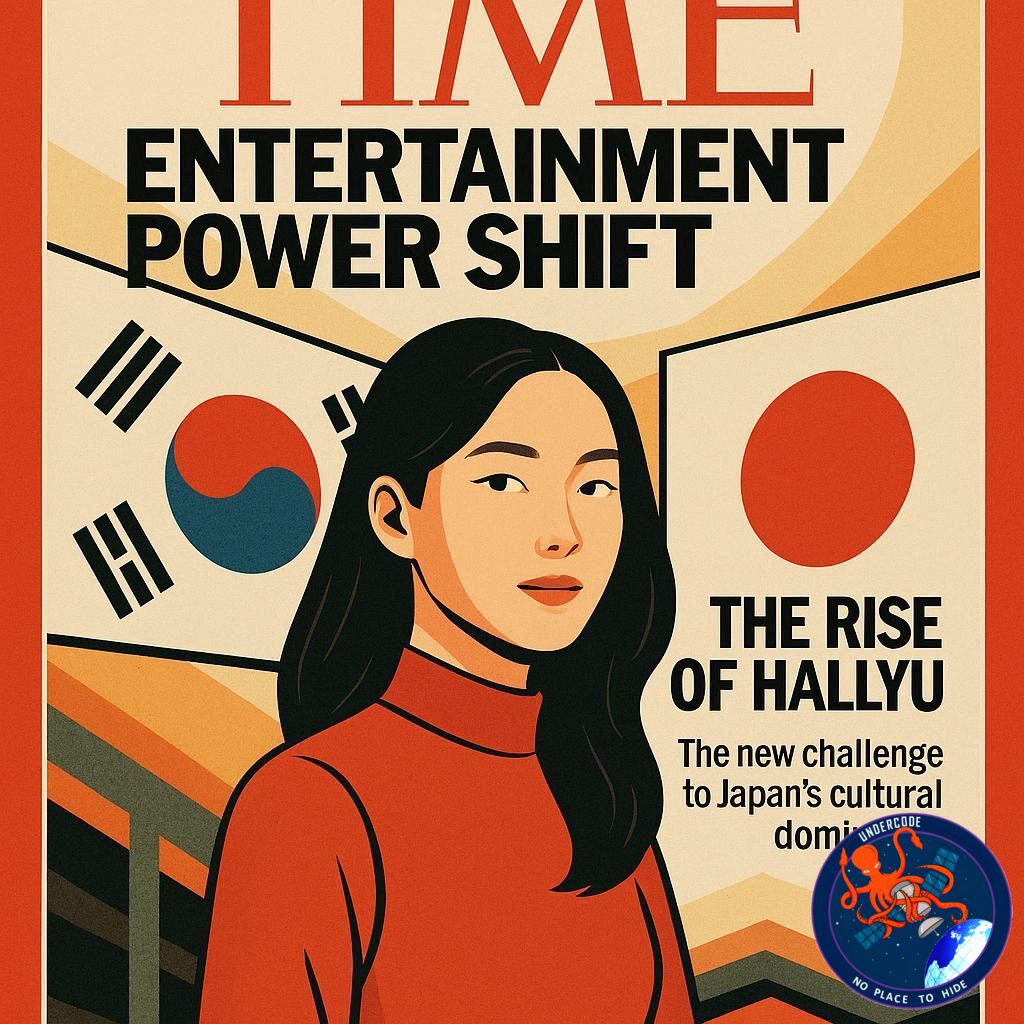 A New Era in Asian Content Is Rewriting the Global Playbook
For decades, Japan stood as the uncontested cultural architect of modern Asian entertainment. From anime that reshaped Western animation to video games that defined global childhoods, Japan built the blueprint. But the landscape is changing. Across Asia, a new generation of creators, studios, and technology giants is rising with unprecedented ambition. South Korea, China, and even Indonesia are no longer followers in Japan’s wake. They are building their own highways to global influence. The question once whispered in industry circles is now spoken aloud: could Japan’s dominance in anime and gaming be under real threat?
Indonesia’s “Jumbo” Signals a Southeast Asian Animation Awakening
Indonesia’s domestically produced feature-length animation “Jumbo” has shattered expectations. The film became the most-watched domestic animated movie in the country’s history and achieved record-breaking box office revenue across Southeast Asia for an animated title. For an industry long perceived as playing catch-up, this was not just a commercial win, it was a symbolic declaration. Indonesian studios demonstrated that large-scale animation production is no longer confined to Tokyo or Seoul.
In interviews, the head of the local animation studio behind “Jumbo” acknowledged the technological and experiential gap with Japan spans decades. Japan’s anime ecosystem was built over half a century of refinement, institutional memory, and global distribution networks. Yet the Indonesian executive emphasized that digital production tools, cross-border talent recruitment, and streaming platforms are compressing that gap at a speed previously unimaginable. If Japan took decades to build its animation empire, Southeast Asia may attempt to accelerate that process within a single generation.
Tencent’s Gaming Empire Reshapes the Competitive Landscape
While Southeast Asia experiments with cinematic storytelling, China is consolidating power in gaming. Tencent has become a gravitational force in the global video game industry. Over the past decade, its gaming revenue has multiplied fourfold, edging closer to the game division of Sony Group. The scale of its expansion is staggering. Tencent is believed to hold investments in approximately 230 gaming companies worldwide, acquired through strategic mergers, minority stakes, and full buyouts.
This vast network allows Tencent to diversify risk while maximizing efficiency. By integrating generative AI tools into development pipelines and sharing technical resources across its subsidiaries, Tencent has turned scale into an operational advantage. Smaller studios under its umbrella gain access to funding, analytics, and global distribution channels. Meanwhile, Tencent gathers creative output like a portfolio manager collecting assets. It is less a single company and more an ecosystem of coordinated innovation.
This structure stands in contrast to Japan’s historically studio-centric model, where creative independence often outweighs centralized efficiency. The difference may define the next phase of gaming competition.
Korea’s “K-POP Girls! Demon Hunters” and the Birth of Hallyu 5.0
South Korea has moved beyond exporting music alone. The animated musical film “K-POP Girls! Demon Hunters,” widely nicknamed “Kedehan,” became a cultural phenomenon across Europe and North America. Its global popularity earned it recognition at the Golden Globe Awards, signaling that Korean animation can compete in the same arena as Western and Japanese productions.
In South Korea, analysts describe this momentum as “Hallyu 5.0,” the fifth generation of the Korean Wave. Earlier phases were driven by television dramas, then K-POP idols, followed by streaming-era series and films. The fifth generation blends animation, music, gaming aesthetics, and digital fan communities into a unified cultural export model. “Kedehan” does not merely entertain; it integrates Korean fashion, cuisine, slang, and lifestyle into its narrative fabric, functioning as a soft power vehicle.
This differs from traditional anime exports that often focused on narrative universality over national branding. Korea’s strategy is explicit: culture is not just content, it is identity marketing.
Japan at a Crossroads in a Crowded Asian Arena
Japan’s entertainment industry remains formidable. Its intellectual properties dominate streaming catalogs, gaming consoles, and global fan conventions. Yet structural challenges are emerging. Production bottlenecks, labor shortages in animation studios, and slower adaptation to AI-assisted workflows risk eroding competitive agility. Meanwhile, Asian rivals are leveraging technology, scale, and government-backed cultural initiatives.
The competitive tension is not necessarily a zero-sum game. Asia’s content expansion may enlarge the global market rather than simply divide it. However, the symbolism matters. For the first time in decades, Japan faces peers that are not merely inspired by its model but are actively reengineering it.
The Convergence of Technology, Capital, and Cultural Confidence
A common thread links Indonesia’s animation surge, China’s gaming consolidation, and Korea’s multimedia exports: confidence. Asian creators are no longer seeking validation from Western markets. They are entering with self-assurance, armed with data analytics, AI tools, and international co-production agreements. Streaming platforms have reduced gatekeeping. Social media accelerates global fandom formation. Cultural localization is no longer a barrier but a feature.
Japan once stood alone as Asia’s cultural ambassador. Now, the region speaks in a chorus.
What Undercode Say:
Asia’s Fifth-Generation Cultural Strategy Is Built on Systems, Not Sentiment
The rise of Hallyu 5.0 and the rapid growth of Asian gaming and animation industries are not accidental phenomena. They are the result of systemic alignment between technology, state support, and private capital. South Korea has long treated culture as a national export strategy, embedding entertainment into economic planning. China’s Tencent model reveals how scale and acquisition can replace organic studio-by-studio growth. Indonesia’s “Jumbo” demonstrates that once digital infrastructure reaches maturity, even late entrants can compete.
Japan’s historical strength lay in craftsmanship and narrative depth. The anime production model valued auteur directors and tightly knit studio cultures. That approach produced masterpieces but also created rigid hierarchies and financial fragility. In contrast, Tencent’s decentralized yet financially centralized network is engineered for resilience. If one title underperforms, another compensates. Data guides development decisions. AI reduces iteration cycles. This industrial logic resembles Silicon Valley more than traditional film studios.
Hallyu 5.0 introduces another dimension: integration. Korean entertainment companies blur the lines between animation, pop music, fashion, and gaming. Intellectual property is conceived as a multiplatform ecosystem from the beginning. A character is not just a character. It is a merchandise line, a soundtrack, a mobile game skin, and a social media persona. Japan pioneered cross-media franchising decades ago, yet Korea’s execution feels more synchronized in the streaming age.
The psychological shift is equally significant. Asian creators once internalized the narrative that Hollywood set the global standard. Today, Western studios actively collaborate with Asian partners. Streaming platforms depend on Korean dramas and Japanese anime to retain subscribers. The power dynamic is evolving into mutual dependence.
However, threats to Japan should not be overstated. Cultural industries are not identical to semiconductor manufacturing where scale alone determines victory. Narrative originality and emotional resonance remain decisive. Japan still possesses unmatched storytelling heritage and globally recognized franchises. The real risk lies in complacency rather than competition.
If Japan accelerates AI adoption, reforms labor structures, and deepens regional collaboration, it could lead a pan-Asian creative renaissance rather than defend a shrinking throne. The contest may ultimately become cooperative. Co-productions between Tokyo, Seoul, Jakarta, and Shenzhen could define the next era.
Asia’s entertainment future will likely be multipolar. No single country will monopolize imagination. Instead, influence will rotate depending on genre, technology, and audience demographics. Hallyu 5.0 is not the end of Japanese leadership. It is the beginning of a broader regional rebalancing.
Fact Checker Results
✅ Indonesia’s “Jumbo” achieved record domestic attendance and strong Southeast Asian box office performance.
✅ Tencent has expanded gaming revenue significantly and holds investments in hundreds of studios worldwide.
✅ “K-POP Girls! Demon Hunters” gained international recognition, contributing to the narrative of Hallyu 5.0.
Prediction
📊 Asian entertainment will evolve into a multi-hub ecosystem led by China’s capital scale, Korea’s integrated branding, and Japan’s storytelling depth.
🎮 AI-driven development and cross-border co-productions will accelerate output and compress creative cycles.
🌏 The next decade may see Asia collectively surpass Western studios in global content volume and digital cultural influence.
▶️ Related Video (74% Match):
🕵️📝✔️Let’s dive deep and fact‑check.
References:
Reported By: xtechnikkeicom_ae4cb2782289e57d9849fcd7
Extra Source Hub (Possible Sources for article):
https://www.reddit.com
Wikipedia
OpenAi & Undercode AI
Image Source:
Unsplash
Undercode AI DI v2
Bing
🔐JOIN OUR CYBER WORLD [ CVE News • HackMonitor • UndercodeNews ]
📢 Follow UndercodeNews & Stay Tuned:
𝕏 formerly Twitter 🐦 | @ Threads | 🔗 Linkedin | 🦋BlueSky | 🐘Mastodon


