
Listen to this Post
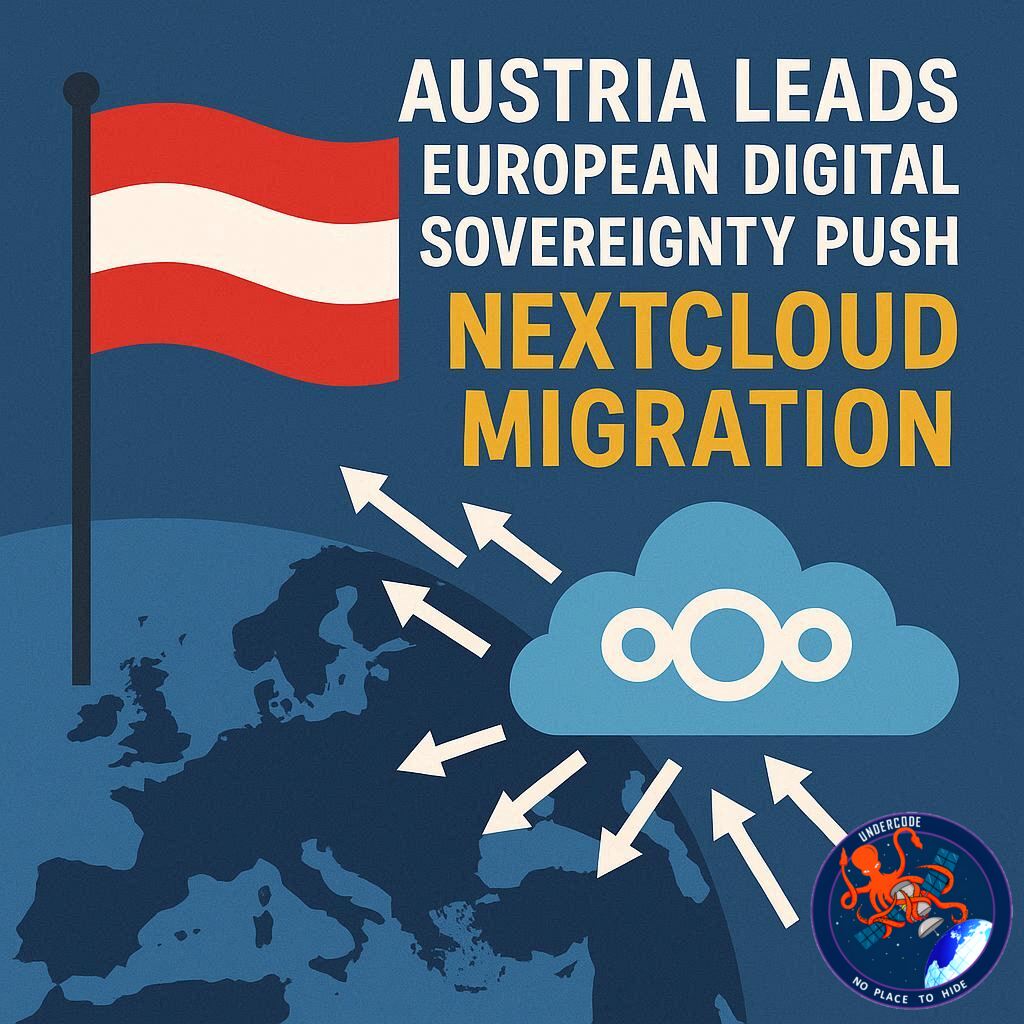
Europe is witnessing a technological shift as governments increasingly seek independence from US-based Big Tech, prioritizing control over sensitive data and national digital sovereignty. Austria’s Ministry of Economy recently exemplified this trend by moving 1,200 employees to a Nextcloud platform hosted on Austrian infrastructure, signaling a strong commitment to open-source solutions and European digital autonomy. This move highlights the broader European push to secure data, reduce reliance on foreign corporations, and foster homegrown technology initiatives.
European Governments Embrace Open-Source Platforms
Austria’s Ministry of Economy, Energy, and Tourism (BMWET) took the strategic step of migrating from Microsoft 365 to a Nextcloud-based system. This migration is more than just a software switch—it represents a deliberate effort to manage sensitive data, ranging from employee information to corporate and citizen records, within European borders. Open-source platforms like Nextcloud provide both the flexibility and security governments need, allowing control over infrastructure, applications, and data while benefiting from collaborative development.
Rising Trend Across the EU
Austria is not alone. Germany, Denmark, and France have also taken steps to reduce reliance on proprietary US software. For instance, Germany’s Schleswig-Holstein state abandoned Exchange and Outlook in favor of open-source alternatives, while French municipal authorities and Danish government agencies have made similar transitions. These efforts align with GDPR compliance requirements and aim to mitigate risks of commercial and foreign surveillance.
Industry Support and Collaboration
European companies are supporting this movement through initiatives like the EuroStack Foundation, which promotes buying, selling, and funding European technology. Open-source software is seen as a crucial pillar for achieving digital sovereignty, offering faster development cycles, improved security, and enhanced control over data. Experts like Thierry Carrez of the OpenInfra Foundation emphasize that open infrastructure enables nations to manage their technological destiny while still participating in global collaboration.
Practical Implementation and Challenges
Austria’s migration to Nextcloud was accomplished in just four months, demonstrating that digital sovereignty is achievable without disrupting workflows. The ministry adopted a hybrid approach, using Nextcloud for internal collaboration while retaining Microsoft Teams for external communication. Seamless integration with existing tools like Outlook ensured minimal disruption for users.
However, not all transitions have been smooth. Austria’s Ministry of Justice experienced difficulties when migrating 20,000 desktops to LibreOffice. Compatibility issues, document formatting errors, and email system misfires caused significant disruption, illustrating the risks of poorly managed software migrations.
Strategic Implications
The US government has expressed concern over Europe’s push for digital sovereignty, viewing it as a potential challenge to American tech dominance. European leaders are set to discuss these issues at the upcoming Summit on European Digital Sovereignty, highlighting the geopolitical and economic dimensions of technology policy.
What Undercode Say:
Austria’s migration to Nextcloud underscores a critical turning point in Europe’s digital landscape. This move represents not only technological autonomy but also a strategic assertion of sovereignty in a global data-driven economy. By retaining control over sensitive data and infrastructure, European states can mitigate risks posed by foreign corporations and governments while complying with stringent GDPR requirements.
From an operational standpoint, Austria demonstrates that a carefully planned hybrid approach—integrating new open-source solutions with existing proprietary tools—can smooth user adoption and maintain workflow continuity. This contrasts sharply with the Ministry of Justice’s troubled LibreOffice rollout, where rushed planning and insufficient IT support led to disruption and inefficiency. The lesson is clear: digital sovereignty initiatives require meticulous project management, robust training, and integration strategies to succeed.
The rise of initiatives like the EuroStack Foundation shows that Europe is aiming to create a sustainable ecosystem for homegrown tech, emphasizing buy-local policies and collaborative development. These initiatives also hint at a broader cultural shift—Europe is not only seeking technological independence but also aiming to redefine global tech governance, emphasizing transparency, data privacy, and ethical software practices.
Moreover, open-source solutions provide a dual advantage: security and flexibility. Unlike proprietary software, open-source systems allow governments to audit code, adapt tools to local regulations, and collaborate across borders without surrendering control. This approach could potentially reduce long-term costs, foster innovation, and enhance resilience against cyber threats.
At the same time, digital sovereignty is more than a technical endeavor; it is an economic and geopolitical strategy. As European nations invest in local infrastructure, they signal to the world that data control and privacy are national priorities, creating leverage in international negotiations and tech policymaking. Countries that master these transitions effectively may also gain competitive advantages, fostering domestic innovation and reducing dependence on foreign vendors.
Despite challenges, Austria’s BMWET illustrates that success is attainable with careful planning, hybrid adoption strategies, and user-focused implementations. European governments that follow this path can secure their digital futures while encouraging domestic technological ecosystems to thrive.
The US government’s concern highlights a growing tension between Europe’s drive for sovereignty and America’s dominance in cloud services. This friction may shape future negotiations on cross-border data flows, privacy standards, and global tech regulations, further reinforcing Europe’s commitment to self-reliance.
In conclusion, Austria’s Nextcloud migration is emblematic of a larger European movement—one that balances practical IT implementation with strategic geopolitical objectives. As more countries and institutions adopt similar measures, the digital sovereignty movement is poised to redefine the power dynamics of global technology.
Fact Checker Results:
✅ Austria’s Ministry of Economy migrated to Nextcloud.
✅ European governments are increasingly adopting open-source solutions for data sovereignty.
❌ The transition of Austria’s Ministry of Justice to LibreOffice was smooth; reports indicate disruptions and compatibility issues.
Prediction:
🌐 The digital sovereignty movement in Europe is likely to accelerate, with more EU states adopting open-source platforms and hybrid cloud strategies.
💼 European tech foundations like EuroStack will gain influence, shaping procurement policies and encouraging local innovation.
⚖️ Geopolitical tensions over data control and US tech dominance may intensify, influencing international negotiations and digital regulations.
🕵️📝✔️Let’s dive deep and fact‑check.
References:
Reported By: www.zdnet.com
Extra Source Hub (Possible Sources for article):
https://www.quora.com
Wikipedia
OpenAi & Undercode AI
Image Source:
Unsplash
Undercode AI DI v2
Bing
🔐JOIN OUR CYBER WORLD [ CVE News • HackMonitor • UndercodeNews ]
📢 Follow UndercodeNews & Stay Tuned:
𝕏 formerly Twitter 🐦 | @ Threads | 🔗 Linkedin | 🦋BlueSky | 🐘Mastodon


