
Listen to this Post
Introduction: A Fresh Ransomware Claim Sends Shockwaves
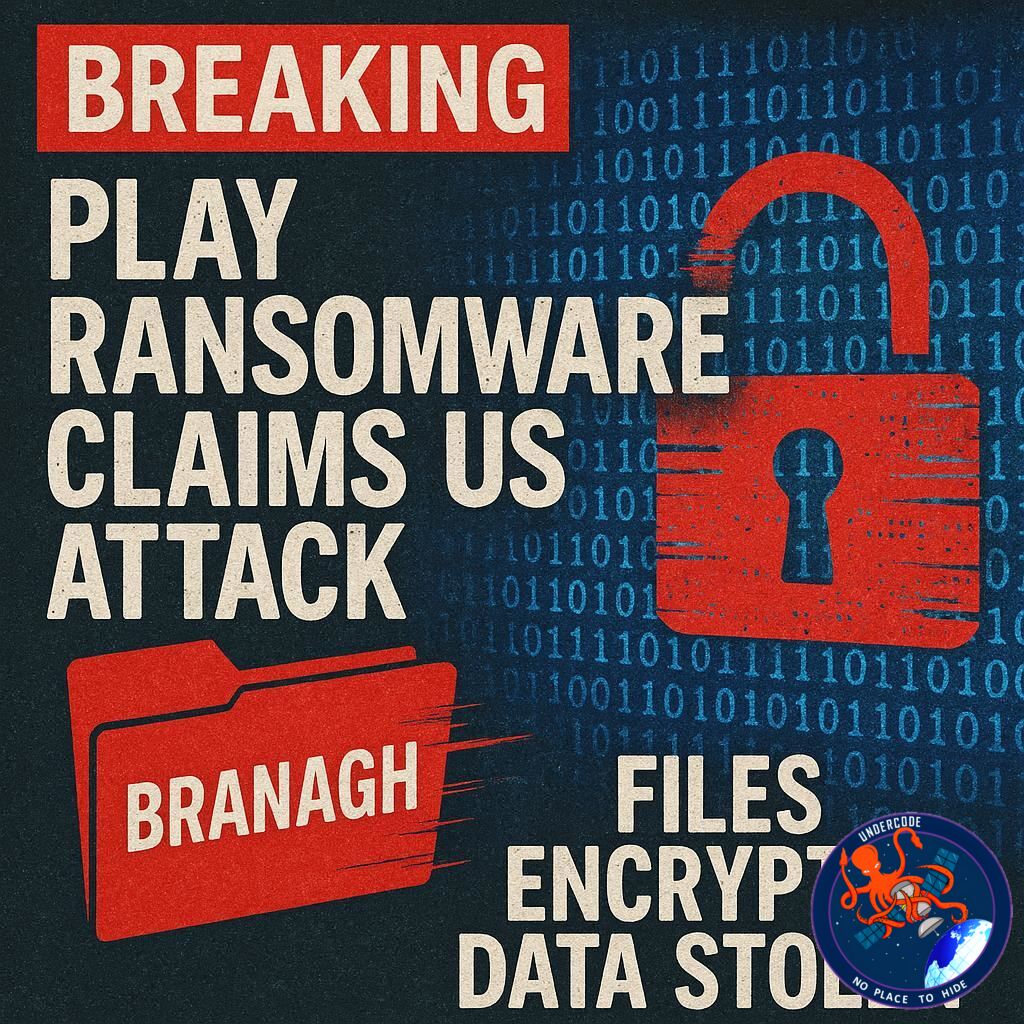
A new ransomware claim is rippling through the cybersecurity community after reports surfaced that the Play ransomware group has allegedly targeted a U.S.-based organization named Branagh. The incident, still unconfirmed by the victim, reportedly involves both file encryption and data exfiltration—an increasingly common double-extortion tactic. The claim emerged via social media channels dedicated to threat intelligence, reigniting concerns over the speed at which unverified cyberattack claims can spread and influence public perception before facts are established.
the Original Report
The alert originated from a post by Cybersecurity News Everyday, known online as @TweetThreatNews, which regularly aggregates and shares emerging cyber threat reports. According to the post, the ransomware group Play claims responsibility for an attack on Branagh in the United States.
The attackers allegedly encrypted critical files and exfiltrated sensitive data, then demanded a ransom in exchange for restoring access and preventing the public release of the stolen information. As of the time of posting, no official confirmation had been issued by Branagh, nor had U.S. authorities acknowledged the incident.
The source of the information was attributed to hendryadrian.com, a site that often compiles cybercrime-related disclosures and dark web activity. The post gained modest visibility, with limited views and engagement, but enough to put the alleged victim’s name into public circulation.
Importantly, the report emphasized that details remain unconfirmed. No samples of leaked data, ransom notes, or negotiation screenshots were publicly shared alongside the claim. This lack of supporting evidence leaves open multiple possibilities: an ongoing investigation, a delayed disclosure, or even a premature or exaggerated claim by the attackers themselves.
The broader context shows how ransomware groups increasingly use public platforms to apply pressure, leveraging uncertainty and reputational risk even before verification occurs.
What Undercode Say:
The Play ransomware group has built a reputation around aggressive double-extortion campaigns, but like many ransomware collectives, it also benefits from ambiguity. Public claims without proof are not unusual in this ecosystem. In some cases, attackers announce breaches early to force victims into faster negotiations. In others, claims are recycled, inflated, or strategically timed to maximize fear.
What stands out in this case is the absence of corroborating evidence. Modern ransomware operations typically publish at least partial proof—file trees, screenshots, or sample documents—especially when making public claims. The silence here suggests either negotiations are ongoing or the attackers are testing the waters before escalating.
Another critical angle is the speed at which such claims are amplified. Accounts focused on real-time threat monitoring serve an important role, but they also highlight a systemic issue: early reporting often outpaces verification. This creates a gray zone where companies may be perceived as breached even if the incident is still under investigation or turns out to be less severe than claimed.
If Branagh is indeed a mid-sized or specialized organization, it may lack the communications infrastructure to respond quickly, further widening the information gap. That delay alone can fuel speculation, impact partner trust, and create regulatory pressure, especially in the United States where breach disclosure timelines are tightening.
From a defensive standpoint, this incident underscores why organizations must assume that any ransomware intrusion will eventually become public—confirmed or not. Incident response plans now need to account not only for technical containment, but also for reputational risk management in an era where threat actors weaponize social media visibility.
Until Branagh or an authoritative body confirms the breach, the claim should be treated as high-risk but unverified intelligence. However, dismissing it outright would be a mistake. Historically, many “unconfirmed” ransomware claims later proved accurate once investigations concluded or negotiations collapsed.
🔍 Fact Checker Results
✅ The Play ransomware group is a known and active threat actor.
❌ No independent confirmation or victim statement has verified the Branagh attack.
⚠️ The claim currently relies on secondary reporting and attacker assertions only.
📊 Prediction
If the attack is legitimate, confirmation or data leaks are likely within days as pressure tactics escalate. If not, the claim may quietly disappear—highlighting the growing challenge of distinguishing real intrusions from strategic noise in the ransomware economy.
🕵️📝✔️Let’s dive deep and fact‑check.
References:
Reported By: x.com
Extra Source Hub (Possible Sources for article):
https://www.medium.com
Wikipedia
OpenAi & Undercode AI
Image Source:
Unsplash
Undercode AI DI v2
Bing
🔐JOIN OUR CYBER WORLD [ CVE News • HackMonitor • UndercodeNews ]
📢 Follow UndercodeNews & Stay Tuned:
𝕏 formerly Twitter 🐦 | @ Threads | 🔗 Linkedin | 🦋BlueSky | 🐘Mastodon


