
Listen to this Post
Introduction: A Turning Point for Diaspora Transfers
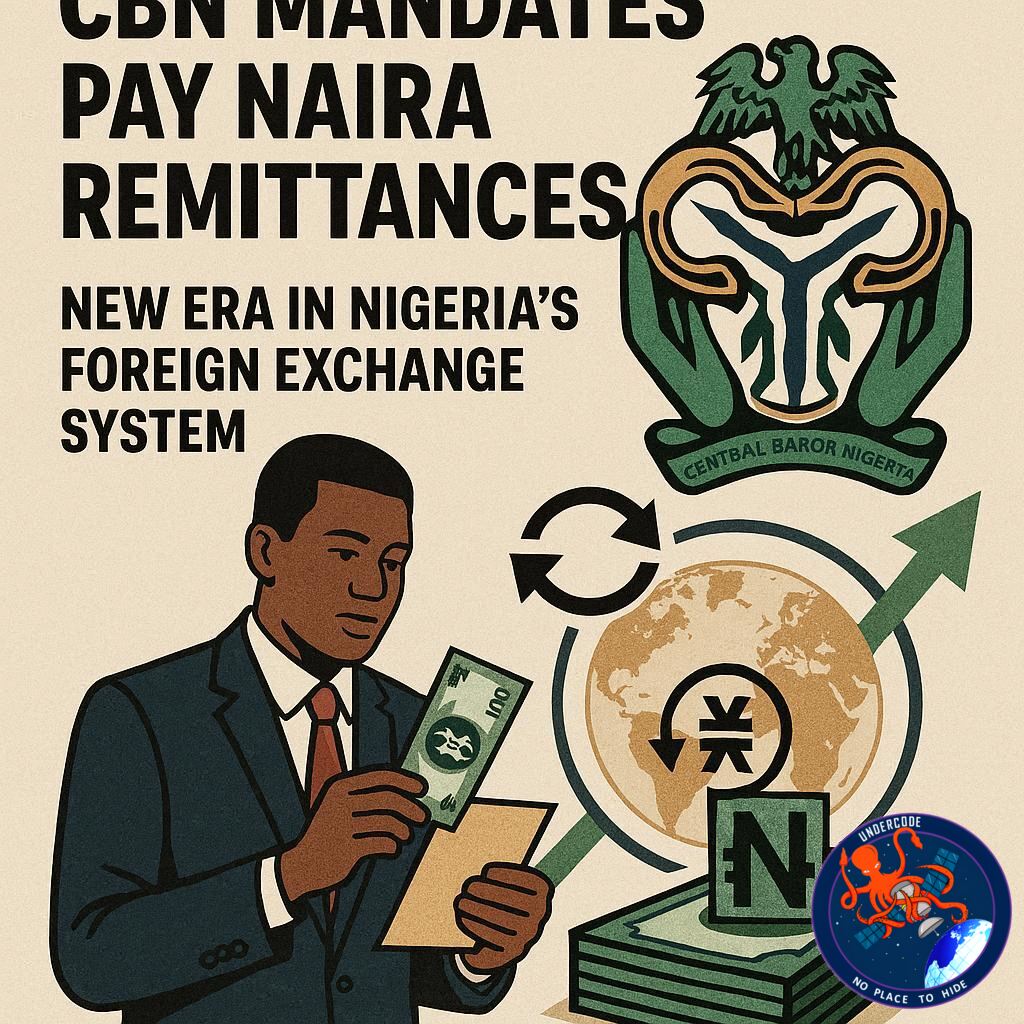
Nigeria’s financial landscape is undergoing a significant shift as the Central Bank of Nigeria rolls out a new directive that changes how money sent from abroad reaches recipients at home. For millions of Nigerians relying on diaspora remittances, this policy is more than a regulatory update. It represents a structural transformation aimed at tightening oversight, improving transparency, and stabilizing the country’s foreign exchange system. By mandating that all remittances be paid in naira through authorized banks, the apex bank is attempting to reclaim control over a critical economic lifeline.
Summary: A Comprehensive Overhaul of Remittance Operations
New Rule Reshapes Remittance Flow
The Central Bank of Nigeria has issued a directive requiring all international money transfers to be settled exclusively in naira. This applies to major operators like Western Union and MoneyGram, along with other licensed International Money Transfer Operators. Under this new framework, recipients in Nigeria will no longer receive funds in foreign currencies, marking a decisive shift in remittance policy.
Mandatory Bank Routing Introduced
All remittance inflows must now pass through accounts held with authorized dealer banks within Nigeria. This rule covers both the distribution of funds to beneficiaries and the settlement process itself. By centralizing remittance flows within the banking system, the CBN aims to eliminate informal or untraceable channels that previously allowed funds to bypass regulatory scrutiny.
Transparency and Accountability at the Core
The directive is part of a broader initiative to improve compliance in the remittance space. By ensuring that all transactions are routed through formal banking systems, the apex bank enhances its ability to monitor and regulate foreign exchange inflows. This move is expected to reduce leakages and strengthen accountability across the financial ecosystem.
Flexibility for Operators Under Strict Conditions
Despite tightening controls, IMTOs are allowed some operational flexibility. They can maintain multiple naira settlement accounts across different authorized banks to suit their business strategies. However, all inflows and proceeds from foreign exchange conversions must be credited strictly into these designated accounts, leaving no room for alternative channels.
Real-Time Exchange Rates Enforced
A key feature of the new policy is the requirement for IMTOs to adopt real-time exchange rates sourced from Bloomberg BMatch. This is designed to eliminate inconsistencies in pricing, reduce arbitrage opportunities, and ensure fairness in currency conversion. For recipients, this translates into more predictable and transparent exchange rates.
Economic Implications for Nigeria
Remittances from Nigerians abroad are one of the country’s most stable sources of foreign exchange. By channeling these funds into the official market, the CBN hopes to boost liquidity, support the naira, and enhance confidence in its foreign exchange management system. While the transition may require adjustments, the long-term objective is a more efficient and stable remittance ecosystem.
Anti-Money Laundering Measures Strengthened
In parallel with the remittance directive, the CBN has introduced new regulations requiring financial institutions to deploy automated anti-money laundering systems. These systems aim to enhance the detection of suspicious transactions and improve reporting standards across banks, mobile money operators, and payment service providers.
What Undercode Say:
A Strategic Attempt to Reclaim FX Control
The policy is not just about remittances. It is a calculated move by the Central Bank of Nigeria to regain control over foreign exchange flows that have long been fragmented between official and parallel markets. By forcing all remittances into the banking system, the regulator is effectively reducing the influence of informal currency channels.
Impact on the Parallel Market
Nigeria’s parallel foreign exchange market has historically thrived on inefficiencies and gaps in the official system. This directive could significantly weaken that market by cutting off a major source of dollar inflows. However, whether it succeeds depends heavily on enforcement and public trust in the banking system.
Trust and User Experience Will Be Critical
For everyday Nigerians, convenience and value matter more than policy intent. If recipients feel that the new system offers competitive rates and fast access to funds, adoption will be smooth. But if delays or unfavorable rates emerge, users may seek alternative, possibly informal, channels.
Pressure on Banks to Deliver
Authorized dealer banks now carry a heavier responsibility. They must process increased volumes of remittance transactions efficiently while maintaining transparency. Any bottlenecks in the system could undermine the effectiveness of the policy.
Exchange Rate Transparency as a Double-Edged Sword
Using real-time rates from Bloomberg BMatch introduces fairness but also removes the flexibility operators once had to adjust margins. This could compress profits for IMTOs while benefiting consumers. Over time, this may reshape the competitive dynamics of the remittance industry.
Liquidity Boost and Naira Stability
If successfully implemented, the policy could significantly improve liquidity in Nigeria’s official foreign exchange market. Increased supply of foreign currency within the formal system may help stabilize the naira, especially during periods of volatility.
Compliance Costs for Operators
IMTOs will likely face increased compliance and operational costs as they adapt to the new rules. Maintaining multiple bank accounts, ensuring real-time rate integration, and meeting reporting standards require technological upgrades and stricter internal controls.
Alignment with AML Regulations
The directive aligns closely with the CBN’s broader push toward stronger anti-money laundering frameworks. By digitizing and centralizing transactions, regulators gain better visibility into financial flows, making it easier to detect suspicious activities.
Long-Term Structural Benefits
Although the transition may be challenging, the long-term benefits include a more transparent financial system, improved investor confidence, and stronger regulatory oversight. These are essential components for economic stability and growth.
Risk of Short-Term Disruption
In the short term, there may be confusion among users and operational hiccups among service providers. Clear communication and efficient implementation will be key to minimizing disruption.
Fact Checker Results
✅ The Central Bank of Nigeria officially introduced a policy mandating naira settlement for remittances through licensed banks.
✅ Major IMTOs like Western Union and MoneyGram are directly affected by this directive.
❌ There is no confirmed evidence yet that the policy alone will immediately stabilize the naira, as outcomes depend on enforcement and market response.
Prediction
Gradual Shift Toward a Fully Digitized FX Ecosystem
🔮 Nigeria is likely to accelerate its transition toward a fully digitized and regulated foreign exchange ecosystem, reducing reliance on informal markets.
Increased Competition Among Banks and IMTOs
🔮 Banks and transfer operators may compete more aggressively on speed, fees, and user experience as transparency levels the playing field.
Potential Policy Adjustments Ahead
🔮 The CBN may refine the policy over time based on real-world challenges, possibly introducing incentives to encourage compliance and adoption.
🕵️📝✔️Let’s dive deep and fact‑check.
References:
Reported By: www.legit.ng
Extra Source Hub (Possible Sources for article):
https://www.quora.com/topic/Technology
Wikipedia
OpenAi & Undercode AI
Image Source:
Unsplash
Undercode AI DI v2
Bing
🔐JOIN OUR CYBER WORLD [ CVE News • HackMonitor • UndercodeNews ]
📢 Follow UndercodeNews & Stay Tuned:
𝕏 formerly Twitter 🐦 | @ Threads | 🔗 Linkedin | 🦋BlueSky | 🐘Mastodon


