
Listen to this Post
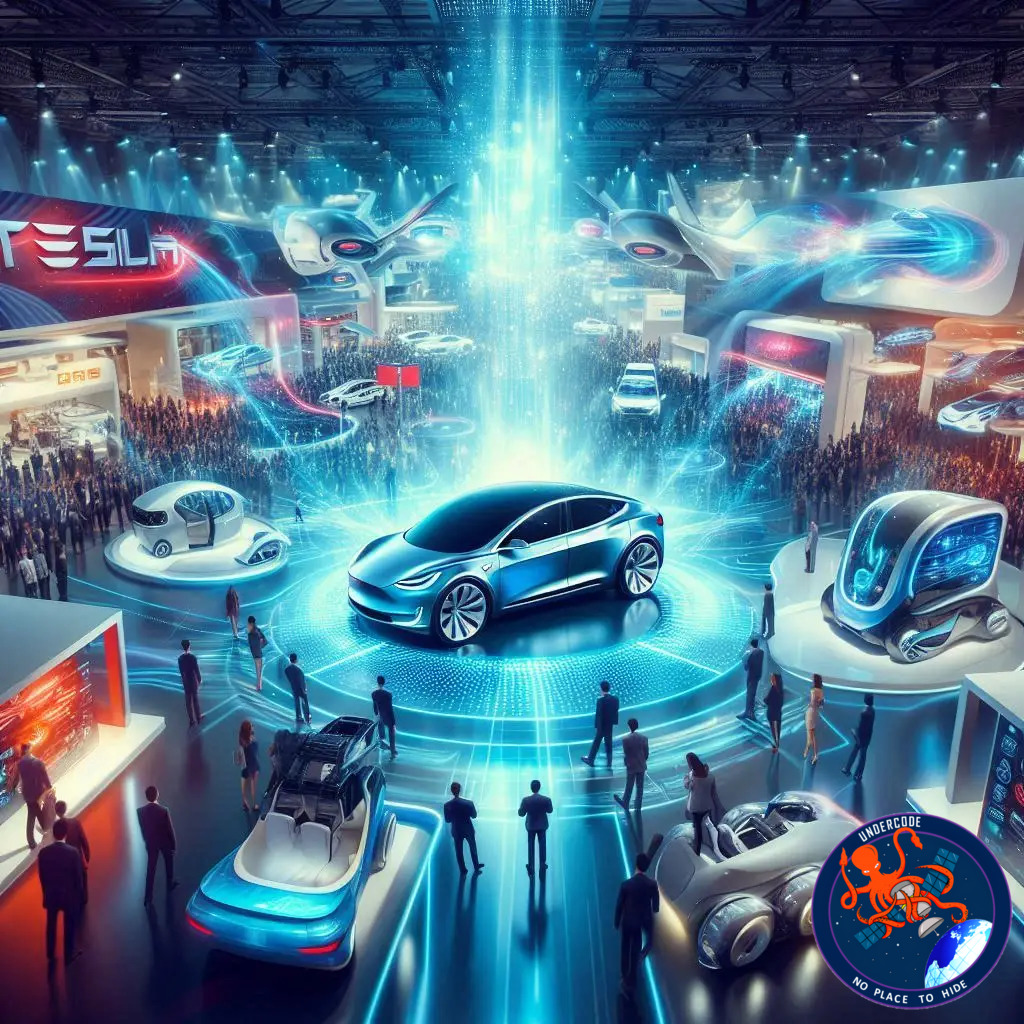
Introduction: CES 2026 Becomes a Reality Check for Autonomy
CES 2026 was supposed to be a celebration of innovation across the automotive and AI industries. Instead, it quietly turned into something far more revealing: a reality check. While competitors showcased incremental progress and polished demos, the broader message coming out of Las Vegas was unmistakable—Tesla’s Full Self-Driving (FSD) strategy is not being overtaken, but increasingly validated. Analysts, technologists, and even rivals themselves appeared to confirm what Tesla has argued for years: autonomy is not about flashy hardware or isolated breakthroughs, but about long-term systems thinking, data scale, and architectural patience.
the Original
At the center of the CES 2026 discussion was Philippe Ferragu, a longtime Tesla bull and analyst at New Street Research, who described the event as “The Great Validation Chamber” for Tesla’s autonomous driving approach. According to Ferragu, two major CES developments stood out. First was Mobileye’s renewed focus on cost-efficient Level 2+ (L2+) hardware, which he interpreted as a quiet retreat from the dream of near-term Level 4 autonomy among Western automakers. Second was NVIDIA’s unveiling of “Alpamayo,” an AI-driven platform designed to accelerate autonomous driving development.
Ferragu argued that while both announcements validate Tesla’s long-standing strategy, they also expose how far behind the rest of the industry remains—by as much as 12 years. In his view, Mobileye’s plan to standardize L2+ systems by 2028 is effectively equivalent to Tesla’s HW2 era back in 2016. For NVIDIA, Ferragu saw Alpamayo as a philosophical endorsement of Tesla’s end-to-end AI and reasoning-based autonomy stack, similar to what Tesla is deploying in FSD versions 13 and 14. However, he warned that NVIDIA’s role stops at providing tools; legacy automakers still need to integrate, optimize, and deploy these systems at scale—a challenge they have historically struggled with.
Elon Musk also weighed in on CES 2026 developments. Responding to speculation that Alpamayo could threaten Tesla’s FSD, Musk said he genuinely hopes NVIDIA succeeds. Still, he emphasized a familiar problem in autonomy: reaching 99% reliability is relatively easy, but solving the “long tail” of rare and complex edge cases is extraordinarily difficult. Musk predicted that competing systems would not apply meaningful pressure on Tesla for another five to six years, if not longer, given the slow pace of traditional automakers.
The broader news cycle around Tesla also included strategic moves beyond autonomy. In the UK, Tesla launched a limited-time trade-in incentive, offering a discount of approximately $5,043 off new or inventory Model 3 and Model Y vehicles when combined with a qualifying trade-in. The move comes amid intensifying European competition, particularly from Chinese automaker BYD, and reflects Tesla’s effort to boost early 2026 deliveries after a year of declining volumes.
Meanwhile, CES 2026 also highlighted alternative autonomy paths. Lucid, Uber, and Nuro announced a robotaxi program built around the Lucid Gravity SUV, featuring LiDAR-heavy sensor arrays and supervised autonomous testing in the San Francisco Bay Area. While ambitious, the project underscores a fundamentally different philosophy from Tesla’s camera-only, vertically integrated approach.
What Undercode Say:
CES 2026 Didn’t Crown New Winners—It Confirmed Old Ones
What CES 2026 really demonstrated is that the autonomy race is no longer about who has the flashiest demo, but who made the right bets a decade ago. Tesla’s strategy—custom silicon, camera-first perception, vertically integrated AI training, and massive real-world data collection—was controversial when it launched. Today, it is increasingly becoming the template others are trying to replicate, just years too late.
Mobileye’s pivot toward standardized L2+ hardware is especially telling. It signals that many automakers have quietly accepted that full autonomy is not around the corner for them. Rather than leapfrogging Tesla, they are consolidating around safer, cheaper driver-assistance systems that regulators and consumers already understand. This is not necessarily a failure—but it is an admission that Tesla’s early ambition created a gap that cannot be closed quickly.
NVIDIA’s Alpamayo is more nuanced. Technologically, it is impressive and philosophically aligned with Tesla’s AI-first mindset. But Alpamayo highlights a structural weakness across the legacy auto industry: dependence. NVIDIA can supply the “kitchen,” as Ferragu put it, but most automakers lack the software culture, data pipelines, and organizational speed to actually cook a winning autonomy product. Tesla, by contrast, controls every layer—from cameras to chips to neural networks to over-the-air deployment.
Elon Musk’s comments about the “long tail” remain the most grounded take in the room. Autonomy is not about average performance; it is about rare, messy, human scenarios. Tesla’s advantage is not that FSD works perfectly today, but that millions of vehicles are constantly feeding edge cases back into a unified learning system. Competitors relying on limited robotaxi fleets or geofenced testing simply do not generate data at that scale.
The contrast with the Lucid–Uber–Nuro robotaxi project is stark. Heavy sensor stacks, supervised testing, and tightly controlled environments may work for specific urban deployments. But they are expensive, slow to scale, and fundamentally different from Tesla’s consumer-first autonomy model. One approach aims to replace drivers in select cities; the other aims to replace driving itself, everywhere.
Even Tesla’s UK trade-in incentive fits into this broader picture. While rivals fight on price and features, Tesla is using its balance sheet flexibility to defend market share while continuing to invest heavily in autonomy. Short-term delivery boosts matter, but the long game is still FSD.
In short, CES 2026 didn’t show Tesla being chased down. It showed the industry finally admitting which direction the road leads—and how long it will take them to get there.
🔍 Fact Checker Results
✅ CES 2026 featured major autonomy announcements from NVIDIA, Mobileye, and multiple automakers.
✅ Elon Musk publicly stated that serious FSD competition is likely 5–6 years away.
❌ No evidence suggests Tesla’s FSD has been overtaken or matched at scale as of CES 2026.
📊 Prediction
Tesla will face increasing “theoretical” competition in autonomy over the next five years, but practical, mass-market pressure will remain limited. As rivals validate Tesla’s architecture and philosophy, Tesla’s real challenge will shift from technology to regulation and public trust. If those barriers fall, the gap revealed at CES 2026 may prove even wider than it appears today.
🕵️📝✔️Let’s dive deep and fact‑check.
References:
Reported By: www.teslarati.com
Extra Source Hub (Possible Sources for article):
https://www.linkedin.com
Wikipedia
OpenAi & Undercode AI
Image Source:
Unsplash
Undercode AI DI v2
Bing
🔐JOIN OUR CYBER WORLD [ CVE News • HackMonitor • UndercodeNews ]
📢 Follow UndercodeNews & Stay Tuned:
𝕏 formerly Twitter 🐦 | @ Threads | 🔗 Linkedin | 🦋BlueSky | 🐘Mastodon


