
Listen to this Post
Introduction
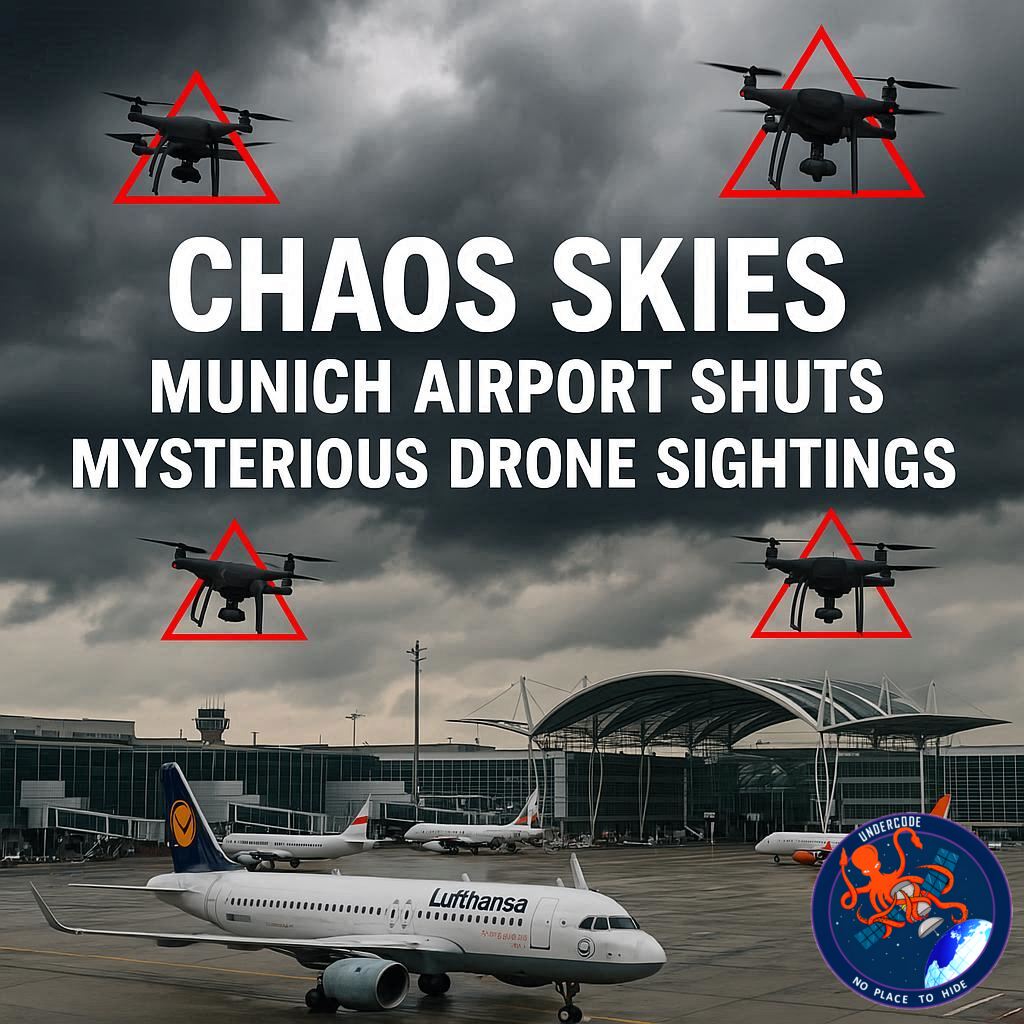
Europe is facing a new wave of aviation chaos as drones continue to disrupt air traffic across multiple countries. The latest incident unfolded in Germany, where Munich Airport was forced to suspend all flights due to unidentified drones spotted near its airspace. This alarming trend has raised questions about security, safety, and potential geopolitical motives behind these sightings. Let’s break down what happened, why it matters, and what experts are saying about this unfolding crisis.
the Incident
Late on Wednesday night, October 2, Munich Airport suddenly suspended all flight operations after multiple drone sightings were reported in its airspace. According to the airport’s official statement, German air traffic control (DFS) restricted flights at 10:18 pm before halting operations completely.
The disruption had an immediate impact: 17 flights were grounded, leaving nearly 3,000 passengers stranded overnight. Authorities emphasized that traveler safety remains the top priority whenever a drone is detected near airports.
The shutdown lasted several hours, with Munich Airport finally reopening early on Friday morning, according to multiple media outlets.
What makes this incident more concerning is that it wasn’t isolated. In the past week, airports in Denmark, Norway, and Poland also suspended operations after drone activity was spotted. Similar airspace violations were reported in Estonia and Romania, with officials directly blaming Russia for possible involvement—though Moscow dismissed these accusations.
The situation remains tense as European aviation authorities scramble to investigate whether these are coordinated disruptions, security failures, or random intrusions.
What Undercode Say:
The Munich drone incident is not just another travel inconvenience—it represents a serious threat to European aviation security.
Security Concerns at Critical Infrastructure
Airports are among the most secure zones in the world, and the fact that drones repeatedly infiltrate these areas shows vulnerabilities in detection and defense systems. If small consumer drones can ground an entire international airport, the risks from larger, potentially weaponized drones are far more alarming.
A Growing European Trend
The timing of these incidents suggests a pattern rather than coincidence. Multiple countries reporting drones within a single week points toward either organized surveillance or deliberate disruption. This raises speculation about whether state-backed actors or sophisticated cyber groups are testing Europe’s air defense readiness.
Passenger Safety vs. Operational Chaos
Authorities acted swiftly by grounding flights, prioritizing lives over convenience. But with thousands of passengers stranded across multiple countries, these shutdowns create ripple effects—economic losses, airline delays, and frustrated travelers. The balance between safety protocols and operational continuity is becoming increasingly delicate.
Geopolitical Tensions Rising
With Estonia and Romania hinting at Russian involvement, the drone crisis has escalated beyond aviation and into international politics. While no concrete evidence has been presented, such accusations could fuel already heightened tensions between NATO members and Moscow.
Technology Gap in Drone Defense
Despite advancements, drone detection systems remain limited. Many airports rely on radar and visual confirmation, which may not always be fast enough to intercept small, fast-moving drones. This technological gap is exactly what malicious actors exploit.
Public Perception and Fear
Passengers witnessing delays and security scares may lose trust in airport safety. The fear of drones being used not just for disruption but for potential attacks will linger in public consciousness unless authorities implement stronger preventive measures.
Economic Fallout for Airlines
Every hour of airport shutdown results in huge financial losses. With airlines already struggling due to high fuel prices and labor shortages, such drone-related suspensions worsen the industry’s fragile recovery.
Coordinated Testing or Random Incidents?
Some analysts argue these sightings could be probing attacks—designed to measure Europe’s response times and vulnerabilities. If true, this suggests a long-term strategy by unknown actors, possibly preparing for larger disruptions in the future.
Urgent Call for Policy and Tech Investment
The crisis highlights the urgent need for pan-European drone regulation, including better tracking, anti-drone technologies, and international intelligence-sharing. Without unified action, airports will remain exposed.
✅ Fact Checker Results
Munich Airport officially confirmed suspension of flights on Oct 2 due to drone sightings.
17 flights and nearly 3,000 passengers were directly affected.
Multiple European airports faced similar drone-related disruptions within the same week.
🔮 Prediction
The Munich incident will not be the last. Expect more coordinated drone sightings at major European airports in the coming months. Governments are likely to ramp up anti-drone defense systems, but until such technology is fully deployed, travelers should brace for sudden airport shutdowns. This pattern suggests that drones are fast becoming a new weapon in hybrid warfare tactics across Europe.
🕵️📝✔️Let’s dive deep and fact‑check.
References:
Reported By: www.euronews.com
Extra Source Hub:
https://www.github.com
Wikipedia
OpenAi & Undercode AI
Image Source:
Unsplash
Undercode AI DI v2
🔐JOIN OUR CYBER WORLD [ CVE News • HackMonitor • UndercodeNews ]
📢 Follow UndercodeNews & Stay Tuned:
𝕏 formerly Twitter 🐦 | @ Threads | 🔗 Linkedin | 🦋BlueSky | 🐘Mastodon


