
Listen to this Post
Introduction
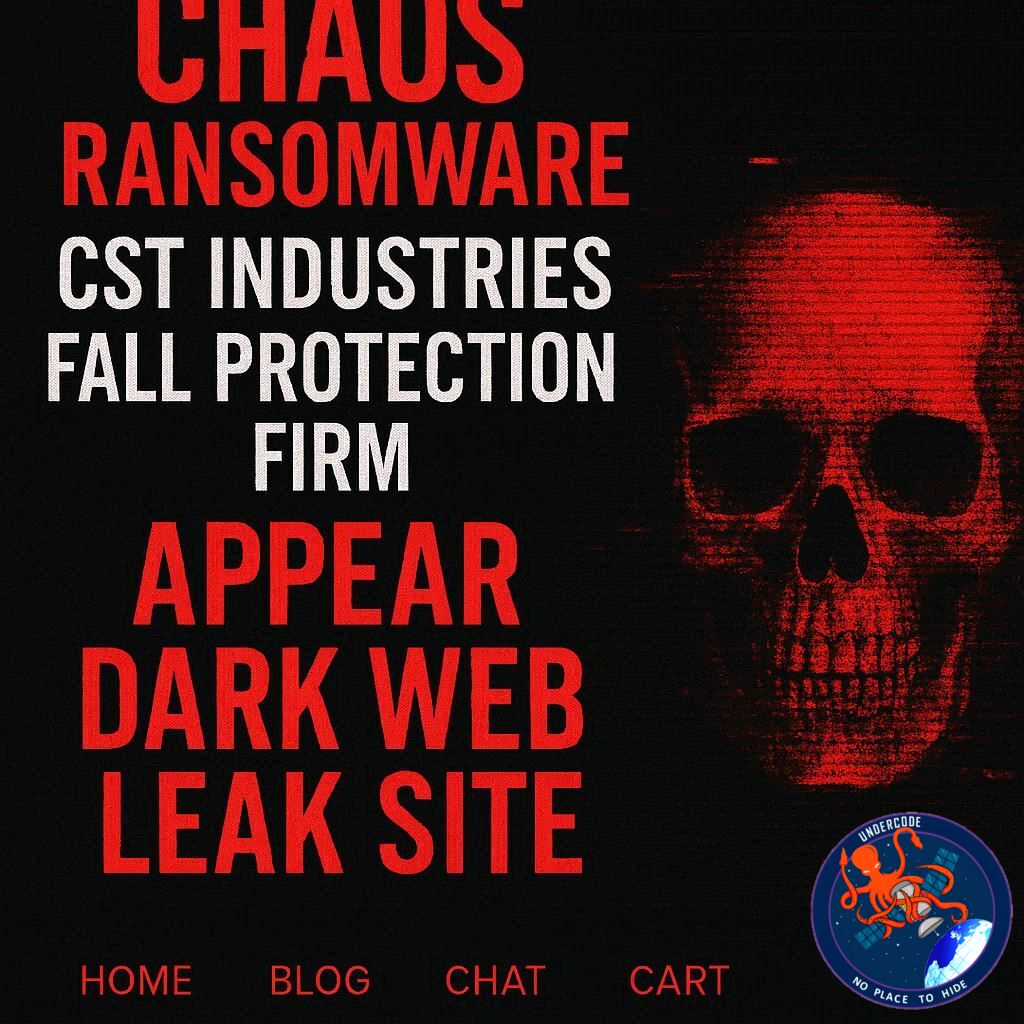
The ransomware landscape continues to spiral into dangerous territory as the notorious “Chaos” ransomware group reportedly added two more organizations to its growing list of victims. According to cyber threat monitoring reports shared by ThreatMon Threat Intelligence Team, both CST Industries and Fall Protect Systems were named on the group’s dark web victim portal on May 17, 2026.
The incident highlights the relentless pace of ransomware operations targeting industrial manufacturers and engineering-focused companies worldwide. While no official confirmation regarding data theft or operational disruption has yet emerged from the affected organizations, the public listing itself is often used by ransomware gangs as psychological pressure to force negotiations and extortion payments.
The appearance of these firms on a ransomware leak site underscores a troubling trend: industrial infrastructure and safety-focused engineering companies are increasingly becoming prime targets for cybercriminal organizations seeking sensitive corporate data, financial leverage, and supply-chain disruption opportunities.
Chaos Ransomware Expands Its Victim List
The Chaos ransomware operation allegedly added CST Industries and Fall Protect Systems to its victim database within minutes of each other, according to dark web monitoring activity shared online by ThreatMon researchers.
CST Industries
is known for manufacturing storage tanks, domes, and industrial containment systems used across multiple sectors including energy, water, and industrial processing.
Meanwhile, Fall Protect Systems
specializes in OSHA-compliant engineered fall protection equipment designed to improve workplace safety in high-risk industrial environments.
The close timing of both listings suggests either a coordinated campaign or multiple successful intrusions carried out during the same operational cycle by the Chaos ransomware group.
Industrial Companies Remain Prime Targets
Industrial and engineering firms have increasingly become attractive ransomware targets because they often operate legacy systems, large supplier networks, and highly sensitive operational data environments.
Attackers understand that downtime in manufacturing and engineering sectors can create massive financial pressure. In many cases, companies may feel forced to negotiate quickly to restore operations or prevent confidential documents from being leaked publicly.
Ransomware groups have evolved beyond simple file encryption. Modern cybercriminal organizations frequently steal proprietary documents, employee information, engineering plans, contracts, and internal communications before deploying ransomware payloads.
That dual-extortion model dramatically increases pressure on victims.
The Role of Dark Web Leak Sites
Dark web leak sites have become a standard tactic among ransomware groups. These websites are designed to publicly shame victims and increase pressure during negotiations.
When a company appears on one of these portals, it does not always confirm that files have already been leaked. In many cases, the posting serves as a warning or countdown intended to force contact from the targeted organization.
Cybersecurity analysts often monitor these portals closely because they provide early indicators of emerging attacks, possible data exposure incidents, and evolving ransomware activity trends.
Threat intelligence platforms such as ThreatMon continuously track these underground operations to alert organizations and security teams about new developments.
Manufacturing Sector Under Cyber Siege
The manufacturing sector has experienced an alarming rise in ransomware attacks over the past several years. Threat actors increasingly focus on operational technology environments where even minor disruptions can halt production lines and create millions in losses.
Companies operating in industrial sectors often maintain hybrid infrastructures combining modern cloud systems with decades-old operational machinery, making cybersecurity defense significantly more complicated.
Many organizations still struggle with:
Legacy Infrastructure Vulnerabilities
Older industrial systems frequently lack modern security protections, creating exploitable weaknesses for attackers.
Weak Third-Party Security Chains
Suppliers, contractors, and external vendors can unintentionally become entry points into larger corporate networks.
Slow Incident Response Procedures
Some industrial firms lack mature cybersecurity response teams capable of rapidly isolating ransomware incidents before they spread.
The Growing Sophistication of Chaos Ransomware
The Chaos ransomware brand has increasingly appeared in threat intelligence discussions tied to aggressive extortion tactics and rapid victim disclosures.
While details regarding the exact intrusion methods used in these latest incidents remain unclear, ransomware groups commonly rely on:
Phishing campaigns
Stolen credentials
VPN vulnerabilities
Remote desktop exploitation
Unpatched enterprise software
Cybercriminal operations have also become more professionalized, with affiliate structures allowing multiple attackers to deploy ransomware under a shared criminal ecosystem.
This model enables faster scaling and broader targeting capabilities.
What Undercode Says:
Cyber Extortion Is Becoming an Industrial Weapon
The listing of CST Industries and Fall Protect Systems reflects more than isolated ransomware incidents. It demonstrates how cybercrime has evolved into a direct threat against industrial continuity and infrastructure resilience.
Attackers are no longer focused solely on stealing data from banks or tech companies. Industrial engineering firms now represent high-value operational targets because disruption itself becomes leverage.
If production halts, projects stop, contracts suffer, and customers panic.
That pressure creates ideal conditions for extortion.
Public Leak Sites Are Psychological Warfare
Ransomware leak portals are designed for visibility and fear. Their primary goal is not merely technical compromise but reputational damage.
By publicly naming companies before full details emerge, threat actors attempt to pressure executives, shareholders, and even customers simultaneously.
This tactic transforms ransomware into a media-driven extortion campaign.
The moment a company appears on a leak site, the damage often extends beyond IT systems and directly impacts public trust.
Industrial Cybersecurity Still Lags Behind
Many industrial firms continue prioritizing operational uptime over cybersecurity modernization.
Unfortunately, attackers understand this weakness extremely well.
Operational technology environments frequently contain outdated infrastructure that cannot easily be patched or replaced without interrupting business processes. That creates a dangerous security gap.
In some cases, attackers remain inside corporate networks for weeks before ransomware deployment.
The lack of visibility across industrial systems remains one of the sector’s biggest cybersecurity failures.
Safety and Engineering Firms Face Elevated Risks
Fall protection engineering firms and industrial infrastructure providers maintain highly sensitive documentation including engineering diagrams, client contracts, facility plans, and regulatory compliance records.
That information can become extremely valuable during extortion campaigns.
Attackers may threaten leaks not because the data has consumer value, but because exposure could damage competitive positioning or trigger regulatory scrutiny.
This shifts ransomware from a technical issue into a business survival issue.
The Human Factor Remains the Weakest Link
Despite advanced cybersecurity tools, phishing and credential theft remain among the most successful attack methods globally.
Employees working in industrial sectors are increasingly targeted through carefully crafted social engineering campaigns designed to bypass traditional defenses.
Even well-funded organizations remain vulnerable if workforce awareness is weak.
Cybersecurity training is no longer optional for industrial organizations operating in critical sectors.
Ransomware Groups Operate Like Corporations
Modern ransomware operations now resemble structured businesses with affiliates, customer support channels, negotiation teams, and revenue-sharing models.
This industrialization of cybercrime allows groups like Chaos to expand rapidly across multiple regions and industries.
The criminal ecosystem itself has matured.
That makes ransomware significantly harder to disrupt than isolated hacking groups from previous years.
Regulatory Pressure Will Intensify
Governments worldwide are beginning to increase pressure on companies to disclose ransomware incidents faster and improve cyber resilience standards.
Organizations operating in manufacturing, engineering, and infrastructure sectors will likely face stricter compliance obligations moving forward.
The financial impact of non-compliance could eventually rival the ransomware demands themselves.
Cyber Insurance May Not Be Enough
Many companies rely heavily on cyber insurance as a recovery strategy, but insurers are becoming increasingly restrictive regarding ransomware payouts and coverage conditions.
Insurers now demand stronger cybersecurity controls before approving policies.
As ransomware attacks continue rising, companies without mature security programs may face higher premiums or reduced coverage options altogether.
Supply Chain Exposure Is the Next Battlefield
One compromised engineering company can indirectly expose multiple clients, contractors, and industrial partners.
That interconnected ecosystem dramatically expands the potential impact of ransomware incidents.
Attackers increasingly seek supply-chain access because it enables wider infiltration opportunities.
This makes every industrial cybersecurity incident a potentially larger systemic risk.
🔍 Fact Checker Results
✅ Verified Threat Intelligence Claims
ThreatMon monitoring posts publicly reported that the Chaos ransomware group added both CST Industries and Fall Protect Systems to its victim listings on May 17, 2026.
✅ No Official Breach Confirmation Yet
As of publication, there is no confirmed public statement from either company verifying the extent of compromise, data theft, or operational disruption.
❌ Leak Site Listings Do Not Automatically Confirm Full Data Exposure
Being listed on a ransomware leak portal does not always mean sensitive files have already been released publicly. In some cases, attackers use listings primarily as negotiation pressure.
📊 Prediction
Cyberattacks Against Industrial Firms Will Accelerate
Industrial manufacturers and engineering providers are likely to experience even more ransomware targeting throughout 2026 as attackers pursue sectors where operational disruption creates immediate financial pressure.
Leak-and-Extort Operations Will Become More Aggressive
Ransomware groups will continue expanding public leak tactics, including countdown timers, media exposure campaigns, and selective document releases designed to intensify negotiations.
Regulatory Cybersecurity Enforcement Will Tighten
Governments and regulators will likely impose stricter cybersecurity compliance frameworks on infrastructure and industrial sectors following the continued rise of ransomware incidents targeting critical business operations.
🕵️📝Let’s dive deep and fact‑check.
References:
Reported By: x.com
Extra Source Hub (Possible Sources for article):
https://www.pinterest.com
Wikipedia
OpenAi & Undercode AI
Image Source:
Unsplash
Undercode AI DI v2
Bing
🔐JOIN OUR CYBER WORLD [ CVE News • HackMonitor • UndercodeNews ]
📢 Follow UndercodeNews & Stay Tuned:
𝕏 formerly Twitter 🐦 | @ Threads | 🔗 Linkedin | 🦋BlueSky | 🐘Mastodon


