
Listen to this Post
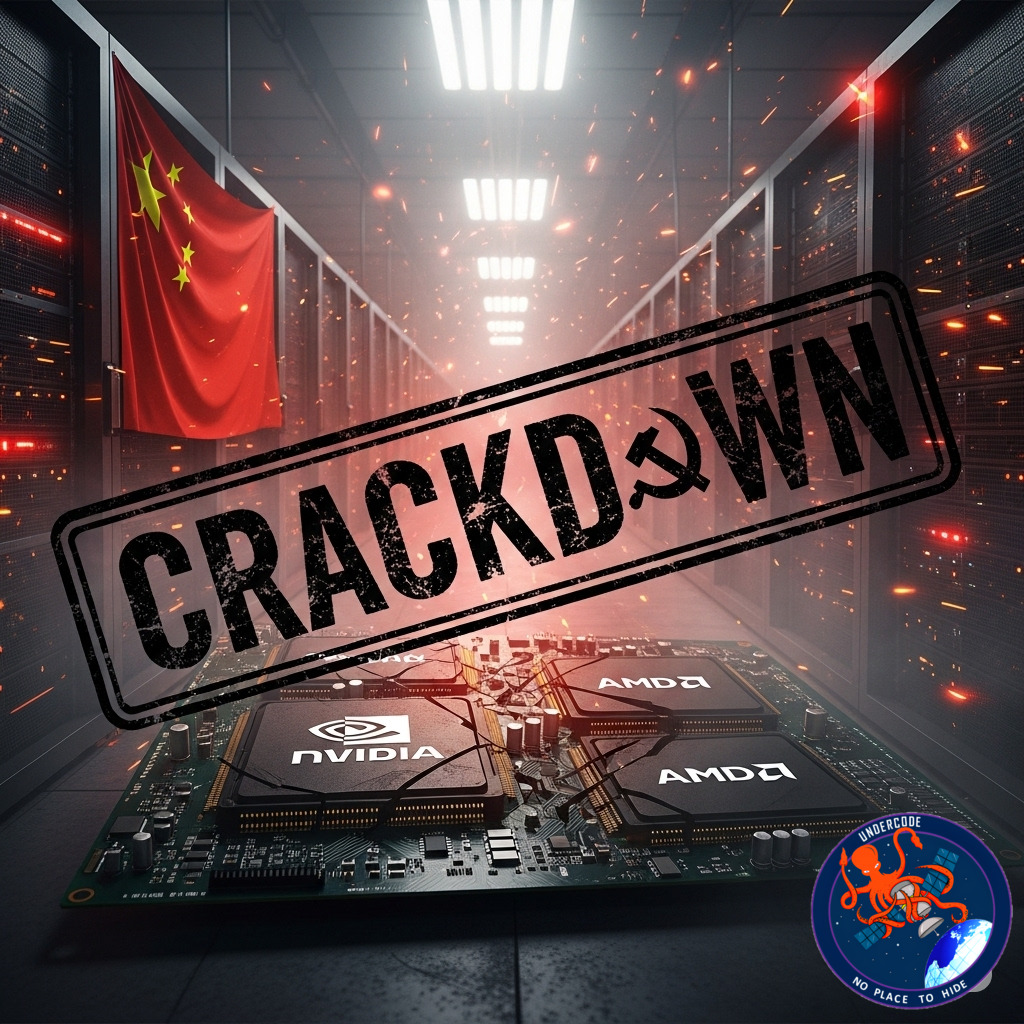
In the escalating global battle over AI technology, US chipmaker Nvidia and rival AMD have hit a new roadblock in China. Beijing has reportedly issued directives instructing domestic companies—especially those working on government-related projects—to avoid using Nvidia’s H20 AI chips and AMD’s MI308. These models, designed specifically for China, are stripped-down versions of the AI chips sold in the US, part of an earlier compromise aimed at sidestepping export restrictions.
This development is more than just another trade spat—it’s a strategic move that complicates billions of dollars in potential revenue for the US firms, while also undermining the Trump administration’s deal that granted them access to the Chinese market in exchange for giving the US government a share of the sales.
the Original
Over recent weeks, Chinese regulators have sent notices to several firms advising them not to purchase less-powerful US-made AI chips for sensitive work. This guidance primarily targets Nvidia’s H20 and AMD’s MI308, both part of an agreement where the companies granted the US government a 15% cut of their China revenue in exchange for export licenses.
These notices reportedly ask companies why they would choose Nvidia’s H20 over local alternatives, and whether they have detected any security flaws in the hardware. At the same time, Chinese state media has raised concerns over the security and reliability of these chips. Nvidia, however, has strongly rejected such claims, stating that the H20 is not a military-grade product and contains no hidden vulnerabilities.
China’s stance appears driven by two main factors:
- Security Concerns – Officials allege that US chips could contain tracking or remote shutdown capabilities, accusations that Nvidia has “vehemently denied.”
- Self-Reliance – The government is pushing to accelerate the growth of its domestic semiconductor industry, encouraging companies to switch to Chinese-made AI chips.
Former President Donald Trump has further fueled tensions, dismissing the H20 chip as “obsolete” and suggesting that China already possesses similar technology. US Commerce Secretary Howard Lutnick also linked the H20 deal to a broader trade pact designed to enhance US access to Chinese rare-earth minerals—a vital resource for electronics manufacturing.
What Undercode Say:
This latest twist in the chip war is not merely a commercial dispute—it’s a geopolitical chess match where AI chips are the new oil. The H20’s restricted design was supposed to be a middle-ground solution—powerful enough for commercial AI work in China but not advanced enough to pose national security risks. Yet China’s outright discouragement of its use shows how quickly compromise solutions can unravel in the face of strategic rivalries.
What’s notable is the dual-front challenge for Nvidia and AMD. On one hand, they are constrained by US export controls, which force them to offer “watered-down” versions in China. On the other, they are now confronted with China’s deliberate effort to erode their market presence, steering domestic buyers toward local alternatives like those from Huawei or Biren Technology.
From a business standpoint, the numbers are alarming. China accounts for a significant chunk of the global AI chip market, and losing that share could pressure Nvidia’s and AMD’s quarterly earnings, especially after recent record-breaking demand for AI hardware in other regions. For AMD, which is still chasing Nvidia’s dominance in AI accelerators, the loss of Chinese contracts could slow its competitive momentum.
The political optics are equally telling. Trump’s dismissal of the H20 as “obsolete” suggests a calculated move to downplay the chip’s strategic value, perhaps to strengthen the US bargaining position in trade talks. China, however, appears less concerned with the chip’s actual capabilities and more focused on sending a message—Western suppliers are no longer welcome in critical infrastructure.
For Chinese AI companies, this policy shift is both a challenge and an opportunity. While they may lose access to certain high-performance chips, the push for domestic alternatives could accelerate investment in homegrown AI architectures, reducing dependency on US technology in the long term. This mirrors Beijing’s broader industrial policy, which has already transformed sectors like solar energy and telecommunications.
In the short term, though, the ban may create performance bottlenecks for Chinese firms used to Nvidia’s CUDA ecosystem and software stack. Transitioning to domestic hardware involves not just chip production, but also building competitive software frameworks, developer tools, and optimization pipelines—a process that could take years.
From the US perspective, Nvidia’s and AMD’s predicament underscores the fragility of “partial access” strategies in export-controlled markets. Granting the US government a cut of Chinese sales may have been a clever workaround initially, but in the long run, it didn’t shield them from political headwinds in Beijing.
If the current trajectory holds, the AI chip market could split into two parallel ecosystems—a US-led hardware-software stack and a Chinese-led one—each optimized for their domestic markets and allies. The economic and innovation consequences of such a tech bifurcation would be profound, affecting AI research collaboration, global supply chains, and the pace of technological progress.
🔍 Fact Checker Results
✅ Bloomberg and other reputable outlets have confirmed Beijing’s notices to companies.
✅ Nvidia and AMD have both publicly acknowledged China’s tightening stance.
❌ No credible technical evidence has surfaced proving that H20 chips contain tracking or shutdown functions.
📊 Prediction
Given China’s clear industrial policy and geopolitical posture, Nvidia and AMD will likely see further erosion of their Chinese market share over the next 12–18 months. This will accelerate the rise of Chinese AI chipmakers, who will gain not only domestic contracts but also export opportunities to nations aligned with Beijing’s technology ecosystem. By 2027, we may see near-complete decoupling of AI chip supply chains between the US and China, forcing global AI developers to choose one side’s hardware and software stack.
🕵️📝✔️Let’s dive deep and fact‑check.
References:
Reported By: timesofindia.indiatimes.com
Extra Source Hub:
https://stackoverflow.com
Wikipedia
OpenAi & Undercode AI
Image Source:
Unsplash
Undercode AI DI v2
🔐JOIN OUR CYBER WORLD [ CVE News • HackMonitor • UndercodeNews ]
📢 Follow UndercodeNews & Stay Tuned:
𝕏 formerly Twitter 🐦 | @ Threads | 🔗 Linkedin | 🦋BlueSky | 🐘Mastodon


