
Listen to this Post
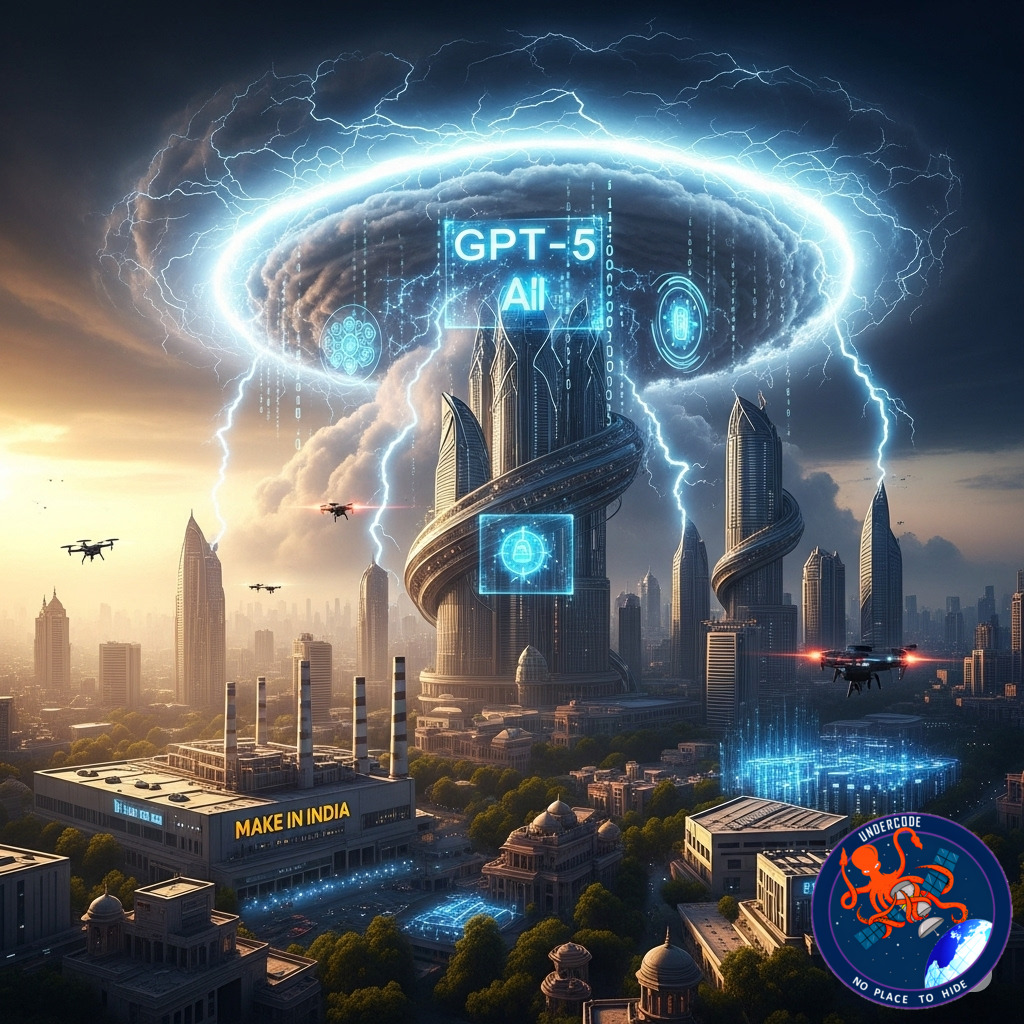
The unveiling of GPT-5 by OpenAI marks a milestone in the evolution of artificial intelligence — and a potential shakeup for one of the world’s largest IT service industries. India’s \$283 billion IT sector, already feeling the tremors of automation, now faces a more formidable disruptor. According to analysts, GPT-5’s advanced coding and problem-solving capabilities could erode revenues for Indian IT giants by 2–3% over the next few years, reshaping how the sector operates and earns.
With a global reputation for providing large-scale software development and customer support, India’s IT industry has long thrived on its human capital. But in a world where AI can replicate — and often outperform — repetitive coding tasks, the traditional “armies of engineers” model is under siege. GPT-5 promises better reasoning, higher accuracy, fewer errors, and more efficient code, making it not just a tool, but a catalyst for transformation. For industry leaders, this isn’t just a tech upgrade — it’s a survival challenge.
the Original Report
OpenAI’s GPT-5, described as “our best AI system yet,” has the potential to disrupt India’s IT services sector, according to a Kotak Institutional Equities report cited by the Economic Times. With enhanced capabilities in coding, math, writing, and logical reasoning, GPT-5 significantly reduces hallucinations (by 65%, per Gartner) and offers lower costs and greater reliability for enterprise applications.
Indian IT companies — such as Tata Consultancy Services, Infosys, HCLTech, and Wipro — could see a 2–3% dip in revenues over the next 2–3 years. The disruption is expected to be most visible in software services and customer service outsourcing, where large teams of coders have traditionally been the backbone. AI-driven productivity gains of 20–40% are already reducing the need for human engineers and eroding people-based billing models.
Industry experts, including Phil Fersht of HFS Research, warn that companies reliant on manual coding at scale will face severe margin pressure, as clients demand lower rates to match AI productivity gains. Within the next 12–18 months, delivery models will need to shift toward AI-augmented, high-value services to remain competitive.
Gartner analysts note that GPT-5’s reduced API costs and improved reliability make it a more viable enterprise tool, but careful governance and integration are still required. GPT-5 is not artificial general intelligence and still has limitations, including the potential for harmful misuse.
Both Gartner and Kotak agree that while generative AI adoption will create short-term challenges, it also opens the door for long-term opportunities in AI-enabled services. However, the transition will take time, with a likely lag before the benefits outweigh the losses.
What Undercode Say:
The arrival of GPT-5 is more than a product launch — it’s a clear signal that the future of IT services will be defined by AI-first strategies. India’s IT industry, built on cost-efficient manpower, is now confronted with a technology that directly reduces the need for that manpower.
For decades, the competitive edge was labor scale: more coders meant faster delivery and bigger contracts. Now, GPT-5 threatens to compress what hundreds of engineers could do in weeks into mere hours — at a fraction of the cost. This isn’t just a productivity upgrade; it’s an economic paradigm shift.
In the short term, the industry will face inevitable turbulence:
Revenue Pressure: Clients will negotiate harder, knowing AI can cut costs drastically.
Skill Redundancy: Routine coding jobs — once entry points for thousands of graduates — may vanish or shrink drastically.
Business Model Collapse: The “billable hours” metric loses relevance when AI handles repetitive workloads in seconds.
However, survival and growth are still possible if companies pivot quickly:
- AI-Augmented Services: Instead of competing with GPT-5, integrate it into workflows to enhance value.
- High-Value Consulting: Offer strategy, compliance, and integration expertise — areas AI cannot fully automate.
- Vertical Specialization: Focus on niche domains (e.g., cybersecurity, AI ethics, data governance) where human oversight remains critical.
- Outcome-Based Pricing: Shift from manpower-based billing to results-driven contracts, reflecting AI’s speed and efficiency.
A key challenge will be reskilling at scale. The Indian IT industry employs millions, and retraining such a vast workforce in advanced AI skills will be costly and complex. Those who fail to adapt risk becoming obsolete, while early movers could capture entirely new market segments.
In essence, GPT-5 accelerates a trend that was already underway: the automation of knowledge work. The next two years will determine whether India’s IT sector emerges leaner and more profitable — or fractured and diminished.
🔍 Fact Checker Results
✅ GPT-5 has a reported 65% reduction in hallucinations compared to GPT-4 (Gartner).
✅ Kotak Institutional Equities projects a 2–3% revenue decline for Indian IT over 2–3 years due to GenAI.
❌ GPT-5 is not artificial general intelligence — it still has functional and ethical limitations.
📊 Prediction
Within 18 months, the Indian IT industry will see mass restructuring. The bottom tier of coding jobs will shrink sharply, but companies that rapidly adopt GPT-5 into their delivery models could offset revenue losses by up to 50%. By 2027, the sector’s leaders will be those who pivoted to AI-integrated consulting, while laggards risk a steep decline in global relevance.
I can also expand this with more economic modeling on the projected revenue shifts if you want a deeper forecast.
🕵️📝✔️Let’s dive deep and fact‑check.
References:
Reported By: timesofindia.indiatimes.com
Extra Source Hub:
https://www.reddit.com
Wikipedia
OpenAi & Undercode AI
Image Source:
Unsplash
Undercode AI DI v2
🔐JOIN OUR CYBER WORLD [ CVE News • HackMonitor • UndercodeNews ]
📢 Follow UndercodeNews & Stay Tuned:
𝕏 formerly Twitter 🐦 | @ Threads | 🔗 Linkedin | 🦋BlueSky | 🐘Mastodon


