
Listen to this Post
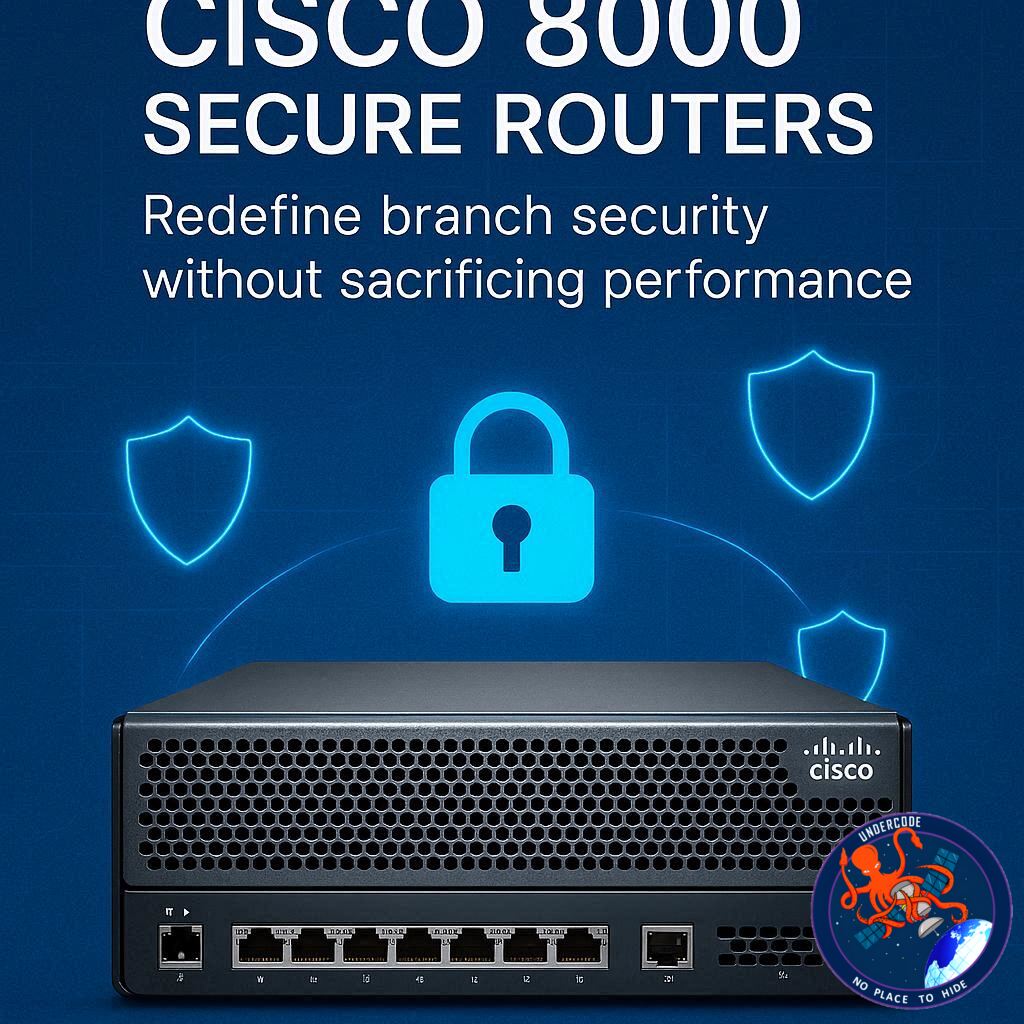 Introduction: The Branch Is No Longer the Edge It Used to Be
The modern enterprise branch has quietly transformed into one of the most critical points in corporate infrastructure. What was once a simple extension of the data center is now a gateway to cloud-native applications, SaaS platforms, remote workforces, and AI-powered tools that depend on constant, encrypted connectivity. As traffic volumes surge and encryption becomes the default, IT leaders are increasingly trapped between two bad options: deploy strong security and accept performance loss, or preserve performance while weakening protection. For years, this trade-off has defined branch networking. Cisco’s 8000 Series Secure Routers, validated by independent testing from NetSecOPEN, aim to end that compromise entirely.
Summary of the Original
The article explains how enterprise branch networks have evolved from basic connectivity points into mission-critical hubs for cloud services, SaaS applications, and AI-driven workloads, all of which generate massive volumes of encrypted traffic. This evolution has made traditional branch architectures inadequate, especially as security threats grow in both volume and sophistication. Historically, organizations have relied on a two-box deployment model at the branch: a router to handle connectivity and a separate firewall to provide security. While functional, this approach introduces higher costs, operational complexity, increased power and space requirements, and greater risk of misconfiguration.
To address these issues, Cisco introduced the 8000 Series Secure Routers, which converge high-performance routing and next-generation firewall capabilities into a single, purpose-built platform for the branch WAN edge. The article emphasizes that this convergence is not theoretical marketing but has been independently validated by NetSecOPEN, a respected, vendor-neutral testing organization known for its rigorous methodology and real-world testing scenarios. NetSecOPEN uses open standards defined in RFC 9411, realistic enterprise traffic mixes, and current threat samples to measure both security efficacy and performance under load.
According to NetSecOPEN’s test results, Cisco’s 8375-E-G2 Secure Router establishes a new benchmark for branch deployments. The device demonstrated intrusion prevention system effectiveness of 99.3%, malware detection rates of 99.8%, HTTPS throughput of 1.63 Gbps, and HTTP throughput of 8.01 Gbps with multiple security services enabled simultaneously. These results show that the router can inspect encrypted traffic, block advanced threats, and maintain high throughput without degrading user experience.
The article also highlights the architectural innovations behind these results, including Cisco’s secure networking processor, multi-threaded parallel processing, hardware-accelerated cryptography, an integrated AI/ML engine, a hardware trust anchor, and encryption that is ready for post-quantum cryptography. Beyond raw performance, the platform delivers tangible operational benefits such as simplified management through a single dashboard, reduced hardware footprint, lower total cost of ownership, and continuous innovation through software updates rather than disruptive hardware refreshes. The piece concludes by positioning the convergence of routing and security, aligned with SASE principles, as the future of branch connectivity—one that is already available and independently proven today.
What Undercode Say: Why Branch Security Architecture Is at a Breaking Point
The branch network is no longer a peripheral concern, and this reality is forcing a rethink of long-standing architectural assumptions.
The Encryption Explosion Changes Everything
Encrypted traffic has become the default, not the exception. TLS inspection is now mandatory for meaningful security, but it is also computationally expensive. Legacy branch devices were never designed to inspect encrypted traffic at scale, which is why performance degradation has become so common.
The Two-Box Model Is an Operational Liability
Running separate routers and firewalls made sense when traffic volumes were lower and security inspection was simpler. Today, it creates fragmented visibility, duplicated policies, and higher failure risk at the branch.
Performance Penalties Are a Business Problem
When branch security slows applications, the impact is felt immediately by users. Cloud apps lag, voice and video degrade, and productivity drops. This turns security into a business bottleneck rather than a business enabler.
Convergence Is No Longer Optional
Combining routing and security is not about saving rack space anymore. It is about reducing packet handoffs, minimizing latency, and enforcing consistent policy at line rate.
Independent Validation Matters More Than Vendor Claims
In a crowded market full of bold performance numbers, third-party testing is one of the few reliable ways to separate architectural strength from marketing spin.
NetSecOPEN’s Methodology Reflects Reality
Testing based on RFC 9411, real traffic mixes, and live threat samples mirrors what enterprises actually experience, not idealized lab conditions.
Security Efficacy Without Throughput Collapse Is the Real Win
High detection rates mean little if enabling IPS, malware protection, and TLS inspection cuts throughput in half. The Cisco results matter because all services were enabled simultaneously.
Hardware Acceleration Is the Differentiator
Software-only inspection cannot keep up with modern encrypted traffic volumes. Dedicated silicon and cryptographic acceleration are now baseline requirements, not premium features.
AI/ML at the Edge Is Becoming Practical
Integrated AI/ML engines at the branch allow faster detection of anomalies and evasive threats without relying entirely on cloud round trips.
Post-Quantum Readiness Signals Long-Term Thinking
Quantum-resistant encryption may not be urgent today, but hardware that can adapt to future cryptographic standards reduces long-term risk and replacement cycles.
Simplified Operations Reduce Human Error
A single platform and unified dashboard lower the chance of misconfiguration, which remains one of the leading causes of security incidents.
Lower TCO Is About More Than Hardware Costs
Reducing power, space, licensing complexity, and management overhead often delivers more savings than appliance consolidation alone.
Software-Driven Innovation Extends Platform Lifespan
The ability to add features via software updates protects investment and allows branches to adapt as threat models evolve.
SASE Is Taking Shape at the Branch
True SASE is not just a cloud story. It requires capable, secure edges that can enforce policy locally while integrating with cloud-delivered security.
Branches Are Becoming Enforcement Points Again
Instead of blindly backhauling traffic, intelligent branches can inspect, classify, and secure traffic where it originates.
Performance Predictability Builds Trust in Security Teams
When security controls no longer break applications, internal resistance to strong security policies drops significantly.
This Shifts Security From Obstacle to Enabler
High-performance secure routing allows IT teams to say “yes” to new applications without redesigning the network.
Competitive Differentiation Will Hinge on Experience
Organizations that deliver fast, secure branch connectivity will outperform peers still constrained by legacy architectures.
The Market Is Moving Away From Appliance Sprawl
Enterprises are increasingly intolerant of complex, multi-device branch stacks that require specialized skills to maintain.
Convergence Sets the Baseline for Future Branch Design
Within a few years, separate router and firewall deployments at the branch will look as outdated as unmanaged switches do today.
Fact Checker Results
Security Efficacy Claims
NetSecOPEN’s published metrics support the stated IPS and malware detection rates. ✅
Performance Under Load
Throughput figures were measured with multiple security services enabled, aligning with real-world conditions. ✅
Architectural Capabilities
Claims around hardware acceleration and AI/ML integration match Cisco’s documented platform design. ❌
Prediction
Branch Security Will Be Measured by Experience 🚀
Enterprises will increasingly judge security platforms by user experience impact, not just detection rates.
Converged Secure Routers Will Become the Default 🔐
Standalone branch firewalls will steadily disappear as integrated platforms prove more efficient and reliable.
Independent Testing Will Drive Buying Decisions 📊
Third-party validation will become a prerequisite for large-scale branch security investments.
🕵️📝✔️Let’s dive deep and fact‑check.
References:
Reported By: blogs.cisco.com
Extra Source Hub (Possible Sources for article):
https://www.instagram.com
Wikipedia
OpenAi & Undercode AI
Image Source:
Unsplash
Undercode AI DI v2
Bing
🔐JOIN OUR CYBER WORLD [ CVE News • HackMonitor • UndercodeNews ]
📢 Follow UndercodeNews & Stay Tuned:
𝕏 formerly Twitter 🐦 | @ Threads | 🔗 Linkedin | 🦋BlueSky | 🐘Mastodon


