
Listen to this Post
Introduction: A Storm Behind the Screens
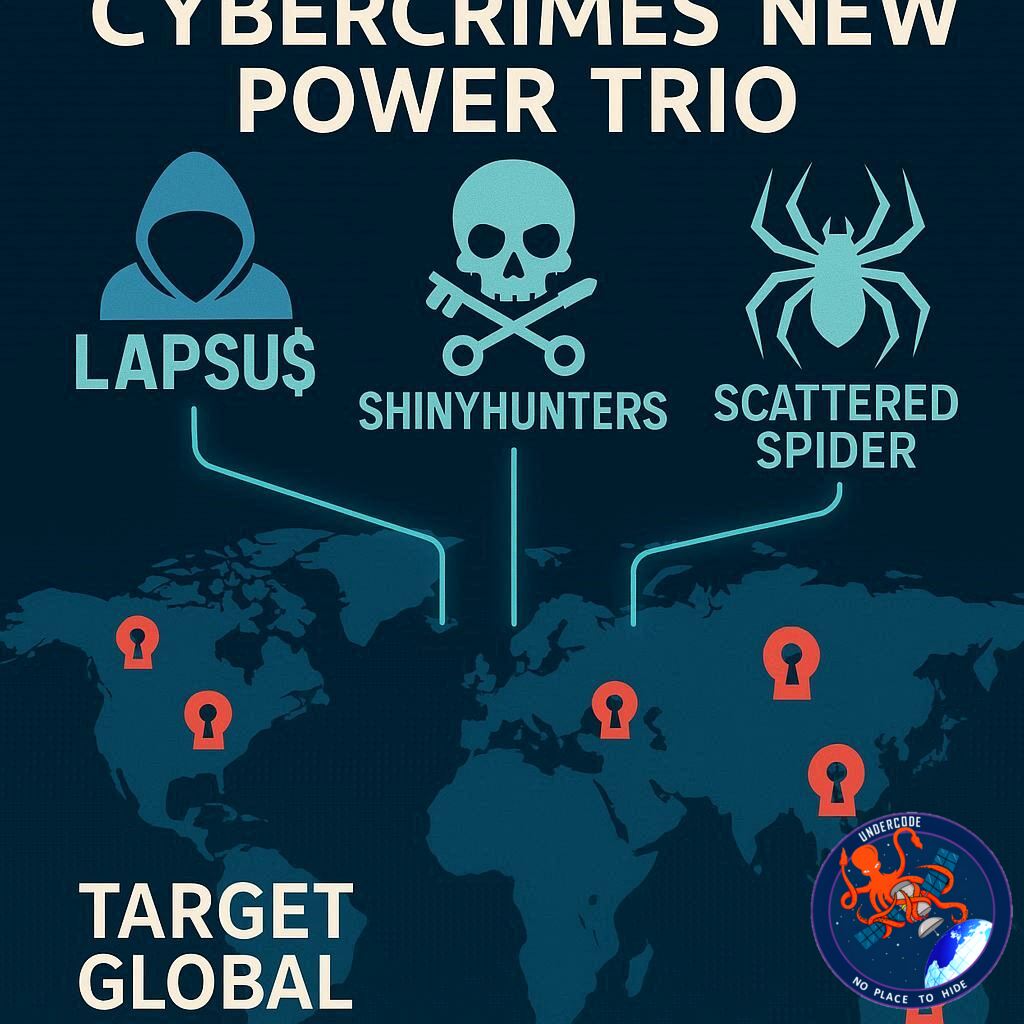
The digital underworld is evolving faster than most enterprises can adapt. Just when corporations believed the “retirement” announcements of infamous hacking groups might signal relief, fresh intelligence proves otherwise. A new Resecurity report has uncovered a sprawling global cybercrime campaign spearheaded by the combined forces of LAPSUS$, ShinyHunters, and Scattered Spider—an alliance now branded as the “Trinity of Chaos.” Their operations expose not only corporate vulnerabilities but also the silent battles waged in boardrooms as companies scramble to contain extortion, breaches, and massive reputational damage. This is not just another hacking headline; it signals a fundamental shift in how modern cybercrime syndicates operate—louder, bolder, and far more dangerous.
The Expanding Shadow of the Trinity of Chaos
Resecurity has revealed that the alliance of LAPSUS$, ShinyHunters, and Scattered Spider is conducting a coordinated wave of cyberattacks. Despite earlier claims of retirement, these groups are alive and thriving, leveraging extortion, data theft, and digital coercion to maximize profits.
Silent Extortion Campaigns Against Global Enterprises
One of the most alarming aspects of this campaign is its private extortion strategy. Rather than public leaks, the groups are opting to quietly pressure companies into compliance. This secrecy amplifies the danger, leaving the public—and even regulators—unaware of the full scope of damage.
Major Industries in the Crosshairs
The affected victims span a wide range of industries, including Fortune 100 firms, aviation, finance, technology, retail, and automotive sectors. High-profile names like AT&T, Salesforce, Qantas, and Jaguar Land Rover (JLR) are already linked to ongoing or past incidents, suggesting that the scale is larger than acknowledged.
Ongoing Attacks Still Emerging
Analysts emphasize that the wave of breaches is still unfolding. Many victims are only now realizing they’ve been compromised, with new incidents expected to surface in the coming months. The fact that these groups rely on notoriety and fear rather than silence makes the campaign particularly unpredictable.
UK Cyber Monitoring Centre Raises Alarm
The UK’s Cyber Monitoring Centre (CMC) categorized the recent cyberattacks on Marks & Spencer and Co-op as Category 2 events—signaling serious national concern. The financial damage is projected between £270M and £440M, numbers that highlight the devastating economic consequences of modern cybercrime.
Government Bailouts and Business Fallout
The UK government has stepped in with a £1.5 billion ($2 billion) loan guarantee for Jaguar Land Rover (JLR), underscoring the catastrophic impact cyberattacks can have on large corporations. The bailout illustrates that cyber threats now ripple beyond IT departments into national economic stability.
Tata Consultancy Services Under Scrutiny
The Guardian revealed that JLR, owned by Tata Group, relies on Tata Consultancy Services (TCS) for IT and cybersecurity. This same provider works with Marks & Spencer and Co-op, raising concerns about whether a single vulnerability within TCS’s framework is being exploited across multiple enterprises by Scattered Spider.
A Developing Global Threat
Resecurity concludes that the Trinity of Chaos represents one of the most pressing threats in the current cybercrime landscape. Their activity is ongoing, their reach spans continents, and the collateral damage may be far greater than what’s visible today.
What Undercode Say:
The alliance of LAPSUS$, ShinyHunters, and Scattered Spider should not be underestimated. These groups have shown adaptability, resourcefulness, and a flair for publicity that differentiates them from typical cybercrime gangs. Instead of operating quietly in the shadows, they thrive on chaos and leverage public fear as a tool of negotiation.
From an economic perspective, the ripple effects of such attacks are massive. When government bailouts are needed to stabilize a company after a hack, it signals that cybersecurity has transcended IT—it’s now a matter of national security. JLR’s £1.5 billion loan guarantee proves that even legacy manufacturers are deeply vulnerable to digital sabotage.
The targeting of multiple enterprises serviced by Tata Consultancy Services raises a deeper issue: supply chain cybersecurity. If a service provider is compromised, every client linked to them inherits the same risk. This magnifies the stakes, especially for critical sectors like retail and automotive, which depend heavily on external IT contractors.
Another concerning element is the reliance on extortion over public leaks. While this tactic avoids immediate scandal, it fosters long-term insecurity. Companies may quietly pay ransoms, reinforcing the criminals’ business model and leaving shareholders, employees, and customers in the dark about the true level of risk.
What also makes this “Trinity of Chaos” unique is its demographic composition. Analysts often describe them as “Gen Z adversaries,” suggesting a younger, more digitally native generation of hackers. Their ability to mobilize rapidly, exploit social engineering, and weaponize reputations creates a new style of cybercrime—less about quiet theft and more about chaotic disruption.
It is also important to recognize that the narrative of “retirement” was likely deliberate misinformation. By claiming to withdraw, these groups lowered corporate defenses, only to strike again at scale. Such psychological tactics blur the lines between hacking and manipulation, creating confusion in both media reporting and corporate strategy.
Looking ahead, businesses must invest not only in stronger digital defenses but also in organizational resilience. Cyberattacks are no longer just about protecting servers—they disrupt supply chains, public trust, and even national economies. Future countermeasures must blend technical innovation, legal reforms, and geopolitical cooperation.
Ultimately, the Trinity of Chaos is not a passing trend. It symbolizes the next stage of cybercrime, where alliances between groups amplify power, reach, and profitability. If left unchecked, these collaborations could become the blueprint for global cyber warfare in the corporate realm.
Fact Checker Results
✅ Multiple credible reports confirm ongoing LAPSUS$, ShinyHunters, and Scattered Spider activities.
❌ The “retirement” narrative is misleading; evidence shows they remain active.
✅ UK financial estimates and government interventions have been independently verified.
Prediction
The Trinity of Chaos will escalate beyond extortion and ransomware, potentially targeting critical infrastructure next. With global economies already destabilized by cyberattacks, the coming years may see cybercrime alliances evolve into quasi-cartels, capable of influencing markets, governments, and public confidence at unprecedented levels. 🔮
🕵️📝✔️Let’s dive deep and fact‑check.
References:
Reported By: securityaffairs.com
Extra Source Hub:
https://www.linkedin.com
Wikipedia
OpenAi & Undercode AI
Image Source:
Unsplash
Undercode AI DI v2
🔐JOIN OUR CYBER WORLD [ CVE News • HackMonitor • UndercodeNews ]
📢 Follow UndercodeNews & Stay Tuned:
𝕏 formerly Twitter 🐦 | @ Threads | 🔗 Linkedin | 🦋BlueSky | 🐘Mastodon


