
Listen to this Post
Introduction: A Turning Point for Cybersecurity Leadership
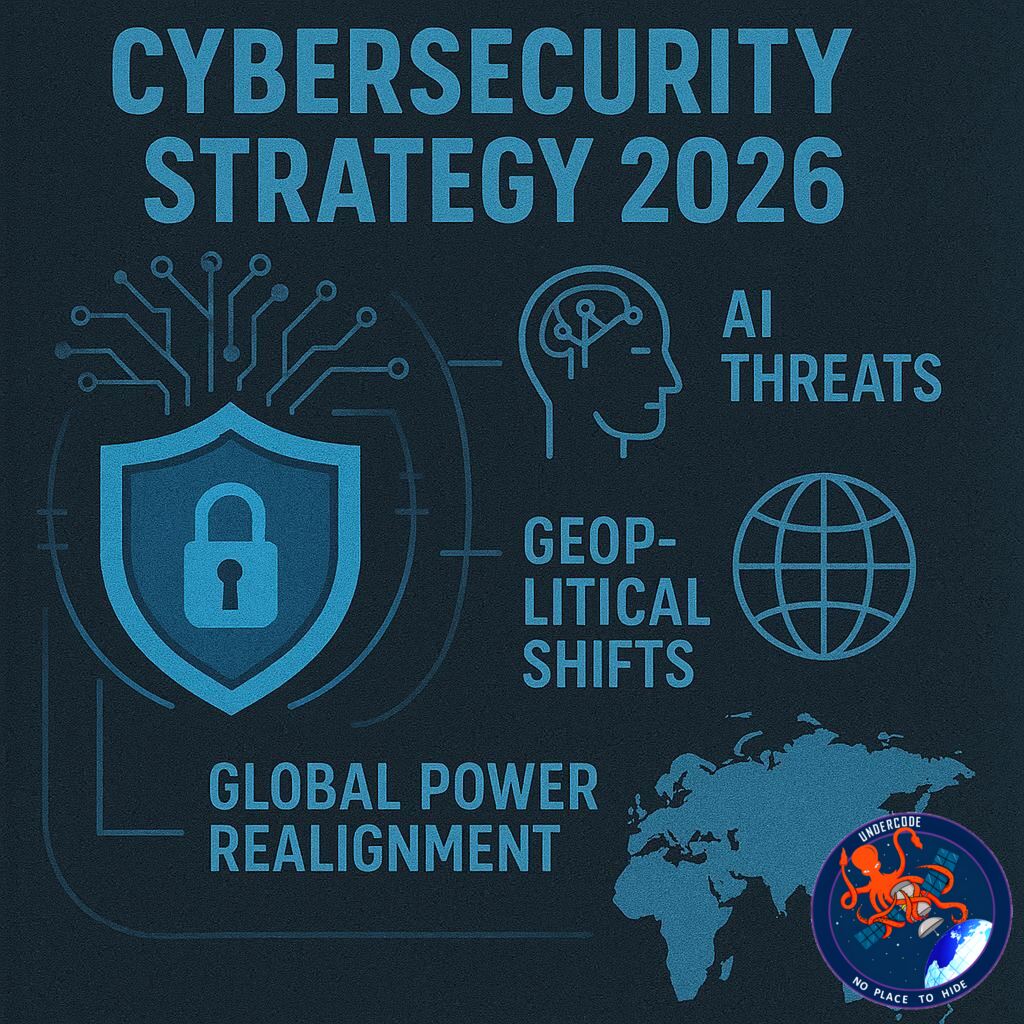
The RSAC 2026 Conference revealed a cybersecurity landscape that feels less like a technical battlefield and more like a geopolitical chessboard. Artificial intelligence is no longer a distant disruptor, it is actively reshaping both offensive and defensive cyber capabilities. At the same time, global leadership dynamics are shifting in unexpected ways, with traditional power centers stepping back and new players stepping forward. The result is a fragile, fast-evolving ecosystem where innovation, risk, and international politics collide in real time.
The Convergence of AI, Geopolitics, and Cybersecurity Strategy
RSAC 2026 highlighted a profound transformation in cybersecurity, where artificial intelligence, global politics, and private-sector innovation are deeply intertwined. One of the most striking developments was the absence of strong federal leadership from the United States, a sharp contrast to previous years when top government officials actively engaged with industry leaders. This absence created a visible vacuum that did not go unnoticed.
Into that vacuum stepped the European Union, positioning itself as a more proactive force in shaping cybersecurity policy and regulation. EU representatives emphasized structured governance, introducing frameworks aimed at cyber resilience and AI oversight. Unlike the more hands-off approach seen in the US, European regulators are pursuing a deliberate strategy focused on clear rules, long-term stability, and collaboration with private enterprises.
Meanwhile, cybersecurity professionals are facing mounting pressure as AI becomes both a powerful tool and a dangerous liability. Chief Information Security Officers are now expected to enable innovation while simultaneously preventing new vulnerabilities. This balancing act is becoming increasingly complex, especially as organizations rush to adopt AI for efficiency gains without fully understanding the risks involved.
The rise of AI-driven threats adds another layer of urgency. Attackers are leveraging machine-speed capabilities to launch large-scale, adaptive cyberattacks. These include advanced phishing campaigns and evolving malware capable of modifying itself in real time to bypass defenses. Traditional security models are struggling to keep pace, forcing defenders to adopt automation and AI-driven countermeasures just to remain competitive.
Beyond immediate threats, the conversation also turned toward the future. Quantum computing looms on the horizon as a potential disruptor of current encryption standards. Organizations are being urged to begin auditing their systems and preparing for a post-quantum world, even though many lack the resources or urgency to act decisively.
At the same time, cybersecurity is increasingly intersecting with physical conflict. Discussions at RSAC suggested that cyber capabilities will play a growing role in kinetic warfare, particularly in areas like drone security and critical infrastructure protection. This marks a significant shift, where cyber is no longer just about data breaches but about real-world consequences.
Despite the uncertainty, there is a sense of resilience within the cybersecurity community. Professionals in the field are accustomed to rapid change and high-pressure environments. While the challenges are significant, there is confidence that the industry will adapt, as it has done repeatedly in the past.
What Undercode Say:
The Leadership Vacuum Is More Dangerous Than the Threats
What stands out most is not the rise of AI threats, but the fragmentation of leadership. Cybersecurity has always depended on coordination between governments and the private sector. When a major player like the US steps back, even temporarily, the entire system becomes less predictable. The EU stepping in is not just a policy shift, it signals a redistribution of global cyber influence.
AI Is Not the Problem, Misuse Is
There is a tendency to frame AI as the villain, but the real issue lies in uncontrolled adoption. Organizations are integrating AI tools faster than they can secure them. The example of sensitive financial data being uploaded into generative AI platforms is not an anomaly, it is a preview of systemic risk. Human behavior remains the weakest link, even in an AI-driven world.
CISOs Are Being Set Up to Fail
CISOs are now expected to drive innovation, cut costs, and eliminate risk simultaneously. These goals are fundamentally in conflict. You cannot aggressively deploy new technologies while maintaining perfect security. This contradiction creates unrealistic expectations at the executive level, turning cybersecurity leaders into scapegoats when things go wrong.
Regulation vs Innovation Is a False Debate
The contrast between US minimalism and EU regulation raises an important question: does regulation actually slow innovation? History suggests otherwise. Structured environments often create more sustainable innovation because they reduce uncertainty. The EU approach may initially seem restrictive, but it could ultimately produce more resilient systems.
Machine-Speed Warfare Is Already Here
The idea that cyberattacks are happening at machine speed is no longer theoretical. Automation is already enabling attackers to scale operations beyond human capability. Defenders are being forced into the same arms race, where response time is measured in milliseconds. This fundamentally changes the nature of cybersecurity from reactive to autonomous.
Quantum Computing Is the Silent Crisis
Unlike AI, which is loud and visible, quantum computing is a quiet but potentially catastrophic threat. Most organizations are unprepared, not because they do not understand the risk, but because the transition is complex and expensive. When quantum capabilities become mainstream, the scramble to adapt could expose massive vulnerabilities.
Cybersecurity Is Expanding Into Physical Reality
The integration of cyber into kinetic warfare is a turning point. Securing drones, infrastructure, and military systems introduces a level of risk that goes far beyond data loss. Cybersecurity is becoming a matter of physical safety and national security, not just IT governance.
The Industry’s Confidence Is Its Greatest Strength
Despite everything, the cybersecurity sector remains remarkably resilient. This confidence is not naive, it is built on decades of adapting to constant change. The professionals in this field understand that chaos is part of the environment, and they are uniquely equipped to operate within it.
Fact Checker Results
✅ AI-driven cyber threats such as adaptive malware and automated phishing are actively emerging and documented in industry reports.
✅ The European Union is advancing cybersecurity and AI regulations, including cyber resilience frameworks expected by 2027.
❌ Quantum computing is not yet capable of breaking mainstream encryption at scale, but preparation is strongly recommended.
Prediction
📊 AI-powered cyberattacks will shift from mass phishing to fully autonomous intrusion systems within 12–24 months.
📊 The European Union will become a dominant global regulator in cybersecurity standards, influencing international compliance models.
📊 Organizations that fail to adopt post-quantum encryption strategies early will face critical vulnerabilities once quantum breakthroughs accelerate.
🕵️📝✔️Let’s dive deep and fact‑check.
References:
Reported By: www.darkreading.com
Extra Source Hub (Possible Sources for article):
https://www.quora.com/topic/Technology
Wikipedia
OpenAi & Undercode AI
Image Source:
Unsplash
Undercode AI DI v2
Bing
🔐JOIN OUR CYBER WORLD [ CVE News • HackMonitor • UndercodeNews ]
📢 Follow UndercodeNews & Stay Tuned:
𝕏 formerly Twitter 🐦 | @ Threads | 🔗 Linkedin | 🦋BlueSky | 🐘Mastodon


