
Listen to this Post
Introduction: A New Era of Deception in Cyber Warfare
Cyber threats are evolving at a pace that outstrips traditional defenses, and the latest campaign attributed to UAC-0255 highlights a dangerous shift in tactics. By impersonating a trusted national cybersecurity authority, attackers exploited institutional trust at scale, targeting nearly one million users with carefully crafted phishing emails. The operation reveals not just technical sophistication, but a deeper psychological manipulation strategy, where credibility becomes the primary weapon.
the Phishing Operation and Malware Deployment
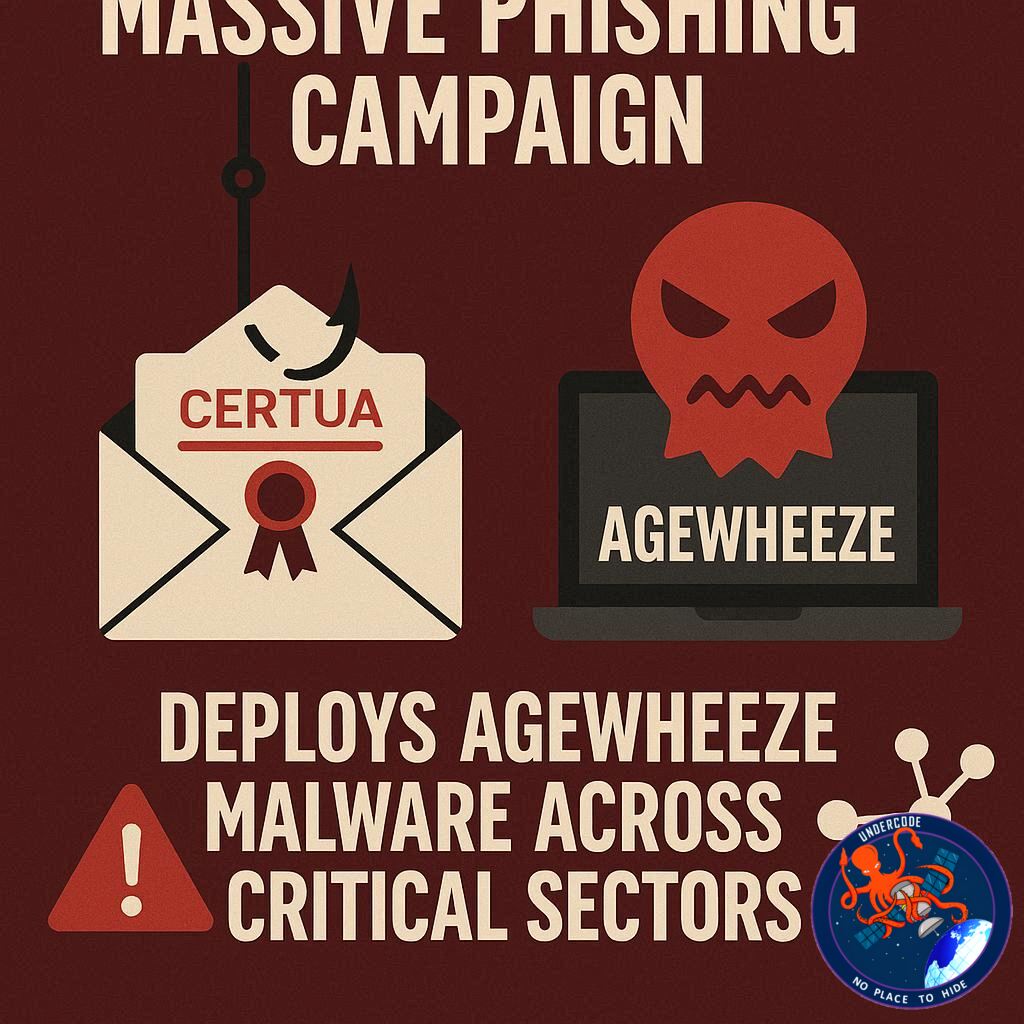
A large-scale phishing campaign conducted by the threat actor known as UAC-0255 targeted approximately one million recipients by masquerading as CERT-UA, Ukraine’s official cyber incident response team. The attackers distributed emails that appeared legitimate, urging recipients to download a password-protected archive hosted on the Files.fm platform. These archives, labeled as security tools such as “CERT_UA_protection_tool.zip” and “protection_tool.zip,” were presented as essential defensive software.
Once downloaded and executed, the files installed a malicious program identified as AGEWHEEZE, a multifunctional remote access tool. Despite its appearance as legitimate software, AGEWHEEZE granted attackers extensive control over infected systems. It enabled remote command execution, file manipulation, screen capturing, input monitoring, and management of processes and services. The malware ensured persistence by embedding itself into system registries, startup processes, and scheduled tasks, often hiding within AppData directories to avoid detection.
The communication between infected machines and the attackers’ command-and-control infrastructure was conducted via WebSockets, allowing continuous and stealthy interaction. Additional capabilities included clipboard data theft and full system command execution, making it a powerful espionage and control tool.
The campaign specifically targeted high-value sectors, including government agencies, medical institutions, security firms, educational organizations, financial institutions, and software development companies. This wide targeting scope suggests a strategic intent to gather intelligence and potentially disrupt critical infrastructure.
To reinforce credibility, the attackers created a fake website mimicking the official CERT-UA portal. Hosted under a deceptive domain, the site promoted the malicious “security tool” and included links to a Telegram channel that openly claimed responsibility for the campaign. The infrastructure behind the operation was traced to servers hosted on OVH, featuring a login interface labeled “The Cult,” which contained Russian-language elements, hinting at possible geographic or linguistic ties.
Interestingly, the fake website appeared to be AI-generated, reflecting a growing trend where attackers leverage artificial intelligence to rapidly produce convincing phishing assets. References to a group called “CYBER SERP,” active since late 2025, were embedded within the campaign. This group claimed responsibility for distributing the phishing emails and infecting over 200,000 devices, although these figures remain unverified.
Despite the масштаб of the operation, its real-world impact was limited. Only a small number of infections were confirmed, primarily within educational institutions. CERT-UA quickly intervened, containing the threat and preventing broader damage. The response was supported by Ukrainian telecom providers, who played a key role in sharing threat intelligence and mitigating the attack.
This incident underscores the growing accessibility of cyberattack tools and techniques, particularly with the integration of AI. It also highlights the urgent need for organizations to strengthen their defenses by reducing attack surfaces and implementing robust security measures such as application control systems and endpoint protections.
What Undercode Say: The Strategic Shift Toward Trust Exploitation
The most alarming aspect of this campaign is not the malware itself, but the method of delivery. Impersonating a national cybersecurity authority represents a calculated move to weaponize trust. In traditional phishing campaigns, attackers rely on urgency or curiosity. Here, they leveraged authority, which is far more powerful and harder to question, especially within institutional environments.
AGEWHEEZE, while technically not groundbreaking compared to other remote access tools, becomes significantly more dangerous in this context. Its effectiveness is amplified by the legitimacy of the delivery mechanism. When users believe they are installing protective software, they are less likely to question permissions, ignore warnings, or verify sources. This psychological bypass is what makes the campaign truly effective.
The use of AI-generated infrastructure introduces another layer of concern. Creating realistic websites, documentation, and communication templates once required time and expertise. Now, attackers can automate this process, producing scalable and highly convincing phishing ecosystems in a fraction of the time. This lowers the barrier to entry for cybercrime and increases the frequency of such campaigns.
The inclusion of Telegram channels as part of the attack ecosystem is also noteworthy. It signals a shift toward more open and even performative cybercrime, where threat actors not only execute attacks but also publicize them to build reputation or intimidate targets. This blending of operational activity with propaganda suggests a hybrid model of cyber warfare and psychological operations.
Another critical observation is the targeting strategy. By focusing on sectors like healthcare, education, and government, the attackers aimed at environments where cybersecurity awareness may vary and where operational continuity is critical. Even a small number of successful infections in these sectors can lead to disproportionate consequences.
The limited impact of the campaign should not be misinterpreted as a failure. Instead, it reflects effective incident response and coordination by CERT-UA and supporting organizations. However, it also serves as a warning. The same tactics, refined and redeployed, could yield far more damaging results in the future.
From a defensive standpoint, this incident reinforces the importance of zero-trust principles. Organizations must assume that even seemingly legitimate communications can be compromised. Verification mechanisms, restricted execution policies like AppLocker, and continuous monitoring are no longer optional but essential.
Ultimately, this campaign illustrates a transition in cyber threats from purely technical exploits to trust-based manipulation augmented by AI. The battlefield is no longer just code, but perception.
Fact Checker Results
✅ The phishing campaign impersonating CERT-UA and distributing AGEWHEEZE is confirmed by official advisories.
✅ AGEWHEEZE capabilities and persistence mechanisms align with known remote access malware behavior.
❌ Claims of over 200,000 infected devices remain unverified and likely exaggerated by attackers.
Prediction
📊 AI-assisted phishing campaigns will become more frequent and harder to detect due to automation and realism.
📊 Threat actors will increasingly impersonate trusted institutions rather than generic brands or services.
📊 Defensive strategies will shift toward behavioral analysis and zero-trust architectures to counter trust-based attacks.
▶️ Related Video (86% Match):
🕵️📝✔️Let’s dive deep and fact‑check.
References:
Reported By: securityaffairs.com
Extra Source Hub (Possible Sources for article):
https://www.reddit.com
Wikipedia
OpenAi & Undercode AI
Image Source:
Unsplash
Undercode AI DI v2
Bing
🔐JOIN OUR CYBER WORLD [ CVE News • HackMonitor • UndercodeNews ]
📢 Follow UndercodeNews & Stay Tuned:
𝕏 formerly Twitter 🐦 | @ Threads | 🔗 Linkedin | 🦋BlueSky | 🐘Mastodon


