
Listen to this Post
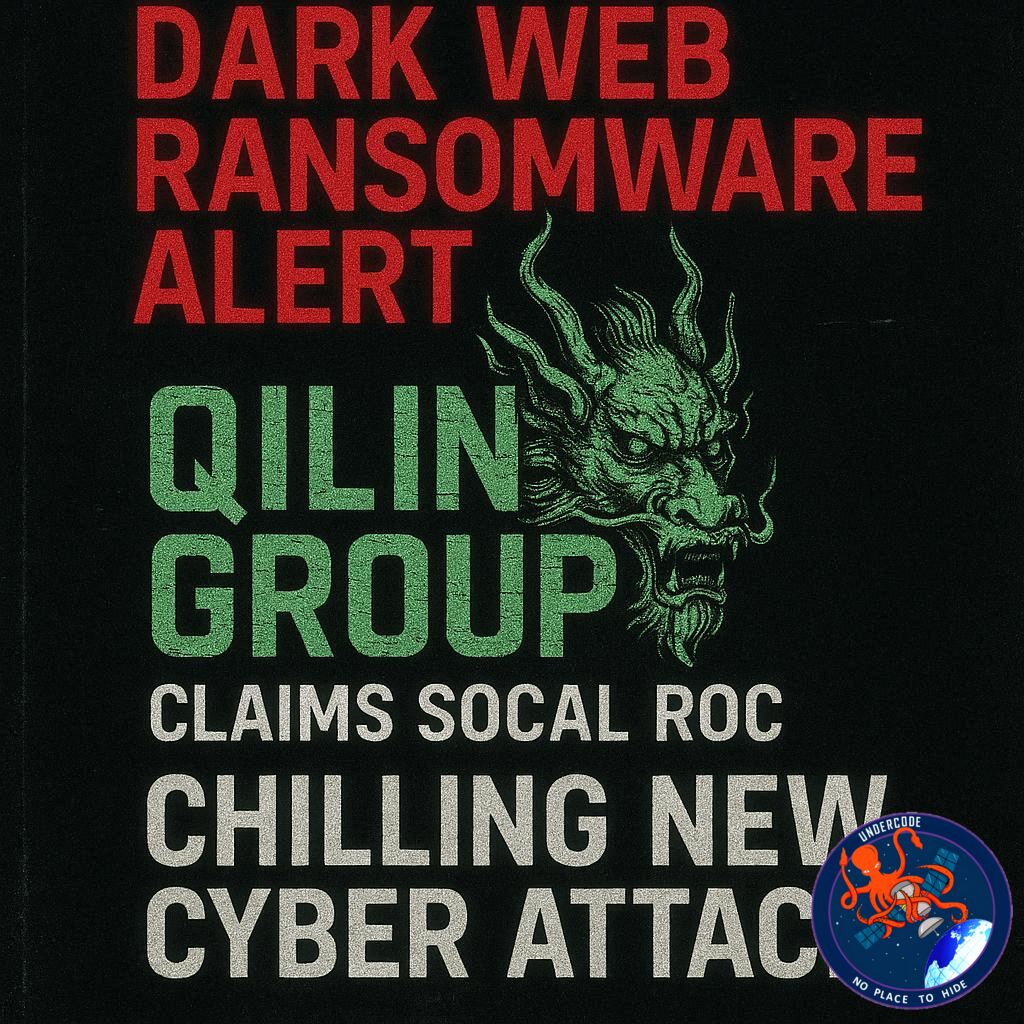
Introduction: A New Dark Web Signal Sends Shockwaves Through Cybersecurity Circles
The dark web has once again lit up with ransomware activity, and this time the spotlight falls on SoCal ROC. Threat intelligence monitors flagged a fresh claim by the Qilin ransomware group, a name increasingly associated with calculated, high-impact extortion campaigns. While the initial disclosure appeared brief and almost routine, the implications behind it are anything but ordinary. This incident reflects not only another victim added to a ransomware leak site, but also the evolving confidence of cybercriminal groups that now treat public attribution as a strategic weapon.
Incident Overview: What Was Publicly Disclosed
According to monitoring conducted by the ThreatMon Threat Intelligence Team, Qilin added SoCal ROC to its list of claimed victims on February 1, 2026. The disclosure surfaced via dark web ransomware tracking channels, indicating that the group considers the operation successful enough to publicize. As with many modern ransomware groups, the announcement itself was concise, offering minimal technical detail while maximizing reputational pressure on the victim organization.
Actor Profile: Who Is the Qilin Ransomware Group
Qilin is not among the oldest ransomware collectives, but it has rapidly built a reputation for operational discipline and selective targeting. The group typically avoids noisy, indiscriminate attacks and instead focuses on organizations that appear operationally critical or reputationally sensitive. Their presence on dark web leak sites suggests a double-extortion model, where data theft is paired with encryption to intensify leverage during negotiations.
Victim Snapshot: Understanding SoCal ROC’s Exposure
SoCal ROC operates in a regional ecosystem where availability, trust, and data integrity are essential. While public details about the internal impact remain scarce, being named on a ransomware group’s victim list alone can trigger legal, regulatory, and reputational consequences. Even before data samples are leaked, the announcement itself can disrupt operations, partnerships, and stakeholder confidence.
Timeline Clarity: When the Attack Surfaced
The timestamp attached to the disclosure—January 31, 2026—suggests that the attack or its public confirmation occurred shortly before the announcement. This timing aligns with a broader trend of ransomware groups accelerating their disclosure cycles, often publishing victim names within days of initial compromise if negotiations stall or fail.
Intelligence Source: Role of ThreatMon Monitoring
ThreatMon’s detection highlights the growing importance of continuous dark web surveillance. Rather than relying solely on victim disclosures, intelligence platforms now identify threats at the moment adversaries publicize them. This approach allows defenders, partners, and even regulators to gain early awareness of unfolding ransomware events.
the Incident: A Condensed Account of What We Know
The Qilin ransomware group publicly listed SoCal ROC as a victim following dark web ransomware activity detected by ThreatMon’s intelligence team. The disclosure, shared through monitored channels, contained minimal operational detail but served as confirmation that Qilin claims responsibility for a successful compromise. No ransom amount, stolen data samples, or negotiation status were immediately revealed, which is consistent with early-stage or pressure-based disclosures. The public timestamp places the announcement in late January 2026, reinforcing the pattern of rapid victim naming. While SoCal ROC has not publicly commented at the time of detection, the inclusion on Qilin’s victim list suggests that data encryption, exfiltration, or both may have occurred. As with similar cases, the announcement alone can initiate regulatory scrutiny, internal incident response escalation, and reputational risk management. The incident underscores how ransomware groups now treat public attribution as part of the attack lifecycle rather than a final step. It also demonstrates the value of third-party threat intelligence in surfacing incidents before official confirmation. In short, even with limited disclosed facts, the claim itself is a significant cybersecurity event with potentially far-reaching consequences.
What Undercode Say: Strategic Meaning Behind the Qilin–SoCal ROC Incident
Ransomware as Psychological Warfare
Qilin’s decision to publicly name SoCal ROC reflects how ransomware has evolved into a form of psychological warfare. The announcement is designed to create urgency, fear, and external pressure long before technical details become public. In many cases, this reputational impact is more damaging than the initial system disruption.
The Power Shift Toward Attackers
By controlling the narrative on dark web platforms, ransomware groups like Qilin dictate timing and tone. Victims are often forced into reactive communication strategies, responding to criminal claims rather than shaping their own disclosures. This asymmetry benefits attackers and complicates crisis management for organizations.
Minimal Disclosure, Maximum Leverage
Notably, Qilin released very little information about the breach. This is not accidental. By withholding specifics, the group maintains flexibility: they can escalate by leaking data later or quietly negotiate if talks resume. Silence becomes a strategic tool rather than a lack of capability.
Why Regional Organizations Are Increasingly Targeted
SoCal ROC’s appearance on a ransomware victim list fits a broader trend of attackers targeting regional or specialized organizations. These entities often hold sensitive data but may lack the cybersecurity maturity of large multinational corporations, making them attractive targets with potentially faster payout timelines.
Dark Web Visibility as a Negotiation Tactic
Public victim listings are now a standard phase in ransomware operations. They signal seriousness to the victim and credibility to other criminals. For groups like Qilin, maintaining an active, updated victim list reinforces their reputation and deters resistance from future targets.
The Intelligence Gap for the Public
From the outside, observers see only fragments of the incident. This information gap fuels speculation, media pressure, and stakeholder anxiety. Attackers exploit this uncertainty, knowing that lack of clarity often weakens an organization’s negotiating position.
Implications for Incident Response Teams
Once a victim is publicly named, incident response priorities shift. Legal teams, communications staff, and executives become as involved as technical responders. The attack moves from an IT problem to an enterprise-wide crisis.
The Role of Third-Party Monitoring
ThreatMon’s detection demonstrates how third-party intelligence has become essential for situational awareness. Organizations may learn about their own exposure from external monitors before internal investigations are complete, changing how early response decisions are made.
Reputational Risk as Collateral Damage
Even if data is never leaked, the association with a ransomware group can linger. Partners and clients may reassess trust, and competitors may quietly capitalize on perceived weakness. This secondary damage is often underappreciated in traditional risk models.
Lessons for Defensive Strategy
The SoCal ROC case reinforces the need for proactive ransomware readiness. Backup strategies, incident communication plans, and dark web monitoring should be treated as core security controls rather than optional enhancements.
The Economics Behind the Attack
Ransomware groups operate like businesses. Public disclosures are marketing, leverage, and reputation management rolled into one. Understanding this economic model is crucial for predicting attacker behavior and response patterns.
Why Silence Does Not Mean Safety
The absence of leaked data does not indicate resolution. Many ransomware cases unfold over weeks, with attackers releasing information incrementally. Early calm should not be mistaken for closure.
A Signal to the Wider Threat Landscape
Every new victim listing sends a message to the broader ecosystem: the group is active, successful, and operational. For defenders, this serves as an early warning that similar organizations may already be in the attackers’ sights.
🔍 Fact Checker Results
✅ Qilin publicly claimed SoCal ROC via dark web ransomware activity monitoring.
✅ ThreatMon is a recognized platform for tracking IOC and C2-related intelligence.
❌ No verified public evidence yet confirms the extent of data exfiltration or ransom demands.
📊 Prediction
Based on Qilin’s past behavior, additional pressure tactics are likely if negotiations do not progress. This may include partial data leaks or follow-up dark web posts. More broadly, similar regional organizations can expect increased targeting as ransomware groups continue refining high-impact, low-noise attack strategies.
🕵️📝✔️Let’s dive deep and fact‑check.
References:
Reported By: x.com
Extra Source Hub (Possible Sources for article):
https://www.facebook.com
Wikipedia
OpenAi & Undercode AI
Image Source:
Unsplash
Undercode AI DI v2
Bing
🔐JOIN OUR CYBER WORLD [ CVE News • HackMonitor • UndercodeNews ]
📢 Follow UndercodeNews & Stay Tuned:
𝕏 formerly Twitter 🐦 | @ Threads | 🔗 Linkedin | 🦋BlueSky | 🐘Mastodon


