
Listen to this Post
Introduction: A New Shockwave in the Online Dating World
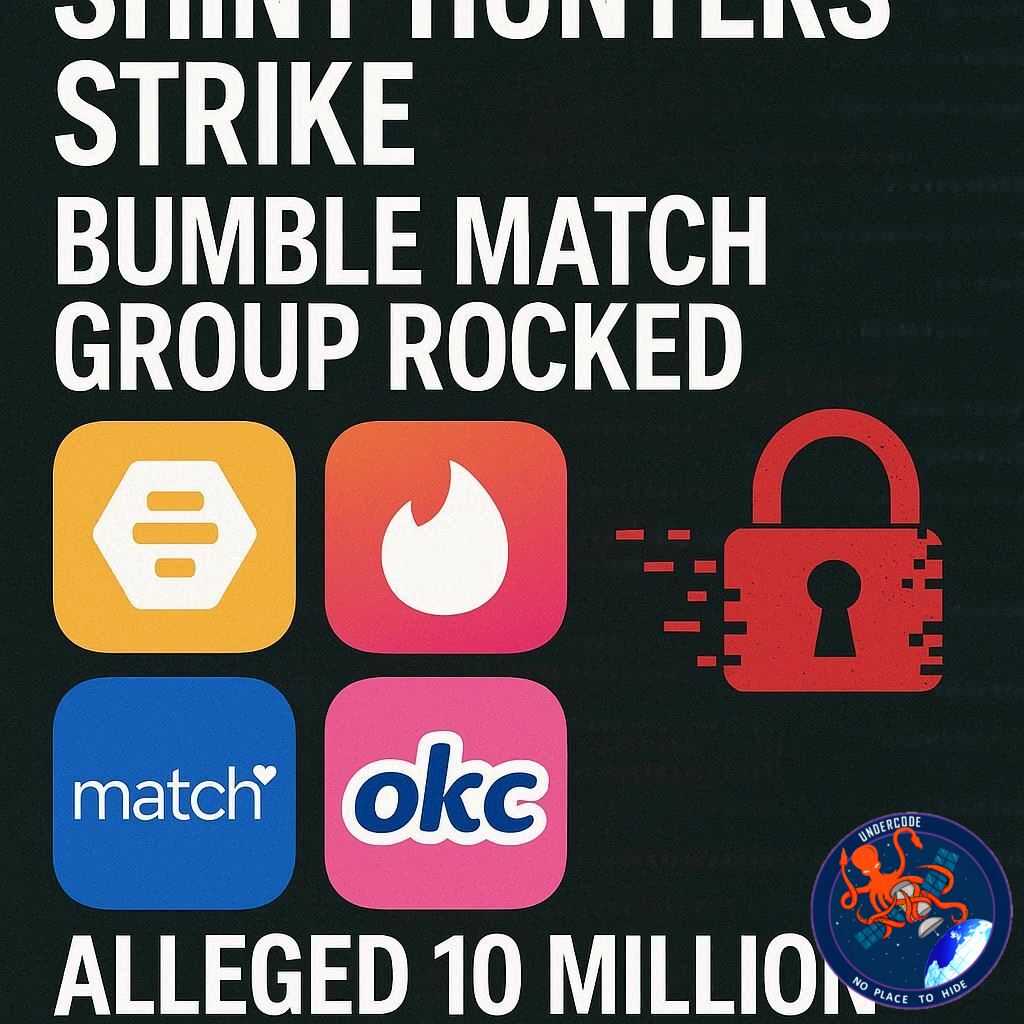
The online dating industry is once again under intense scrutiny after notorious hacking collective ShinyHunters claimed responsibility for a major data breach affecting Bumble and Match Group, two of the most influential companies in the global dating app ecosystem. According to cybersecurity monitoring accounts, the attackers allege they accessed internal corporate documents and data tied to up to 10 million users, raising urgent questions about contractor security, third-party risk, and how safely intimate user data is really being handled.
the Original Report
Cybersecurity News Everyday reported that ShinyHunters publicly claimed to have breached Bumble and Match Group systems, leaking internal documents and user-related records. The incident allegedly involves as many as 10 million user entries, although the exact scope and sensitivity of the data remain unclear.
In Bumble’s case, the breach is reportedly linked to a phishing attack targeting a contractor account, rather than a direct compromise of Bumble’s core infrastructure. This detail highlights a recurring pattern in modern cyberattacks, where attackers exploit weaker links in extended corporate ecosystems instead of attacking hardened internal systems directly.
Match Group, which owns major dating platforms such as Tinder, Hinge, OkCupid, and Plenty of Fish, was also named by ShinyHunters in their claims. However, at the time of reporting, no detailed technical breakdown or official confirmation was publicly available regarding the exact method of intrusion affecting Match Group.
The claims were circulated via social media, where ShinyHunters has historically announced previous high-profile breaches involving tech firms, retailers, and service providers. While views on the original post were relatively modest, the reputational implications for dating platforms are significant due to the deeply personal nature of user data involved.
As of the report’s publication, both companies had not released comprehensive public statements confirming or denying the full extent of the alleged breach, leaving users, researchers, and regulators awaiting clarification. The incident adds to a growing list of data security controversies facing consumer platforms that rely heavily on trust and privacy as core value propositions.
What Undercode Say:
This incident, whether ultimately confirmed in full or not, underscores a brutal reality of modern cybersecurity: your security is only as strong as your weakest external partner. The alleged Bumble breach being tied to a contractor account is not just a technical footnote—it is the story. Over the past few years, attackers have increasingly shifted focus from fortified enterprise systems to vendors, freelancers, and third-party service providers who often operate with looser security controls.
Dating platforms are especially attractive targets. Unlike generic consumer apps, they store behavioral patterns, private messages, sexual orientation indicators, location history, and social graphs. Even partial leaks can enable blackmail, targeted scams, or long-term identity profiling. That makes claims of “internal documents” particularly alarming, as such files may reveal system architecture, moderation processes, or internal security discussions that attackers can weaponize later.
ShinyHunters’ involvement also matters. This is not an unknown or untested actor; the group has a track record of combining real breaches with strategic data teasers to maximize pressure on companies. Even when initial claims appear exaggerated, follow-up leaks have historically validated at least part of their access. For companies like Match Group, silence or vague statements can unintentionally fuel speculation and erode user trust faster than the breach itself.
From an industry perspective, this case highlights a persistent failure to treat contractor access with the same rigor as employee access. Phishing-resistant authentication, strict session monitoring, and zero-trust enforcement are still unevenly applied outside core staff. Until that gap closes, large consumer platforms will remain exposed, no matter how advanced their internal defenses appear on paper.
For users, the takeaway is uncomfortable but clear: dating apps sit at the intersection of convenience and vulnerability. Incidents like this remind us that “free” platforms are often paid for with data, and when that data leaks, the cost is measured in privacy, safety, and long-term digital risk—not just headlines.
🔍 Fact Checker Results
✅ ShinyHunters have publicly claimed responsibility for breaches involving Bumble and Match Group.
✅ Bumble’s alleged breach is reported to be linked to a phishing attack on a contractor account.
❌ No independent forensic confirmation has yet verified the full claim of 10 million affected user records.
📊 Prediction
If these claims are even partially substantiated, expect increased regulatory pressure on dating platforms in the US and EU, particularly around third-party access controls. More platforms will likely roll out mandatory phishing-resistant authentication for contractors, while users may see a new wave of class-action lawsuits and privacy-focused app migrations in the months ahead.
🕵️📝✔️Let’s dive deep and fact‑check.
References:
Reported By: x.com
Extra Source Hub (Possible Sources for article):
https://www.quora.com/topic/Technology
Wikipedia
OpenAi & Undercode AI
Image Source:
Unsplash
Undercode AI DI v2
Bing
🔐JOIN OUR CYBER WORLD [ CVE News • HackMonitor • UndercodeNews ]
📢 Follow UndercodeNews & Stay Tuned:
𝕏 formerly Twitter 🐦 | @ Threads | 🔗 Linkedin | 🦋BlueSky | 🐘Mastodon


