
Listen to this Post
Introduction: A New Wave of Digital Exposure Emerges
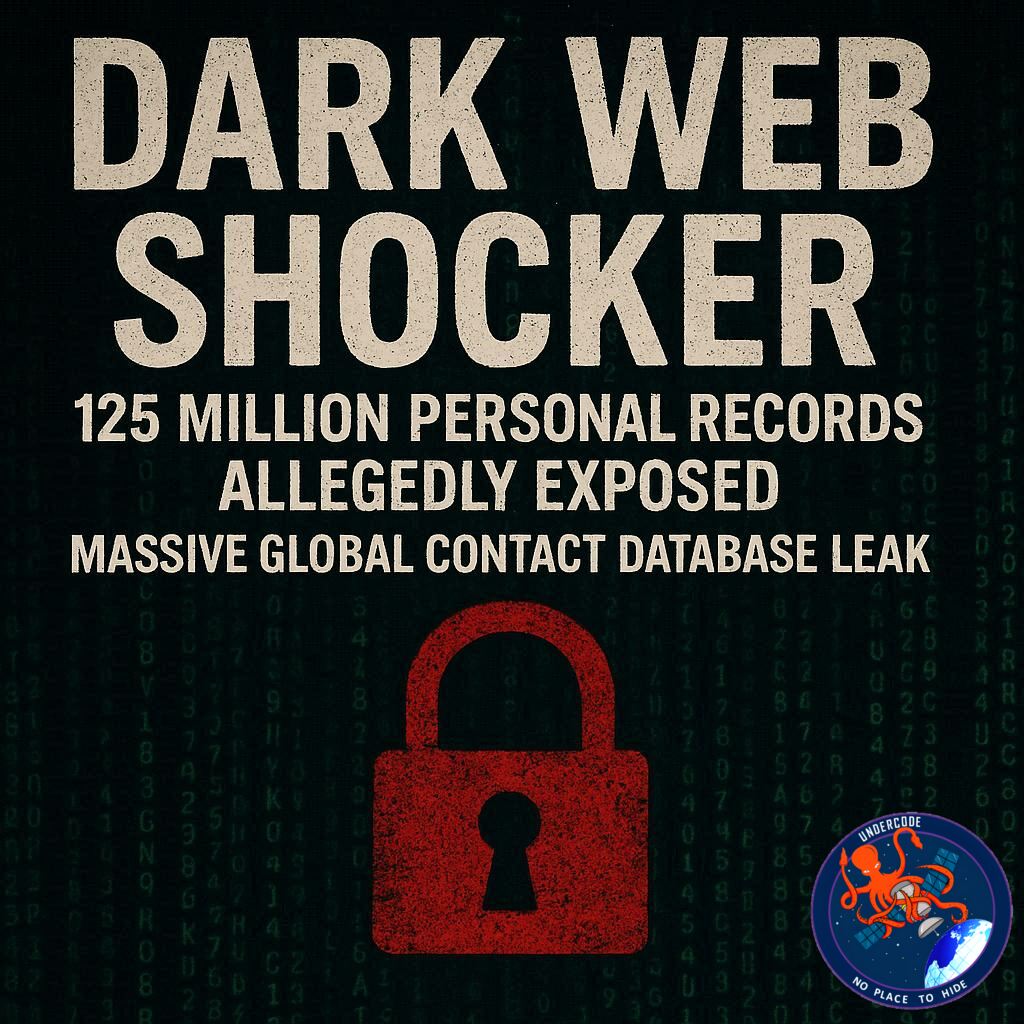
A chilling new claim circulating in cybercrime circles suggests that millions of individuals worldwide could be at risk of having their personal data exposed. A threat actor, operating within underground forums, is reportedly offering a massive “Global Contact Directory Dataset” for sale—raising fresh concerns about privacy, cybersecurity, and the growing scale of data commodification on the dark web.
the Alleged Data Leak
Recent intelligence shared by Dark Web Intelligence reveals that a cybercriminal has listed a dataset purportedly containing over 12.5 million personal records. The dataset is said to be structured in a CSV format and weighs approximately 773 MB, suggesting a highly organized and potentially usable collection of sensitive information.
According to the listing, the dataset allegedly includes a wide range of personally identifiable information. This includes full names, both mobile and landline phone numbers, and complete physical addresses. In addition, ZIP or postal codes are reportedly included, along with country identifiers and geolocation data—details that significantly enhance the usability of the dataset for malicious purposes.
The geographical scope of the data is particularly concerning. The threat actor claims the records span multiple regions across the globe, including the United States, the United Kingdom, the European Union, Asia, the Middle East, and Africa. If accurate, this would indicate a broad and diverse data collection, potentially affecting millions of individuals across different continents.
Cybersecurity experts warn that datasets like these can be weaponized in numerous ways. Common uses include launching large-scale spam campaigns, executing phishing attacks, committing identity fraud, and conducting social engineering operations. SMS-based attacks, such as smishing, could also be significantly amplified using such detailed contact information.
However, it is crucial to note that the authenticity, origin, and uniqueness of this dataset have not yet been independently verified. At this stage, the claims remain unconfirmed and are based solely on activity observed within underground cybercrime forums.
What Undercode Say: The Hidden Economy of Personal Data Is Booming
The Industrialization of Data Theft
What stands out in this case is not just the scale—12.5 million records—but the structured nature of the dataset. A CSV format implies immediate usability, meaning buyers don’t need to clean or organize the data before deploying it. This reflects a broader trend: cybercrime is no longer chaotic; it’s industrialized. Threat actors are increasingly behaving like data vendors, offering “ready-to-use” packages tailored for specific attack vectors.
Why Contact Data Is More Dangerous Than It Seems
At first glance, a contact directory may appear less sensitive than financial or password data. That assumption is dangerously outdated. Modern cyberattacks rely heavily on social engineering, where even minimal personal details can be leveraged to build trust. With full names, phone numbers, and addresses, attackers can craft highly convincing phishing messages or impersonation attempts that bypass traditional skepticism.
Global Scope Means Higher Value
The dataset’s alleged international coverage dramatically increases its black-market value. A geographically diverse dataset allows cybercriminals to run region-specific campaigns, bypass localized security filters, and exploit cultural nuances. For example, phishing messages can be tailored to mimic regional banks, delivery services, or government agencies—making them far more effective.
Recycled Data vs. New Breach: The Critical Question
One of the biggest uncertainties is whether this dataset is genuinely new or simply a repackaged compilation of older leaks. The dark web is flooded with recycled data, often resold under new labels to maximize profit. If this dataset is not unique, its immediate threat level may be lower—but its circulation still increases exposure risk, especially for individuals who assume old breaches are no longer relevant.
The Role of Aggregators in Cybercrime
Datasets like this often originate from multiple smaller breaches aggregated into a single, massive directory. This aggregation process adds value by creating a more complete profile of individuals. In many cases, fragmented data from different sources becomes significantly more powerful when combined—transforming scattered leaks into a comprehensive intelligence tool.
Why Verification Takes Time—and Why That Matters
The “unverified” status is not unusual. Verifying such datasets requires cybersecurity researchers to analyze samples, cross-reference known breaches, and assess data freshness. This process can take days or even weeks. During that window, however, the dataset may already be circulating among buyers, meaning potential damage could begin long before confirmation.
The Psychological Factor: Fear as a Commodity
Beyond the data itself, posts like these generate fear—and that fear has value. Cybercriminals often exploit hype to increase demand, driving urgency among buyers who fear missing out on a “fresh” dataset. This psychological manipulation mirrors tactics used in legitimate markets, further highlighting how sophisticated underground economies have become.
Implications for Everyday Users
For individuals, the biggest takeaway is that personal data exposure is no longer a question of “if” but “when.” Even if this specific dataset turns out to be exaggerated or recycled, similar leaks are constantly emerging. The growing frequency of such incidents underscores the importance of proactive digital hygiene, including skepticism toward unsolicited communications and careful handling of personal information online.
Fact Checker Results
Verification Status: ❌ Unconfirmed Claims
The dataset’s existence and authenticity have not been independently verified, and the claims rely solely on a forum post.
Data Scope Plausibility: ✅ Realistic but Unproven
A dataset of this size and structure is technically plausible, given past large-scale breaches.
Threat Potential: ✅ Credible Risk Scenario
If genuine, the dataset could realistically be used for phishing, fraud, and social engineering attacks.
Prediction
Escalation of Data Aggregation Markets
The future of cybercrime will likely see a surge in aggregated datasets, where multiple breaches are merged into highly detailed global profiles.
Rise of Hyper-Personalized Attacks
With richer datasets, attackers will shift toward more personalized and targeted scams, increasing success rates significantly.
Faster Monetization Cycles
The time between data theft and active exploitation will continue to shrink, leaving defenders with less time to respond.
Normalization of Mass Exposure Events
Incidents involving tens of millions of records will become increasingly common, gradually desensitizing the public to large-scale data breaches.
🕵️📝Let’s dive deep and fact‑check.
References:
Reported By: x.com
Extra Source Hub (Possible Sources for article):
https://www.instagram.com
Wikipedia
OpenAi & Undercode AI
Image Source:
Unsplash
Undercode AI DI v2
Bing
🔐JOIN OUR CYBER WORLD [ CVE News • HackMonitor • UndercodeNews ]
📢 Follow UndercodeNews & Stay Tuned:
𝕏 formerly Twitter 🐦 | @ Threads | 🔗 Linkedin | 🦋BlueSky | 🐘Mastodon


