
Listen to this Post
Introduction to the Emerging Threat
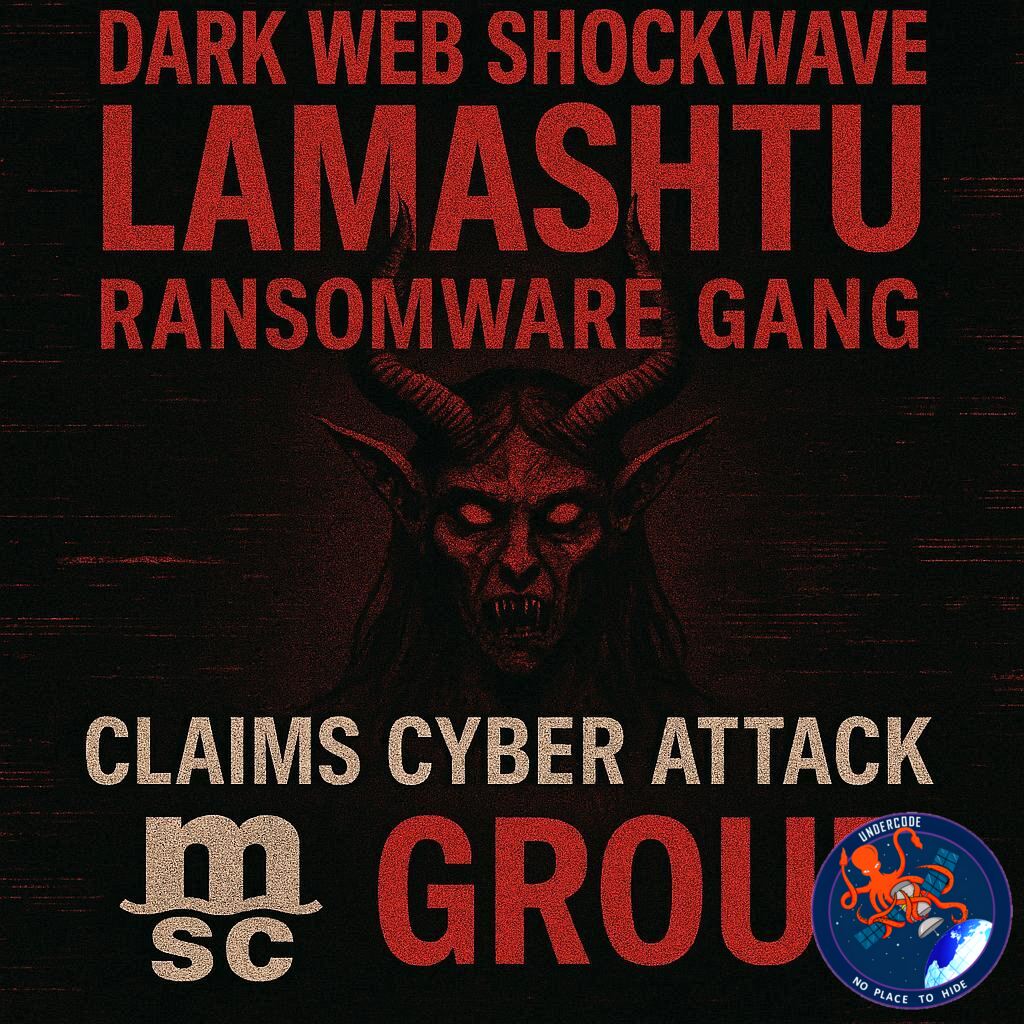
A fresh wave of ransomware activity has once again pushed major corporations into the cybersecurity spotlight after the notorious ransomware operation known as “Lamashtu” allegedly added MSC Group to its growing victim list. The claim surfaced through monitoring conducted by ThreatMon’s Threat Intelligence Team, which tracks dark web ransomware activity and cybercriminal leak sites.
The announcement rapidly circulated across X, formerly Twitter, where cybersecurity watchers and digital threat analysts closely monitor underground hacking campaigns. While the details surrounding the alleged breach remain limited, the inclusion of MSC Group on a ransomware victim list immediately triggered concern across cybersecurity communities due to the company’s massive global presence and strategic importance in logistics and shipping.
The incident highlights a growing trend in which ransomware gangs publicly expose victims online as part of psychological pressure campaigns designed to force negotiations and ransom payments. Even before official confirmation from affected organizations, these announcements often generate intense speculation regarding data theft, operational disruption, and possible financial consequences.
At the same time, another ransomware actor known as “incransom” reportedly listed bergen1.net as a victim during the same monitoring cycle, signaling that ransomware activity remains highly active across multiple sectors worldwide.
ThreatMon Detects New Ransomware Activity
ThreatMon’s intelligence monitoring system identified the alleged activity on May 18, 2026. According to the report, the Lamashtu ransomware group publicly named MSC Group among its latest targets on dark web infrastructure commonly used by cybercriminal organizations.
The ransomware ecosystem has evolved significantly in recent years. Modern threat actors no longer rely solely on encrypting files. Many now focus heavily on extortion by stealing sensitive corporate information before launching encryption attacks. Victims therefore face dual pressure: restoring systems while also preventing confidential data leaks.
MSC Group’s appearance on such a list does not automatically confirm the scale or legitimacy of the intrusion. Cybercriminal groups occasionally exaggerate or fabricate claims to gain notoriety. However, security researchers treat these postings seriously because many previous ransomware disclosures eventually proved authentic.
Who Is the Lamashtu Ransomware Group?
The Lamashtu ransomware operation remains relatively mysterious compared to older groups such as LockBit or BlackCat. Its name appears inspired by ancient Mesopotamian mythology, a pattern increasingly common among cybercriminal organizations seeking intimidating branding.
Despite limited public intelligence, the group appears to operate using a standard ransomware-as-a-service model. In these operations, developers provide malware infrastructure to affiliates who conduct attacks against selected targets. Profits from successful extortion attempts are then shared among participants.
Cybersecurity analysts believe newer ransomware groups are attempting to fill the vacuum left after several major law enforcement crackdowns disrupted established cybercrime syndicates over the past few years. As authorities dismantle one network, smaller and more agile groups quickly emerge to occupy the space.
MSC Group’s Strategic Importance Raises Concerns
MSC Group is globally recognized within the logistics and shipping industry, making any alleged cyberattack particularly alarming. Large transportation and supply chain companies represent highly attractive targets for ransomware operators because operational downtime can create enormous financial pressure.
Shipping companies maintain massive volumes of sensitive information, including customer data, cargo documentation, customs records, financial transactions, and internal communications. A successful ransomware intrusion could therefore impact not only the company itself but also business partners and supply chain operations worldwide.
The maritime sector has increasingly become a battlefield for cyber warfare and financially motivated hacking campaigns. Ports, shipping lines, and freight operators have all experienced escalating attacks in recent years as global trade becomes more digitally interconnected.
Public Exposure as a Psychological Weapon
Modern ransomware campaigns rely heavily on public humiliation tactics. By posting victim names on dark web leak sites or social media monitoring channels, attackers attempt to increase reputational pressure on organizations.
This strategy creates several layers of panic simultaneously:
Reputational Damage and Investor Anxiety
Publicly traded companies may experience immediate market concern when linked to ransomware incidents. Investors often fear operational disruption, regulatory investigations, or costly legal consequences tied to data exposure.
Customer Trust Erosion
Customers increasingly worry about how corporations protect their personal and financial information. Even unverified breach claims can damage trust if companies fail to communicate quickly and transparently.
Negotiation Leverage
Ransomware gangs use publicity to force victims into accelerated negotiations. The longer uncertainty remains in public view, the greater the reputational pressure becomes.
The Growing Industrialization of Cybercrime
The alleged MSC Group incident reflects how ransomware has transformed into a sophisticated criminal economy. Today’s ransomware ecosystem resembles a corporate structure more than isolated hacking activity.
Threat actors now operate dedicated support teams, leak portals, affiliate recruitment programs, cryptocurrency laundering networks, and negotiation specialists. Some even provide “customer support” for victims willing to pay.
This professionalization has dramatically increased the speed and scale of global cyber extortion campaigns.
Why Logistics Companies Are Prime Targets
Transportation and logistics firms have become highly vulnerable due to rapid digital transformation. Modern shipping depends heavily on interconnected technologies including:
Cloud-Based Operations
Shipping schedules, tracking systems, and inventory management often rely on cloud infrastructure, creating multiple attack surfaces.
Legacy Infrastructure
Many industrial logistics systems still operate on outdated software that lacks modern security protections.
Global Connectivity
International operations require constant digital communication across suppliers, ports, customs authorities, and clients, increasing exposure to cyber threats.
High Downtime Costs
Operational shutdowns can disrupt entire supply chains, making companies more likely to consider ransom negotiations.
What Undercode Says:
Cybercrime Has Become a Public Relations War
One of the most important developments in ransomware operations is the shift from silent encryption attacks to aggressive public branding campaigns. Groups like Lamashtu understand that fear spreads faster through headlines than through malware alone.
The dark web is no longer just a hidden marketplace for hackers. It has evolved into a stage where cybercriminal organizations compete for visibility, reputation, and psychological dominance. Every new victim announcement serves as marketing for future attacks.
What makes the MSC Group situation especially significant is the symbolic value of targeting global logistics infrastructure. Cybercriminals know that disrupting transportation systems creates worldwide attention. The larger the target, the greater the publicity.
Another critical issue is the increasing overlap between cyber extortion and geopolitical instability. Maritime infrastructure is deeply connected to international trade, national economies, and even government operations. Attacks against logistics giants therefore carry implications beyond simple financial theft.
The ransomware landscape in 2026 also demonstrates how fragmented the threat ecosystem has become. Smaller groups can now launch sophisticated campaigns using leaked tools, rented malware kits, and affiliate-based business models. Cybercrime no longer requires elite technical expertise; it increasingly operates like franchised digital extortion.
The role of social media in amplifying these attacks cannot be ignored either. Platforms like X allow ransomware disclosures to spread globally within minutes. Even unverified claims generate panic cycles that pressure corporations into crisis management before investigations are complete.
Another worrying trend is the normalization of breach announcements. Years ago, a major ransomware incident would dominate headlines for weeks. Today, new victims appear so frequently that cyber extortion risks becoming treated as routine corporate news.
This normalization is dangerous because it can reduce urgency among executives and consumers alike. Organizations may begin viewing ransomware as an unavoidable business expense rather than a preventable security crisis.
There is also growing concern regarding third-party exposure. Large corporations rarely operate independently. A compromise affecting one logistics provider may indirectly impact suppliers, contractors, partners, and customers across multiple countries.
The speed of ransomware evolution continues to outpace traditional corporate defense models. Many companies still prioritize perimeter security while attackers increasingly exploit employee credentials, remote access systems, or social engineering methods.
Artificial intelligence is likely accelerating this threat landscape as well. Cybercriminals now use AI-assisted phishing campaigns, automated reconnaissance, and faster malware adaptation techniques. Defensive teams must therefore respond to threats operating at machine speed.
The MSC Group case also underscores a harsh reality: no industry is immune. Shipping, healthcare, education, manufacturing, finance, and government sectors all remain under constant digital siege.
Organizations facing modern ransomware threats must move beyond reactive cybersecurity. Real resilience requires proactive monitoring, segmented infrastructure, employee awareness training, incident response planning, and rapid recovery capabilities.
The future of ransomware may become even more aggressive as criminals combine data theft, AI-generated disinformation, and operational sabotage into unified extortion strategies. In some scenarios, reputational destruction could become more valuable to attackers than encryption itself.
Ultimately, ransomware has evolved into one of the defining criminal industries of the digital age. Incidents like the alleged MSC Group attack reveal not only vulnerabilities in corporate systems but also vulnerabilities in global digital trust itself.
🔍 Fact Checker Results
✅ Verified Claim About ThreatMon Monitoring
ThreatMon did publicly report that the Lamashtu ransomware group added MSC Group to its victim list on May 18, 2026.
✅ Verified Increase in Ransomware Leak Site Activity
Cybersecurity researchers worldwide have documented a continuing rise in ransomware groups publicly naming victims on dark web leak portals.
❌ No Independent Confirmation of Full Breach Impact Yet
As of now, there is no public evidence confirming the exact scale of the alleged MSC Group compromise, including whether sensitive data was successfully stolen or encrypted.
📊 Prediction
📊 Ransomware Leak Campaigns Will Intensify
Cybercriminal groups are likely to increase public victim disclosures because media attention amplifies extortion pressure and strengthens their underground reputation.
📊 Logistics and Maritime Industries Will Face Escalating Attacks
Shipping and transportation companies are expected to remain prime ransomware targets due to their critical role in global commerce and their dependence on interconnected digital infrastructure.
📊 AI-Driven Cyberattacks Could Redefine Future Threats
Artificial intelligence may soon enable ransomware groups to automate phishing campaigns, breach analysis, and extortion messaging at unprecedented scale, making future attacks faster and harder to detect.
🕵️📝Let’s dive deep and fact‑check.
References:
Reported By: x.com
Extra Source Hub (Possible Sources for article):
https://www.quora.com
Wikipedia
OpenAi & Undercode AI
Image Source:
Unsplash
Undercode AI DI v2
Bing
🔐JOIN OUR CYBER WORLD [ CVE News • HackMonitor • UndercodeNews ]
📢 Follow UndercodeNews & Stay Tuned:
𝕏 formerly Twitter 🐦 | @ Threads | 🔗 Linkedin | 🦋BlueSky | 🐘Mastodon


