
Listen to this Post
Introduction
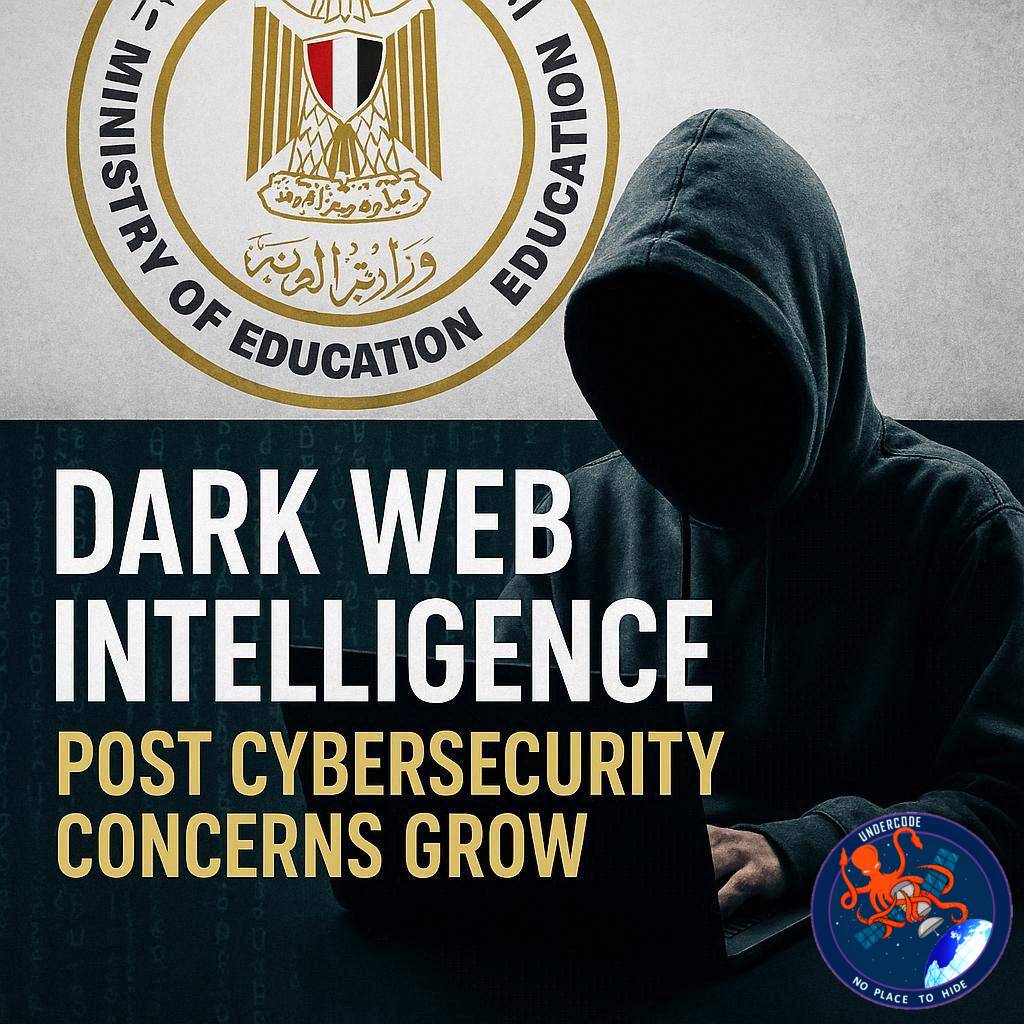
A brief post published by the account known as Dark Web Intelligence has triggered renewed discussions about cybersecurity vulnerabilities within government institutions in the Middle East. The post referenced Egypt’s Ministry of Education without offering technical details, evidence of compromise, or confirmation of any breach. Despite the lack of specifics, the mention alone was enough to fuel concern across cybersecurity communities and social media platforms already focused on digital privacy and government infrastructure security.
The account, which frequently posts alleged cyber threat intelligence and dark web monitoring updates, shared the message on May 13, 2026, alongside trending discussions related to cybersecurity, privacy, and technology. While no official statement from Egypt’s Ministry of Education was attached to the post, the incident highlights how even vague dark web references can rapidly generate public anxiety in an era where government systems are increasingly targeted by hackers, ransomware groups, and data brokers.
A Cryptic Post Sparks Online Attention
The original post was remarkably short, containing only a reference to Egypt’s Ministry of Education and a partially visible link. No screenshots, leaked files, or supporting evidence accompanied the message. However, because the source account has built a reputation around monitoring dark web activity, followers immediately interpreted the post as a possible warning sign of a cybersecurity incident.
Cybersecurity observers have become increasingly sensitive to such posts because many recent government breaches worldwide were initially hinted at through underground forums or intelligence-monitoring accounts before official confirmations surfaced. This creates an environment where even ambiguous messages can trigger speculation and concern.
Why Government Education Systems Are Frequent Targets
Educational institutions have become attractive targets for cybercriminals over the last decade. Ministries of Education often manage enormous databases containing student information, employee records, examination systems, and financial data. In many countries, these systems were built gradually over years, leaving behind outdated infrastructure and inconsistent cybersecurity practices.
Attackers frequently target education sectors because they combine valuable data with weaker protection compared to military or banking systems. In some cases, hackers pursue financial gain through ransomware attacks. In others, political motives, espionage, or ideological campaigns play a role.
Egypt, like many developing and digitally expanding nations, has accelerated its adoption of online education platforms and centralized digital services. That transformation improves accessibility and efficiency but also increases the attack surface for cyber threats.
The Rise of Dark Web Monitoring Accounts
Accounts similar to Dark Web Intelligence have gained popularity across platforms like X because they act as informal cybersecurity alert systems. These profiles monitor hacking forums, ransomware leak sites, Telegram channels, and underground marketplaces for signs of data breaches or cyberattacks.
Sometimes these alerts prove accurate and precede official disclosures. Other times they remain unverified rumors that never develop into confirmed incidents. This uncertainty creates a difficult challenge for journalists, governments, and the public when interpreting such posts.
The modern cybersecurity ecosystem increasingly operates in real time, meaning information spreads instantly before verification processes can catch up. That speed often amplifies fear and speculation.
Social Media’s Role in Cybersecurity Panic
One major issue surrounding dark web-related posts is the rapid spread of unconfirmed information. Users often repost cybersecurity claims without evidence, leading to viral narratives that may exaggerate the scale or legitimacy of a threat.
The mention of Egypt’s Ministry of Education quickly attracted attention because government institutions symbolize national infrastructure and public trust. Even the possibility of a breach raises questions about student data safety, administrative systems, and national cyber readiness.
Social media algorithms also intensify engagement around cybersecurity fears because topics like privacy, hacking, and government vulnerabilities naturally generate emotional reactions and public debate.
The Lack of Official Confirmation
At the time the post circulated, there was no official confirmation indicating that Egypt’s Ministry of Education had suffered a verified cyberattack or data breach. No ransomware group publicly claimed responsibility, and no leaked databases were presented as evidence.
This distinction is important because cybersecurity discussions often blur the line between verified incidents and speculative warnings. A mention on a dark web monitoring account does not automatically confirm a successful breach.
Still, cybersecurity experts typically encourage institutions to investigate any public references involving their infrastructure, especially when those references originate from communities associated with cybercrime monitoring.
Cybersecurity Challenges Across the Middle East
Governments across the Middle East have invested heavily in digital transformation initiatives over the last several years. From smart city projects to online education platforms, regional institutions increasingly depend on interconnected digital systems.
However, rapid digitization often outpaces cybersecurity development. Many organizations struggle with legacy systems, limited cybersecurity staffing, insufficient employee training, and fragmented infrastructure.
This environment creates opportunities for cybercriminals seeking financial extortion, geopolitical disruption, or access to sensitive information.
Countries throughout the region have experienced ransomware campaigns, phishing attacks, database leaks, and attacks targeting critical infrastructure. As a result, cybersecurity has evolved into a major national security priority.
What Undercode Says:
Dark Web Mentions Are Becoming a New Form of Psychological Pressure
One of the most important aspects of incidents like this is not necessarily whether a breach occurred, but how public perception changes the moment an institution is linked to dark web activity. In modern cybersecurity culture, reputation damage begins instantly, often before technical investigations even start.
The mention of Egypt’s Ministry of Education demonstrates how cyber narratives now operate similarly to information warfare. A short message from a monitoring account can immediately generate suspicion, pressure officials, and create public uncertainty.
Governments Are Losing Control of the Information Timeline
Traditionally, institutions controlled how and when security incidents became public. That model has changed completely. Today, third-party monitoring accounts, underground forums, and anonymous leak channels often publish hints of incidents before governments can respond.
This creates a dangerous imbalance where speculation fills the vacuum left by delayed official communication. Even if an investigation later reveals no breach occurred, the public memory of the accusation often remains.
Education Infrastructure Is an Increasingly Valuable Target
The education sector is no longer viewed as a low-priority cyber target. Educational databases contain identity information, payment records, academic credentials, and access systems linked to broader government services.
Attackers understand that ministries handling millions of student records can become strategic leverage points. In some cases, cybercriminals exploit these institutions financially through ransomware. In others, hostile actors seek disruption and political symbolism.
The Dark Web Has Become a Public Spectacle
Years ago, dark web discussions remained limited to cybersecurity specialists. Now, social media has transformed dark web activity into mainstream digital entertainment and public drama.
Accounts built around cyber leak monitoring attract massive audiences because they blend secrecy, fear, and technological intrigue. The problem is that audiences often cannot distinguish between verified intelligence and unconfirmed chatter.
That confusion benefits cybercriminal ecosystems because fear itself becomes part of the impact.
Cybersecurity Visibility Can Be Both Helpful and Dangerous
Public monitoring accounts serve an important function by increasing awareness about cyber threats. Some legitimate breaches were indeed identified early through independent researchers and online monitoring communities.
However, the absence of verification standards can also spread misinformation. A vague reference without evidence may unfairly damage reputations or create unnecessary panic.
The cybersecurity industry still lacks a universal framework for balancing rapid disclosure with responsible reporting.
Egypt’s Digital Expansion Raises the Stakes
Egypt has invested heavily in digital transformation, online education systems, and e-government infrastructure. These projects modernize public services but also create larger digital attack surfaces.
As governments centralize more citizen data, cyber resilience becomes critically important. A single compromised system can affect millions of users simultaneously.
This means cybersecurity is no longer merely an IT issue. It has become tied directly to public trust, governance stability, and national reputation.
Threat Actors Increasingly Exploit Attention Economics
Modern hackers understand media psychology exceptionally well. Even unverified leaks can produce headlines, social media engagement, and public fear. Sometimes attackers gain influence simply by implying access to sensitive systems.
In this environment, perception itself becomes a weapon.
The rapid spread of cyber rumors also pressures governments into reactive communication strategies, which can inadvertently amplify the visibility of threat actors.
The Future of Cybersecurity Will Depend on Transparency
One of the strongest defenses against misinformation and panic is transparent communication. Institutions that respond quickly with technical clarity often reduce speculation before narratives spiral out of control.
Silence, on the other hand, usually increases public suspicion.
As cyber incidents become more politicized and publicly visible, governments will likely need dedicated crisis communication teams working alongside cybersecurity experts.
🔍 Fact Checker Results
✅ Verified Information
The X account known as Dark Web Intelligence did publish a post mentioning Egypt’s Ministry of Education on May 13, 2026.
❌ No Confirmed Breach Evidence
There is currently no publicly verified evidence proving that Egypt’s Ministry of Education suffered a confirmed cyberattack or data leak based solely on the referenced post.
✅ Cybersecurity Concerns Are Legitimate
Government education systems worldwide are increasingly targeted by cybercriminals due to the large amount of sensitive data they manage.
📊 Prediction
Rising Pressure on Government Cybersecurity Transparency
Incidents like this will likely push governments toward faster public communication strategies regarding cyber threats and potential breaches. Institutions can no longer rely on silence while online speculation spreads globally within minutes.
Growth of Independent Threat Intelligence Communities
Dark web monitoring accounts and independent cybersecurity researchers are expected to gain even greater influence over public cyber awareness. Their posts may increasingly shape media narratives before official investigations conclude.
Education Systems Will Face More Aggressive Attacks
As digital education expands globally, ministries and academic institutions will continue attracting ransomware groups and data brokers searching for high-value databases and weak infrastructure points.
🕵️📝Let’s dive deep and fact‑check.
References:
Reported By: x.com
Extra Source Hub (Possible Sources for article):
https://www.digitaltrends.com
Wikipedia
OpenAi & Undercode AI
Image Source:
Unsplash
Undercode AI DI v2
Bing
🔐JOIN OUR CYBER WORLD [ CVE News • HackMonitor • UndercodeNews ]
📢 Follow UndercodeNews & Stay Tuned:
𝕏 formerly Twitter 🐦 | @ Threads | 🔗 Linkedin | 🦋BlueSky | 🐘Mastodon


