
Listen to this Post
 Introduction: A Major Shift in Responsibility for Online Banking Fraud
Online banking fraud continues to grow across Europe, particularly through phishing attacks that trick users into revealing their login credentials. While banks typically argue that customers should bear responsibility when they fall for scams, a new legal opinion from the European Union could significantly change that dynamic.
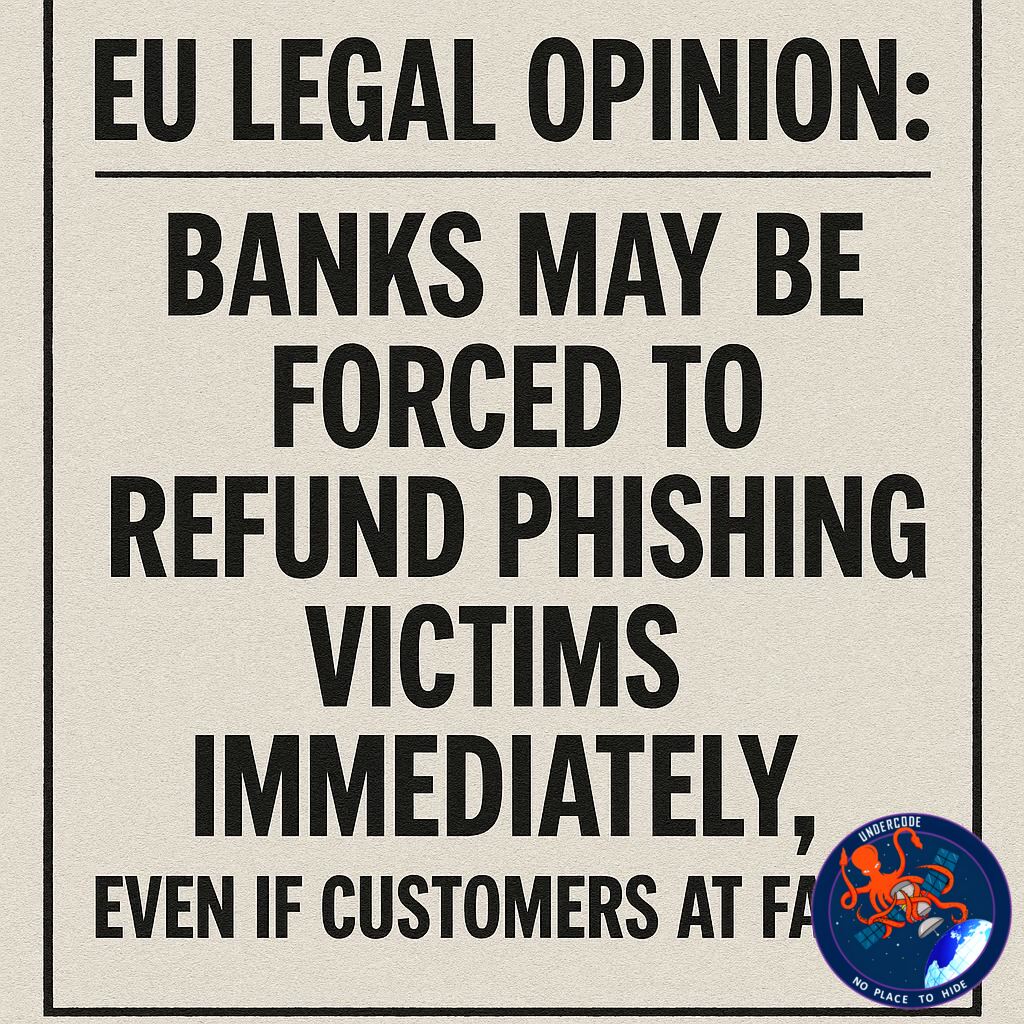
In a notable development, Athanasios Rantos has issued a formal legal opinion suggesting that banks may be required to immediately refund victims of unauthorized transactions, even when those victims may have contributed to the security breach.
The opinion relates to the interpretation of EU banking rules under the Payment Services Directive (PSD2) and could influence how financial institutions across Europe handle phishing-related losses. Although the opinion is not yet a final court ruling, it provides a strong indication of how the Court of Justice of the European Union might ultimately decide when issuing its binding judgment.
The Case That Triggered the Legal Debate
The legal question emerged from a dispute in Poland involving the bank PKO Bank Polski and one of its customers. The case was referred to the EU court system by the District Court in Koszalin, seeking clarification on how European law should apply in situations involving phishing fraud.
The incident began when the customer attempted to sell an item on an online auction platform. During the transaction process, a fraudster contacted the seller pretending to be a legitimate buyer. The attacker sent a link that directed the victim to a webpage carefully designed to mimic the bank’s official login portal.
Believing the page to be genuine, the customer entered their banking credentials. Those credentials were immediately captured by the fraudster, who then used them to perform an unauthorized transfer from the victim’s bank account.
Realizing something was wrong, the customer reported the incident the following day both to the bank and to local law enforcement. Despite the report, the fraudsters were never identified, and the stolen funds were not recovered.
However, the bank refused to reimburse the lost money.
This refusal triggered the legal dispute that ultimately reached the European Union’s top court.
Why the Bank Refused to Refund the Victim
The central argument presented by the bank was based on negligence. According to the institution, the customer’s own actions enabled the fraud. By entering login credentials into a fake website, the victim had effectively compromised their own account security.
Under traditional interpretations of banking rules, such negligence can justify denying reimbursement. Banks often claim that customers must exercise reasonable caution when handling sensitive financial information.
Because the customer voluntarily entered their credentials into a fraudulent website, the bank argued that the loss was not its responsibility.
This position reflects a common stance among financial institutions across Europe and globally.
However, the Advocate General’s legal opinion challenges that interpretation.
The Advocate General’s Legal Interpretation
According to Athanasios Rantos, European law requires banks to prioritize immediate consumer protection in cases involving unauthorized transactions.
Under the Payment Services Directive (PSD2), banks are obligated to refund customers as the first step when unauthorized payments occur.
The only exception would be if the bank has concrete reasons to suspect that the customer intentionally committed fraud.
In such cases, the bank must formally communicate its suspicion to the relevant national authority in writing.
In other words, unless the bank believes the customer is actively involved in fraud, it should not delay the refund.
This interpretation shifts the immediate financial burden away from consumers and onto banks.
The Refund Requirement Is Only the First Step
Although the Advocate General’s opinion strongly favors immediate reimbursement for victims, it does not mean customers are fully absolved of responsibility.
The legal framework still allows banks to pursue financial recovery later.
If the bank can prove that the customer acted with gross negligence or intentionally violated security requirements, it may demand that the customer repay the refunded amount.
Examples of such negligence might include:
Sharing login credentials with third parties
Ignoring obvious security warnings
Repeatedly violating security instructions from the bank
If the customer refuses to repay the funds after such proof is presented, the bank may initiate legal proceedings to recover the money.
Therefore, the proposed interpretation establishes a two-step approach:
Immediate refund to the victim
Legal recovery process if negligence is proven
This framework aims to balance consumer protection with financial accountability.
Why the Opinion Matters Across Europe
Although the opinion issued by the Advocate General is not legally binding on its own, it carries significant influence.
Advocate Generals at the Court of Justice of the European Union are responsible for providing independent legal analysis to guide the court’s judges before they deliver their final decision.
Historically, the court often follows these recommendations when issuing its final rulings.
If the CJEU ultimately adopts this interpretation, the decision would become binding for courts across all European Union member states.
This could reshape how banks respond to fraud complaints throughout the EU.
What Undercode Say:
The Hidden Impact on the European Banking Industry
If the final ruling aligns with the Advocate General’s opinion, European banks may need to dramatically change how they handle fraud cases. Immediate refunds would become the default response rather than a disputed outcome, placing financial institutions under greater operational pressure.
Banks would need to absorb losses initially, even in cases where customers clearly made mistakes.
A Stronger Safety Net for Consumers
From a consumer protection perspective, the proposed interpretation strengthens trust in digital banking. Victims of phishing attacks often face financial devastation while waiting months or years for legal decisions.
Immediate reimbursement would significantly reduce that stress and financial vulnerability.
Cybercrime Trends Are Driving Legal Changes
The rise of phishing and social engineering attacks is one of the major reasons regulators are reconsidering liability rules. Cybercriminals increasingly exploit human psychology rather than technical vulnerabilities.
Many victims are deceived by sophisticated fake websites, realistic payment confirmations, and convincing messages.
This makes the concept of “customer negligence” more complicated than it once was.
Banks May Invest More in Fraud Prevention
If banks become financially responsible for initial losses, they will likely invest more heavily in fraud detection systems.
This could include:
Advanced behavioral analytics
Real-time transaction monitoring
Stronger authentication mechanisms
AI-powered fraud detection
The financial incentive to prevent fraud would increase significantly.
Legal Battles Could Increase
Another consequence of this interpretation could be a rise in lawsuits between banks and customers. Since refunds would occur immediately, disputes about negligence would likely shift into courtrooms afterward.
This could create a new legal battlefield around the definition of “gross negligence.”
A New Balance Between Responsibility and Protection
The potential ruling represents a broader shift in digital finance regulation.
Rather than forcing victims to fight banks for refunds, the burden would shift toward financial institutions first.
This reflects a modern understanding that cybercrime is often highly sophisticated and difficult for ordinary users to detect.
Ultimately, the system may evolve toward shared responsibility: banks handle immediate financial protection, while courts determine long-term liability.
Fact Checker Results
✅ The opinion was issued by Advocate General Athanasios Rantos regarding a dispute involving PKO Bank Polski and a phishing victim.
✅ The legal interpretation concerns the application of the Payment Services Directive (PSD2) governing unauthorized payment transactions.
❌ The Advocate General’s opinion is not yet a final ruling by the Court of Justice of the European Union and therefore does not currently have binding legal force.
Prediction
🔐 Banks across the European Union may begin preparing internal policies for faster fraud reimbursements even before the final ruling arrives.
⚖️ Future court cases could redefine what qualifies as “gross negligence” in phishing-related fraud incidents.
💻 Financial institutions are likely to accelerate investments in AI-driven fraud detection systems to reduce the risk of automatic refund liabilities.
🕵️📝✔️Let’s dive deep and fact‑check.
References:
Reported By: www.bleepingcomputer.com
Extra Source Hub (Possible Sources for article):
https://www.medium.com
Wikipedia
OpenAi & Undercode AI
Image Source:
Unsplash
Undercode AI DI v2
Bing
🔐JOIN OUR CYBER WORLD [ CVE News • HackMonitor • UndercodeNews ]
📢 Follow UndercodeNews & Stay Tuned:
𝕏 formerly Twitter 🐦 | @ Threads | 🔗 Linkedin | 🦋BlueSky | 🐘Mastodon


