
Listen to this Post
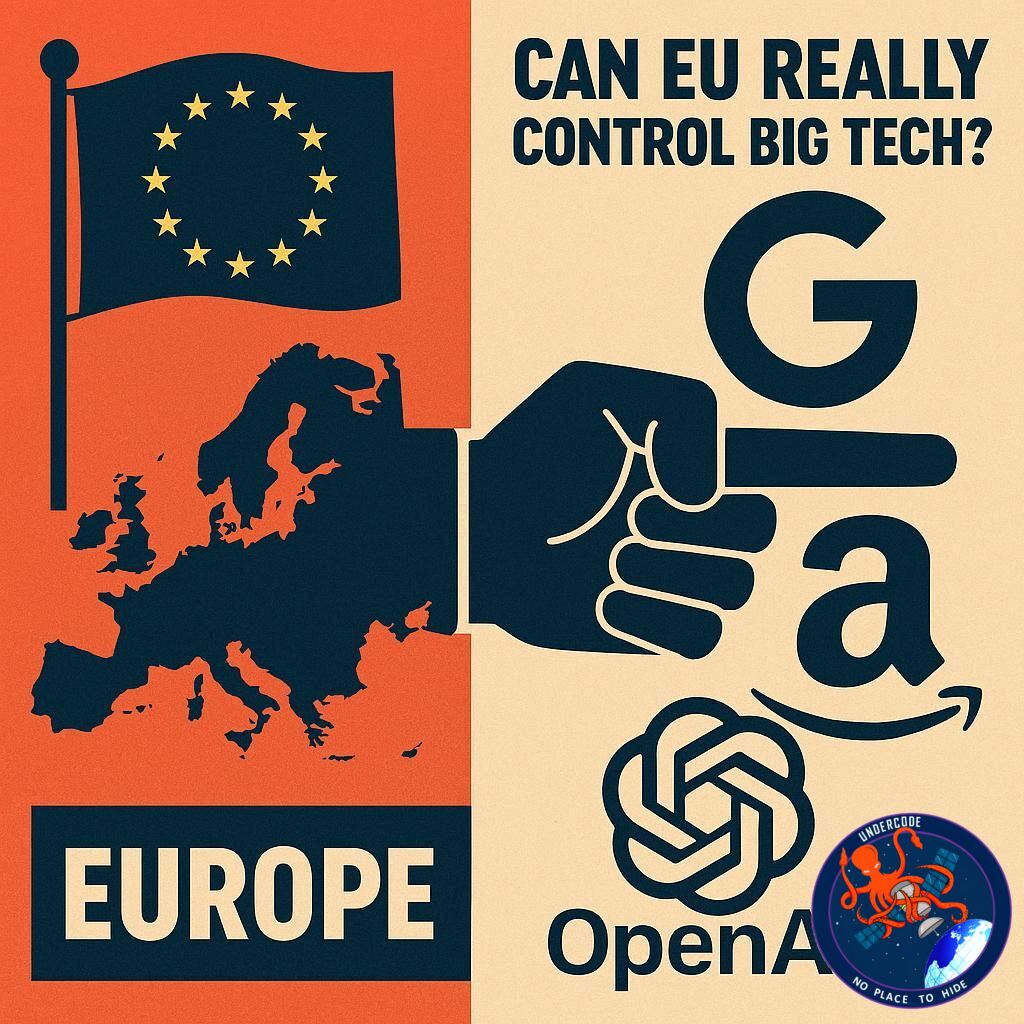
Europe’s Digital Power Struggle Is Entering a New Era
For years, Europe has positioned itself as the world’s strictest digital regulator. While Silicon Valley companies expanded across the globe with relatively little resistance, the European Union quietly built a legal framework designed to challenge the dominance of American technology giants. From privacy rules to artificial intelligence oversight, Brussels has increasingly become the place where the future of global tech regulation is being decided.
The growing influence of companies like Google, Amazon, and OpenAI has created both economic opportunities and political fears. European lawmakers argue that unchecked tech power threatens privacy, competition, democracy, and even national sovereignty. Their response has been aggressive regulation aimed directly at the world’s largest digital platforms.
Yet a difficult question remains unanswered: can Europe truly force American tech companies to obey its rules, especially when those companies dominate global markets and possess enormous financial power?
Europe Wants Stronger Control Over Big Tech
The European Union has spent the last decade building laws that target how major technology companies collect data, run platforms, and deploy artificial intelligence tools. European officials argue that digital services should not operate outside democratic oversight simply because they are innovative or profitable.
One of the EU’s strongest weapons has been privacy regulation. The bloc introduced strict data protection standards designed to give users more control over personal information. These rules forced global companies to redesign how they collect and process user data across websites, apps, and advertising systems.
The EU also moved aggressively against anti-competitive practices. Lawmakers accused major platforms of abusing market dominance by prioritizing their own services, limiting rivals, and trapping consumers inside closed ecosystems. Regulators believe these practices weaken innovation and reduce consumer choice across Europe.
Artificial intelligence has now become the newest battlefield. As AI systems become deeply integrated into search engines, office software, creative tools, and social media platforms, European officials fear that companies are deploying powerful systems faster than governments can understand or supervise them.
AI Regulation Is Becoming Europe’s Biggest Challenge
The rapid rise of generative AI has intensified concerns inside European institutions. Companies are releasing systems capable of generating text, images, code, and even human-like conversations at unprecedented speed.
The emergence of AI products from companies such as OpenAI has sparked debates over misinformation, copyright, labor disruption, and algorithmic transparency. European lawmakers worry that AI could reshape society before proper safeguards are established.
To address these fears, the EU introduced comprehensive AI-focused legislation aimed at classifying systems based on risk levels. High-risk AI applications could face stricter obligations involving transparency, safety testing, and accountability.
Supporters of the rules argue that Europe is acting responsibly while the rest of the world races blindly toward automation. Critics, however, claim the regulations may slow innovation and push investment away from Europe toward less restrictive markets like the United States or parts of Asia.
This conflict reveals a deeper philosophical divide. American tech culture often prioritizes rapid innovation and market expansion first, while European regulators tend to emphasize precaution, public oversight, and consumer protection.
Silicon Valley Does Not Always Welcome European Rules
Many American technology firms view Europe’s regulations as expensive, restrictive, and difficult to implement globally. Compliance with EU digital laws often requires companies to redesign products, create additional reporting systems, or change advertising operations.
Some executives privately fear that Europe is attempting to become the world’s de facto digital referee despite lacking its own globally dominant technology platforms. This criticism appears frequently in American business circles, where European policy is sometimes described as regulation without innovation.
At the same time, the EU’s economic size gives it enormous leverage. Because Europe represents one of the world’s largest consumer markets, companies often decide that complying with EU rules is easier than abandoning European users altogether.
This phenomenon is sometimes called the “Brussels Effect.” When Europe passes major regulations, global companies frequently apply those standards internationally because maintaining separate systems for different regions becomes too costly and complicated.
As a result, European policies can indirectly shape global technology practices far beyond Europe’s borders.
Data Privacy Became Europe’s First Major Victory
One of the clearest examples of Europe’s regulatory influence came through privacy legislation. Global companies were forced to update consent systems, privacy policies, and user controls after the EU introduced stronger data protection standards.
Consumers around the world suddenly became more aware of how much information platforms were collecting from them. Cookie consent banners, data download tools, and account privacy settings became common across the internet.
While many users complain about endless pop-up consent forms, privacy advocates argue that the regulations successfully forced transparency into an industry previously built around invisible surveillance.
Large companies adapted because they had the financial resources to do so. Smaller firms, however, sometimes struggled with compliance costs, creating debates about whether strict regulation unintentionally strengthens the biggest corporations.
Competition Laws Are Targeting Digital Dominance
Europe has also focused heavily on market power. Regulators accused major tech companies of unfairly disadvantaging competitors by controlling app stores, search rankings, online marketplaces, and advertising ecosystems.
Companies like Google and Amazon have faced investigations, fines, and legal pressure over business practices that European authorities believe undermine fair competition.
European officials argue that digital markets naturally create monopolistic behavior because large platforms benefit from massive data advantages and network effects. Once a company dominates a market, competitors struggle to survive.
Critics counter that consumers often voluntarily choose these services because they work well and offer convenience. They argue that excessive intervention could reduce efficiency and discourage technological progress.
The reality likely sits somewhere in the middle. Big Tech platforms undeniably transformed global communication and commerce, but their scale also created unprecedented concentrations of power.
The Political Dimension Is Growing Larger
Technology regulation is no longer just an economic issue. It has become deeply political.
European leaders increasingly frame digital sovereignty as a national security concern. They worry that dependence on foreign platforms weakens Europe’s strategic independence and gives non-European corporations excessive influence over information systems, communications infrastructure, and public discourse.
This concern intensified after several global controversies involving misinformation, election interference, and platform moderation policies.
European policymakers now want stronger local control over how online platforms operate within their borders. That includes demands for transparency regarding algorithms, advertising systems, and content moderation decisions.
American companies often argue that these demands are difficult to implement consistently and may conflict with free speech traditions or innovation priorities.
What Undercode Say:
Europe’s battle against Big Tech is not just about privacy or competition anymore. It is becoming a symbolic fight over who controls the digital future. The European Union understands something many governments ignored for years: technology companies are no longer ordinary corporations. They shape politics, culture, communication, labor markets, education, and even human behavior itself.
The interesting part is that Europe entered this war from a position of technological weakness. Unlike the United States or China, Europe does not dominate the global consumer internet. There is no European equivalent to Google Search, Amazon Web Services, or OpenAI-scale AI dominance. That limitation forced Europe to pursue power through regulation rather than innovation supremacy.
This strategy is both brilliant and risky.
On one side, Europe successfully positioned itself as the world’s ethical regulator. Even American companies now anticipate EU reactions before launching major features. That influence is real. The so-called Brussels Effect proves that economic regulation can become geopolitical power.
But there is another side that many analysts ignore.
Regulation alone rarely creates technological leadership. Europe may successfully slow harmful practices, yet still fail to produce globally dominant technology ecosystems of its own. If innovation increasingly shifts toward AI, quantum computing, robotics, and cloud infrastructure, the regions controlling those industries will hold massive long-term influence.
That creates a paradox.
Europe wants digital sovereignty, but strict regulation could unintentionally discourage startups and investors from building next-generation technologies within the EU itself. Large corporations can afford lawyers, compliance teams, and regulatory negotiations. Small innovators often cannot.
Ironically, aggressive regulation may strengthen the exact giants Europe wants to weaken.
Another issue involves speed. Technology evolves exponentially while governments move bureaucratically. By the time regulators fully understand one wave of innovation, another already appears. Artificial intelligence demonstrates this problem clearly. AI models improve every few months, yet legislation often takes years.
This creates a permanent cat-and-mouse game between lawmakers and tech firms.
There is also a cultural difference shaping this conflict. Silicon Valley historically embraces experimentation first and correction later. Europe prefers caution before deployment. Neither philosophy is entirely right or wrong, but the clash creates friction whenever global platforms operate across multiple legal systems.
The AI race will likely intensify these tensions.
Companies developing advanced AI systems move aggressively because the economic rewards are enormous. Governments fear losing control because AI could transform employment, security, education, media, and national competitiveness. Europe’s AI rules are essentially an attempt to build guardrails before society fully understands the technology itself.
Whether that works remains uncertain.
Another overlooked factor is public opinion. Many citizens actually support tougher oversight of technology companies, especially after years of privacy scandals, misinformation crises, and concerns about algorithmic manipulation. Politicians know this. Regulating Big Tech has become politically popular across ideological lines.
At the same time, consumers continue using these platforms daily. People criticize Big Tech while relying on it constantly. That contradiction gives companies leverage because governments cannot realistically disconnect entire societies from essential digital services overnight.
The future may not involve one side defeating the other. More likely, Big Tech and governments will enter a long-term negotiation phase where regulation becomes part of doing business globally.
In many ways, Europe already changed the conversation permanently. Ten years ago, technology firms operated with extraordinary freedom. Today, governments worldwide openly discuss AI governance, antitrust enforcement, digital taxation, and platform accountability.
That shift alone represents a major victory for European regulators.
Fact Checker Results
✅ Europe has introduced major digital regulations focused on privacy, competition, and AI governance.
✅ American tech companies continue adapting products and services to comply with EU market rules.
❌ There is still no clear evidence that regulation alone can reduce long-term Big Tech dominance globally.
Prediction
The next five years will likely determine whether Europe becomes the global referee of artificial intelligence regulation or falls behind in the AI innovation race itself. 🤖
Major technology firms will probably continue complying with European rules because abandoning the EU market is financially unrealistic. 💼
However, the countries that dominate AI infrastructure and computing power may ultimately hold greater influence than regulators alone. ⚡
▶️ Related Video (82% Match):
🕵️📝Let’s dive deep and fact‑check.
References:
Reported By: www.dw.com
Extra Source Hub (Possible Sources for article):
https://www.quora.com/topic/Technology
Wikipedia
OpenAi & Undercode AI
Image Source:
Unsplash
Undercode AI DI v2
Bing
🔐JOIN OUR CYBER WORLD [ CVE News • HackMonitor • UndercodeNews ]
📢 Follow UndercodeNews & Stay Tuned:
𝕏 formerly Twitter 🐦 | @ Threads | 🔗 Linkedin | 🦋BlueSky | 🐘Mastodon | 📺Youtube


