
Listen to this Post
A Nation Cut Off From the Digital World
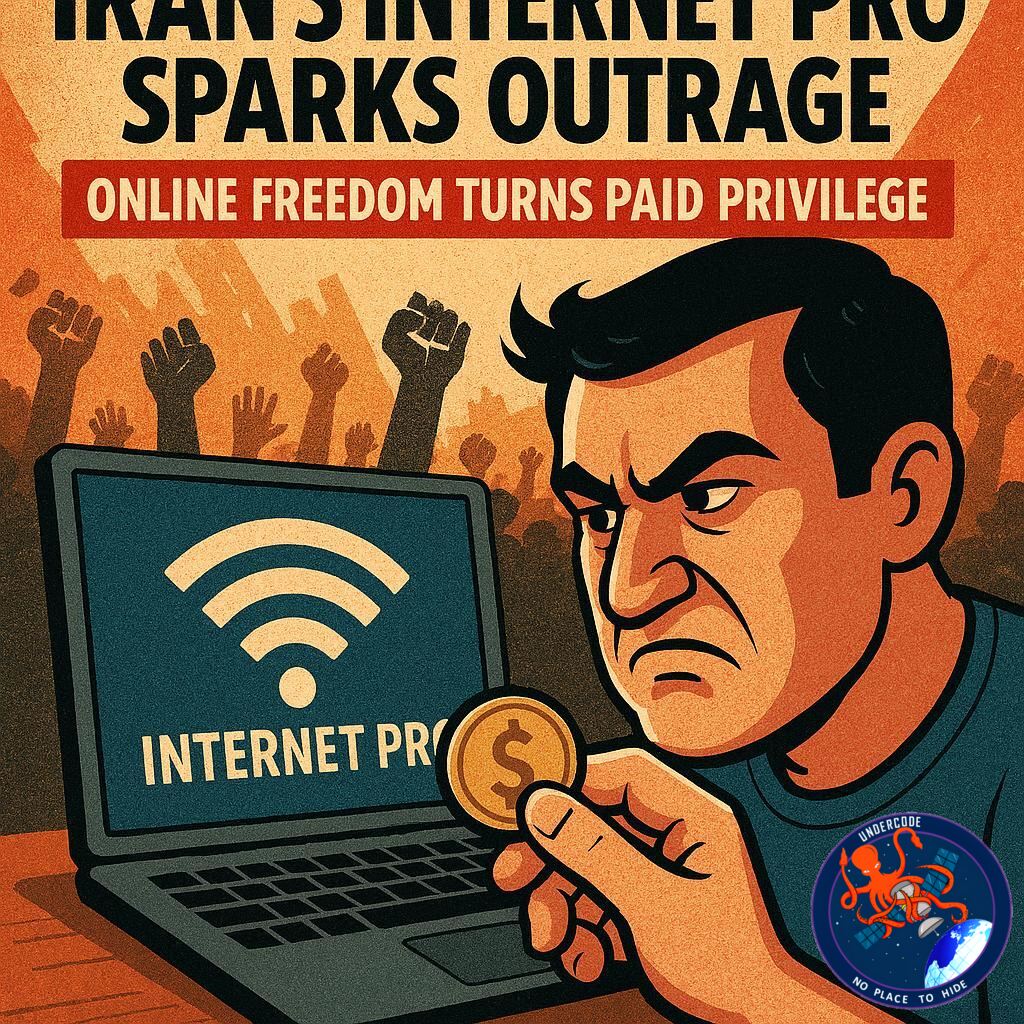
For millions of Iranians, the internet is no longer a basic utility. It has become a controlled and expensive privilege reserved for select groups. After months of severe restrictions following the February 28 attacks involving the United States and Israel, Iran’s leadership has introduced a controversial system called “Internet Pro,” a paid access program that offers limited connection to the global internet for approved users.
The decision has ignited criticism both inside and outside Iran. Many believe the system deepens inequality, strengthens state surveillance, and transforms access to information into a luxury available only to those connected to government-approved sectors. While officials describe the move as necessary for economic stability during a national crisis, critics argue it represents one of the most aggressive forms of digital segregation ever implemented in the country.
The debate around Internet Pro goes beyond technology. It reflects a larger struggle involving censorship, economic collapse, social control, and the future of free communication in Iran.
Iran’s Longest Internet Shutdown Creates Digital Isolation
Iran has experienced internet restrictions many times over the past decade, especially during protests and political unrest. However, the current shutdown has become the longest in the country’s history, lasting more than 80 days.
The blackout began after military tensions escalated on February 28. Since then, ordinary citizens have faced near-total isolation from global communication platforms. Access to foreign websites and social media services has been heavily restricted, making it difficult for people to communicate with relatives abroad, follow international news, or conduct online business activities.
Authorities have repeatedly used internet disruptions as a security strategy during periods of instability. By limiting online access, the state can reduce the spread of protest organization, independent journalism, and uncensored reporting. But the human cost has become enormous.
Families have lost income streams, students have struggled to continue their education, and small businesses dependent on digital platforms have collapsed almost overnight.
What Exactly Is “Internet Pro”?
Despite its name, Internet Pro is not a faster or more advanced internet service. Instead, it is essentially a paid bypass system that grants selected groups limited access to the broader internet.
Approved users receive a package containing 50 gigabytes of international data traffic for around $11. While this amount may not sound excessive outside Iran, it is considered extremely expensive within the country’s struggling economy.
Access is mostly granted to professionals tied to sectors considered economically valuable by the government. These include technology companies, startup founders, Chamber of Commerce members, and certain retailers.
Even then, the system remains heavily restricted. Platforms such as Instagram, YouTube, and X continue to face blocking measures. Many users still rely on VPN services to reach these websites despite paying for Internet Pro access.
This has led many Iranians to question the true purpose of the initiative. Critics say the government is not restoring internet freedom but monetizing censorship.
Inflation and Economic Collapse Intensify the Crisis
Iran’s economy was already under severe strain before the internet shutdown began. Inflation has reportedly climbed above 50%, while the Iranian rial continues to lose value against the US dollar.
The shutdown has added another devastating layer to the crisis.
Factories damaged during military conflict have reduced production across several industries. Thousands of workers have lost their jobs. Yet official unemployment statistics fail to capture another major loss: the destruction of small online income opportunities.
For years, many Iranians, especially women in smaller towns and rural areas, depended on social media platforms to support their families. They sold handmade products, clothing, food items, crafts, and local goods through Instagram-based businesses and messaging apps.
With internet access restricted, these small digital marketplaces disappeared almost instantly.
For many households, these online activities were not side projects. They were survival mechanisms.
Women and Students Are Among the Biggest Losers
One of the most criticized aspects of Internet Pro is the exclusion of ordinary citizens who depend heavily on digital access.
Women who financially support their families through online work are largely excluded from the approved categories. University students also remain outside the priority groups despite relying on online research tools and educational resources.
A 19-year-old engineering student speaking anonymously described the growing fear surrounding the new system. Because Internet Pro requires registration through national ID numbers and verified mobile accounts, many users worry that increased internet access comes with expanded surveillance.
As a result, some citizens continue buying VPN services through underground markets despite rising prices and unreliable connections.
The situation has created a two-tier digital society. Wealthier or institutionally connected individuals gain limited online access, while millions remain digitally trapped.
VPN Markets Become Underground Lifelines
The restrictions have unintentionally created a booming black market for VPN services. Iranians desperate for unrestricted access often turn to unofficial sellers offering private VPN configurations.
However, even this workaround has become increasingly difficult. VPN prices have risen sharply, and many services no longer function reliably during near-total shutdowns.
Digital rights researchers warn that users face growing cybersecurity risks when purchasing unregulated VPN software from underground channels. Malware, phishing attacks, and government infiltration remain constant concerns.
Still, for many citizens, unreliable VPNs are the only remaining gateway to independent journalism and international communication.
The Government’s Official Justification
Iranian officials argue that Internet Pro is designed to protect economic activity during emergencies.
Government spokesperson Fatemeh Mohadscherani stated that the system helps prevent disruptions to businesses and ensures communication channels remain open for critical sectors.
President Masoud Pezeshkian has also promised that broader internet access will eventually return.
At the same time, authorities are restructuring how digital control is managed inside the country. A new crisis management body reportedly led by Vice President Mohammad Reza Aref has been created to centralize internet policy decisions.
Yet very little information about this organization has been made public. Reports suggest even government officials are prohibited from discussing its structure or responsibilities openly.
That secrecy has only increased suspicion among citizens and international observers.
What Undercode Say:
Digital Control Is Becoming an Economic Product
Iran’s Internet Pro system represents something larger than censorship. It signals the transformation of internet freedom into a paid commodity controlled directly by the state.
Historically, authoritarian governments restricted access through blocking and surveillance. What makes this model different is the introduction of selective monetization. Citizens are now effectively asked to pay for fragments of freedom while remaining under supervision.
That changes the psychological relationship between governments and digital rights.
Instead of openly banning the internet for everyone, authorities can now create tiered systems where privileged users receive controlled access while the broader population remains disconnected. This approach reduces international backlash because officials can claim the internet still exists, even though access is deeply unequal.
The Iranian model may become a blueprint for other governments facing political instability.
Internet Shutdowns Now Damage Entire Economies
In earlier years, internet restrictions mainly disrupted communication and media consumption. Today, shutting down the internet damages the entire economic infrastructure of modern societies.
Millions of people worldwide now depend on digital platforms for work, education, payments, transportation, and commerce. In Iran, Instagram alone had become a major informal marketplace before restrictions intensified.
The collapse of these networks disproportionately harms lower-income populations because they lack financial cushions.
Large corporations may survive internet shutdowns temporarily. Small online sellers usually cannot.
This is why many analysts believe internet access should increasingly be viewed as economic infrastructure rather than merely a communication tool.
The Rise of Digital Class Divisions
One of the most alarming aspects of Internet Pro is the creation of digital class systems.
Access is no longer determined by technical availability but by political and economic status. If internet freedom depends on your profession, your institutional connections, or your ability to pay high prices, then digital inequality becomes institutionalized.
This creates long-term social consequences.
Students lose educational opportunities. Independent journalists lose audiences. Rural entrepreneurs lose customers. Women running home businesses lose financial independence.
Meanwhile, approved sectors continue functioning with partial privileges.
Such systems risk widening existing inequalities across society.
Surveillance Concerns Are Not Paranoia
The fears surrounding national ID registration are understandable.
Whenever internet access becomes centralized through identity-linked systems, concerns about surveillance naturally increase. Many users worry that online activity could become easier to monitor, categorize, and punish.
Even if the official intention is administrative control, the perception of surveillance changes user behavior dramatically.
People become more cautious about what they search, share, or discuss online. Over time, self-censorship becomes normalized.
This silent chilling effect can sometimes become more powerful than outright bans.
VPN Dependency Reflects System Failure
The explosion of underground VPN usage reveals a basic truth: people will always search for open communication channels when restrictions intensify.
Governments may slow access temporarily, but completely controlling information in the digital era remains extremely difficult.
The more restrictions expand, the more sophisticated circumvention methods become.
Iran has experienced this cycle repeatedly over the years. Each new restriction generates new bypass tools, underground networks, and digital resistance strategies.
Yet ordinary citizens pay the highest price during this endless technological tug-of-war.
The International Impact Could Grow
Iran’s internet policies are no longer just domestic matters.
Global human rights organizations increasingly view internet shutdowns as violations of civil liberties. International businesses also pay attention because digital instability affects investment confidence and economic partnerships.
If prolonged shutdowns become normalized, Iran risks further technological isolation from the global economy.
That isolation may ultimately hurt innovation, entrepreneurship, scientific collaboration, and long-term development far more than authorities anticipate.
A Generation Growing Up Behind Digital Walls
Perhaps the deepest consequence is psychological.
Young Iranians are growing up in an environment where unrestricted internet access feels abnormal rather than standard. Constant filtering, blocked apps, and unreliable connections shape how an entire generation experiences information.
This creates frustration, mistrust, and cultural isolation.
The internet was once seen as a bridge connecting Iranian youth to global culture, education, and opportunity. Increasing restrictions threaten to turn that bridge into a narrow government-controlled tunnel.
The long-term social impact of that transformation may take years to fully understand.
Fact Checker Results
✅ Iran has implemented one of its longest internet shutdowns following regional military tensions.
✅ Internet Pro is a restricted paid-access system rather than a true restoration of open internet freedom.
❌ Claims that Internet Pro fully restores unrestricted access to global platforms are inaccurate since many services still require VPN usage.
Prediction
📉 Iran will likely continue experimenting with tiered internet access models instead of restoring completely open connectivity.
📱 Underground VPN markets and digital circumvention tools are expected to grow even larger as restrictions persist.
🌍 International criticism over digital repression in Iran will probably intensify, especially if economic and educational damage continues expanding.
▶️ Related Video (82% Match):
🕵️📝Let’s dive deep and fact‑check.
References:
Reported By: www.dw.com
Extra Source Hub (Possible Sources for article):
https://www.reddit.com/r/AskReddit
Wikipedia
OpenAi & Undercode AI
Image Source:
Unsplash
Undercode AI DI v2
Bing
🔐JOIN OUR CYBER WORLD [ CVE News • HackMonitor • UndercodeNews ]
📢 Follow UndercodeNews & Stay Tuned:
𝕏 formerly Twitter 🐦 | @ Threads | 🔗 Linkedin | 🦋BlueSky | 🐘Mastodon | 📺Youtube


