
Listen to this Post
Introduction
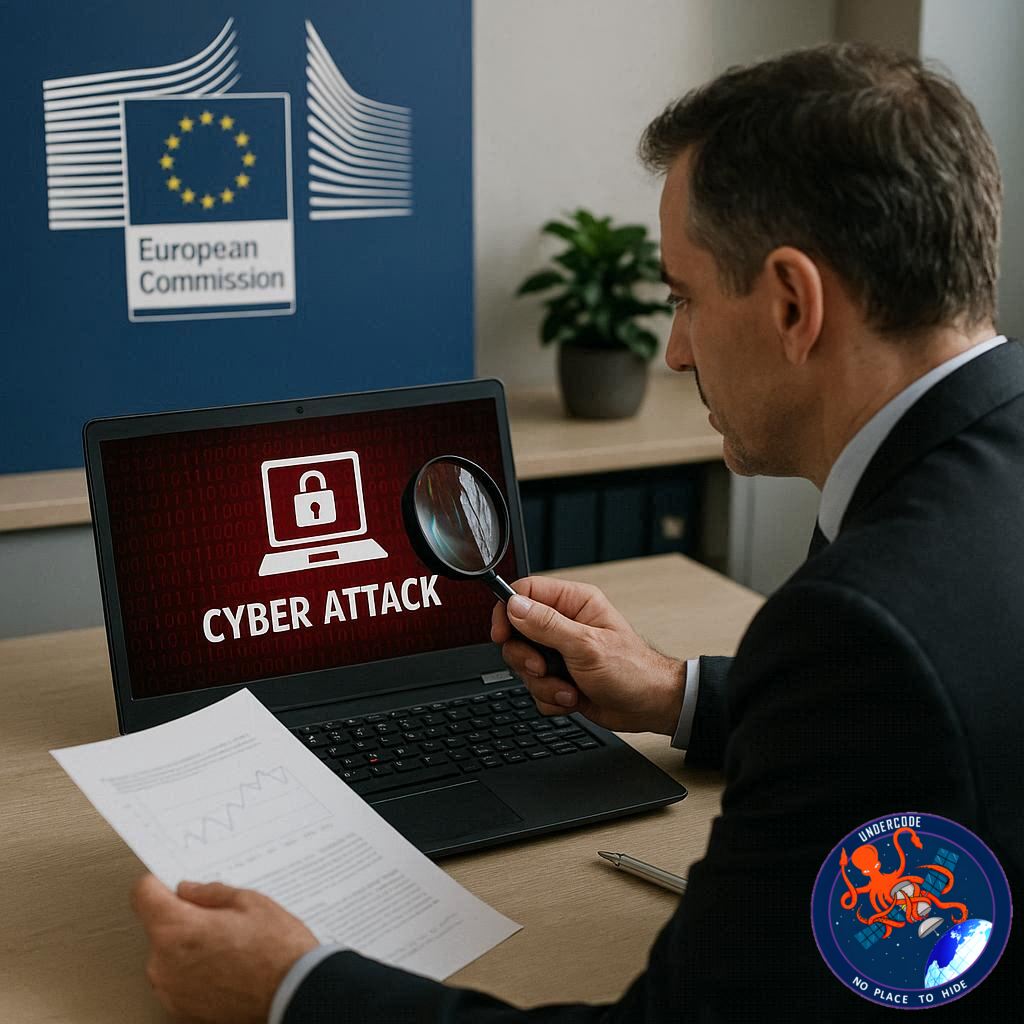
Cybersecurity threats against public institutions are no longer rare events, they are persistent pressure tests on trust, governance, and digital resilience. The European Commission has now joined a growing list of high-profile organizations facing sophisticated intrusion attempts. In late January, signs of unauthorized access were detected within a critical system responsible for managing mobile devices used by EU staff. While officials moved quickly to contain the incident, the breach raises serious questions about exposure risks, operational security, and the evolving tactics of threat actors targeting European institutions.
the Incident
The European Commission confirmed it is investigating a cyberattack affecting its mobile device management platform after identifying traces of malicious activity on January 30. According to official statements, attackers may have gained access to limited staff-related data, specifically names and mobile phone numbers of some employees. Importantly, the Commission emphasized that no mobile devices themselves were compromised during the incident.
The breach was detected within the Commission’s central infrastructure that oversees mobile device administration. Once discovered, internal security teams responded rapidly, managing to contain and fully clean the affected system within a nine-hour window. This swift action appears to have prevented further lateral movement or escalation inside the network.
Authorities have not disclosed the attack vector used by the threat actors, leaving open questions about whether the intrusion resulted from a vulnerability, credential misuse, or a more advanced supply-chain style compromise. The European Computer Emergency Response Team, known as CERT-EU, has been tasked with conducting a deeper investigation into the breach to determine scope, method, and attribution.
While the immediate technical impact seems limited, the exposure of staff contact details introduces secondary risks. Stolen names and phone numbers can be leveraged in targeted phishing or vishing campaigns, where attackers impersonate colleagues or officials to trick victims into revealing credentials or approving malicious requests. Such data is especially valuable for reconnaissance, enabling spear-phishing operations or even physical targeting of high-value personnel.
This is not the first time EU institutions have faced cybersecurity challenges. In March 2021, multiple European Union bodies were affected by a coordinated IT security incident, though details about the attackers or techniques were never publicly disclosed. At the time, EU staff were warned about increased phishing activity, suggesting a recurring pattern of social engineering campaigns aimed at European officials.
Sources cited by Bloomberg previously described some of these incidents as more severe than typical background cyber noise targeting large institutions. Combined with the latest event, this reinforces concerns that EU digital infrastructure remains a prime target for both criminal and state-aligned threat actors seeking intelligence, disruption, or influence.
What Undercode Say:
This incident may appear minor on the surface, but strategically it carries significant weight. Mobile device management systems sit at a sensitive crossroads of identity, access control, and operational visibility. Even without direct device compromise, access to MDM platforms can reveal how an organization structures trust, permissions, and internal workflows.
The European Commission’s rapid containment is commendable, yet speed alone does not equal immunity. The absence of disclosed technical details suggests either an ongoing investigation or concerns about revealing defensive weaknesses. In cybersecurity, silence often signals complexity rather than simplicity.
The exposure of staff phone numbers is not trivial. Modern cyber operations increasingly blend digital intrusion with human manipulation. A well-crafted vishing call, backed by accurate internal context, can bypass even the strongest technical controls. For institutions like the EU, where authority and hierarchy matter, impersonation attacks are especially dangerous.
There is also a regulatory paradox at play. The European Union is a global enforcer of data protection standards through GDPR, yet breaches affecting its own institutions inevitably invite scrutiny. Even limited data exposure can translate into reputational damage and political pressure, particularly when public trust in digital governance is at stake.
Historically, repeated low-level incidents often indicate persistent access attempts rather than isolated failures. Threat actors test defenses incrementally, collecting small datasets that later enable larger, more damaging campaigns. From that perspective, this breach should be viewed less as an endpoint and more as a warning signal.
The lack of attribution further complicates the picture. Without knowing whether the attacker was a cybercriminal group, a hacktivist collective, or a state-aligned actor, defensive adjustments risk being reactive rather than strategic. Long-term resilience depends on understanding intent as much as technique.
Ultimately, this event underscores a broader reality: critical institutions are no longer breached solely for immediate disruption. They are mapped, studied, and socially engineered over time. Cybersecurity today is not just about systems staying online, but about people remaining unmanipulated in environments saturated with partial truths and trusted identities.
Fact Checker Results
✅ The European Commission confirmed detection and containment of the cyberattack within nine hours.
✅ No mobile devices were reported as compromised during the incident.
❌ The attack vector and threat actor attribution remain undisclosed and unverified.
Prediction
📊 Future investigations are likely to reveal tighter access controls and revised MDM security policies across EU institutions.
📊 Expect increased staff training focused on vishing and impersonation threats using legitimate internal data.
📊 Continued targeting of European bodies suggests this will not be the last test of EU cyber resilience.
▶️ Related Video (90% Match):
🕵️📝✔️Let’s dive deep and fact‑check.
References:
Reported By: securityaffairs.com
Extra Source Hub (Possible Sources for article):
https://www.pinterest.com
Wikipedia
OpenAi & Undercode AI
Image Source:
Unsplash
Undercode AI DI v2
Bing
🔐JOIN OUR CYBER WORLD [ CVE News • HackMonitor • UndercodeNews ]
📢 Follow UndercodeNews & Stay Tuned:
𝕏 formerly Twitter 🐦 | @ Threads | 🔗 Linkedin | 🦋BlueSky | 🐘Mastodon


