
Listen to this Post
Introduction: When Demand Outpaces the Digital Dream
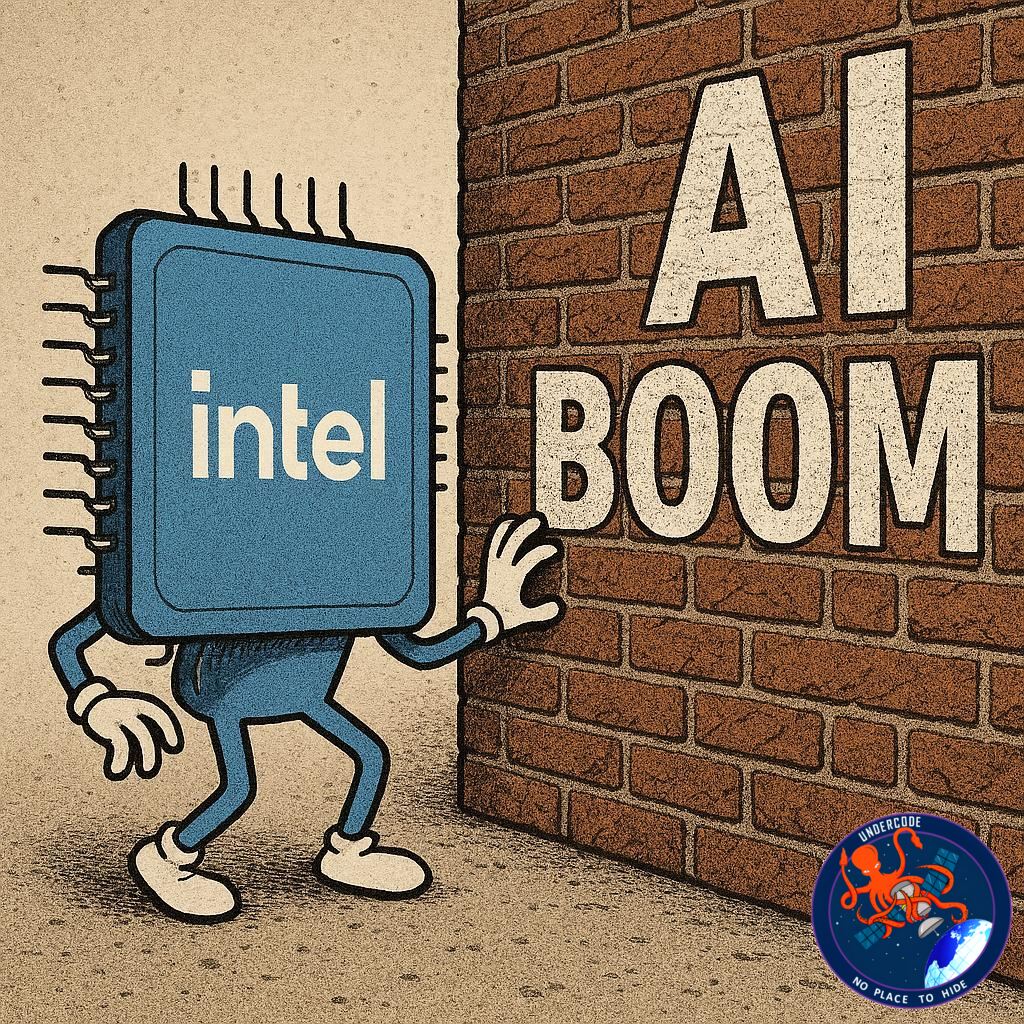
The global AI surge is often framed as a race of algorithms, models, and software breakthroughs. But behind the scenes, a far more concrete limitation is tightening its grip. Intel CEO Lip-Bu Tan is discovering that the future of artificial intelligence is no longer constrained by imagination or code. It is constrained by silicon, memory, heat, and factories that cannot expand fast enough. What once looked like a software revolution is now colliding with the physical limits of modern computing infrastructure.
Executive Pressure Reveals a Hardware Crisis
Intel’s leadership is facing a wave of unprecedented pressure from the world’s most powerful companies. CEOs across industries are calling directly, asking for more chips, more capacity, and faster delivery. This is not polite curiosity. It is urgency bordering on desperation. The AI economy has reached a point where access to hardware determines who can grow and who must wait.
A New CEO at a Critical Moment
Lip-Bu Tan stepped into the Intel CEO role just eleven months ago, following two years on the company’s board. Many in his circle warned him away from the position, citing Intel’s struggles and the personal risk to his strong reputation in venture capital. Tan saw something else. He saw a foundational American company whose survival and revival matter far beyond shareholders. That decision now places him at the center of the most intense demand cycle Intel has ever faced.
Demand Beyond Intel’s Current Capacity
The scale of requests coming into Intel goes far beyond what the company can realistically deliver today. AI workloads are expanding at a pace that traditional capacity planning was never designed to handle. Even as Intel ramps production, the gap between supply and demand continues to widen, exposing structural weaknesses across the entire semiconductor ecosystem.
Memory Emerges as the Real Bottleneck
While processors dominate headlines, Tan made it clear that memory is the true choke point. High-bandwidth memory has become the lifeblood of modern AI chips. Conversations with two of the three major memory manufacturers revealed a grim outlook. No meaningful supply relief is expected before 2028. This timeline places a hard ceiling on near-term AI expansion.
AI’s Appetite Drains the Entire Electronics Market
AI accelerators from Nvidia, AMD, and others consume enormous volumes of advanced memory. This demand is so aggressive that it is now pulling supply away from traditional markets. PC manufacturers and smartphone makers are feeling the pressure as memory availability tightens across consumer and enterprise segments alike.
Moore’s Law Accelerates Beyond Infrastructure
One of Tan’s most striking observations highlights how disconnected innovation speed has become from manufacturing reality. Moore’s Law once implied progress every few years. Now, compute requirements appear to be doubling every few months. Supply chains, capital investment cycles, and fabrication timelines simply cannot move at that velocity.
Thermal Limits Stall Peak Performance
Even when chips exist, physics imposes another barrier. High-performance AI processors often cannot operate at full speed due to heat and power constraints. Engineers are forced to dial back clock speeds to maintain stability. This means theoretical performance figures rarely translate into real-world output at scale.
Cooling Becomes a Strategic Technology
Air cooling is no longer sufficient for modern AI infrastructure. Tan pointed to liquid cooling, micro-channel designs, and immersion cooling as necessities rather than future experiments. Data centers are evolving into complex thermal systems, and cooling innovation is becoming just as critical as chip design itself.
Intel Foundry Shows Signs of Revival
Amid these challenges, Intel’s manufacturing business is showing measurable improvement. Tan acknowledged that yields on the advanced 18A process were initially poor. Through focused execution, the company has achieved steady monthly yield gains of seven to eight percent. This progress is beginning to attract external customers.
Customers Return as Confidence Rebuilds
Several potential foundry clients are now actively engaging with Intel, encouraged by visible improvements in manufacturing performance. Tan expects the second half of the year to bring volume commitments that could validate Intel’s long-awaited comeback as a competitive manufacturing powerhouse.
Summary: A Physical Constraint Redefines the AI Era
The AI boom has entered a new phase defined less by innovation and more by infrastructure. Intel CEO Lip-Bu Tan is navigating an environment where demand from global executives vastly exceeds available hardware. While chips remain scarce, memory has become the most critical bottleneck, with suppliers signaling no relief until 2028. AI accelerators consume enormous memory resources, creating shortages that ripple into PCs and smartphones. At the same time, thermal limits prevent chips from operating at full capacity, forcing the industry toward advanced cooling solutions. Despite these obstacles, Intel’s foundry business is improving, with rising yields on its 18A process and renewed interest from customers. The situation paints a clear picture. AI’s future is now bound by physical realities that cannot be solved overnight.
What Undercode Say: The AI Revolution Hits the Laws of Physics
The most important signal in this story is not Intel’s internal progress, but the systemic nature of the bottlenecks described. AI has officially outgrown the assumptions of the semiconductor era that built it. The industry spent decades optimizing for predictable scaling. AI shattered that model almost overnight.
Memory scarcity is especially revealing. Unlike logic chips, memory manufacturing is capital-intensive with long lead times and limited flexibility. When AI workloads suddenly absorb massive quantities of high-bandwidth memory, there is no rapid way to rebalance supply. This explains why relief timelines stretch years rather than quarters.
Thermal constraints represent another underappreciated risk. As chips grow denser and more powerful, performance gains increasingly translate into heat rather than usable compute. The shift toward liquid and immersion cooling signals a deeper transformation. Data centers are becoming industrial-scale thermal engineering projects, not just racks of servers.
Intel’s foundry recovery matters because geopolitical and supply chain resilience are now strategic priorities. If Intel can deliver competitive yields at scale, it offers customers diversification away from overconcentrated manufacturing regions. That alone gives Intel leverage even before it fully regains technical leadership.
The deeper takeaway is sobering. AI progress is no longer gated by ideas. It is gated by factories, materials, energy, and cooling infrastructure. Companies that control these layers will define the next decade of AI growth, while others will be forced to wait, regardless of how advanced their models may be.
Fact Checker Results
✅ Intel leadership publicly acknowledged severe AI-driven hardware demand.
✅ Memory supply constraints extending toward 2028 align with industry capacity realities.
❌ No evidence suggests short-term breakthroughs will eliminate thermal limits entirely.
Prediction
📊 AI expansion will slow selectively, favoring firms with secured hardware access and advanced cooling infrastructure.
📊 Memory manufacturers will gain outsized strategic power as the scarcest link in the AI supply chain.
📊 Intel’s foundry progress could reposition the company as a critical stabilizer in a strained global semiconductor market.
▶️ Related Video (84% Match):
🕵️📝✔️Let’s dive deep and fact‑check.
References:
Reported By: timesofindia.indiatimes.com
Extra Source Hub (Possible Sources for article):
https://stackoverflow.com
Wikipedia
OpenAi & Undercode AI
Image Source:
Unsplash
Undercode AI DI v2
Bing
🔐JOIN OUR CYBER WORLD [ CVE News • HackMonitor • UndercodeNews ]
📢 Follow UndercodeNews & Stay Tuned:
𝕏 formerly Twitter 🐦 | @ Threads | 🔗 Linkedin | 🦋BlueSky | 🐘Mastodon


