
Listen to this Post
Introduction: A New European Push to Protect Children Online
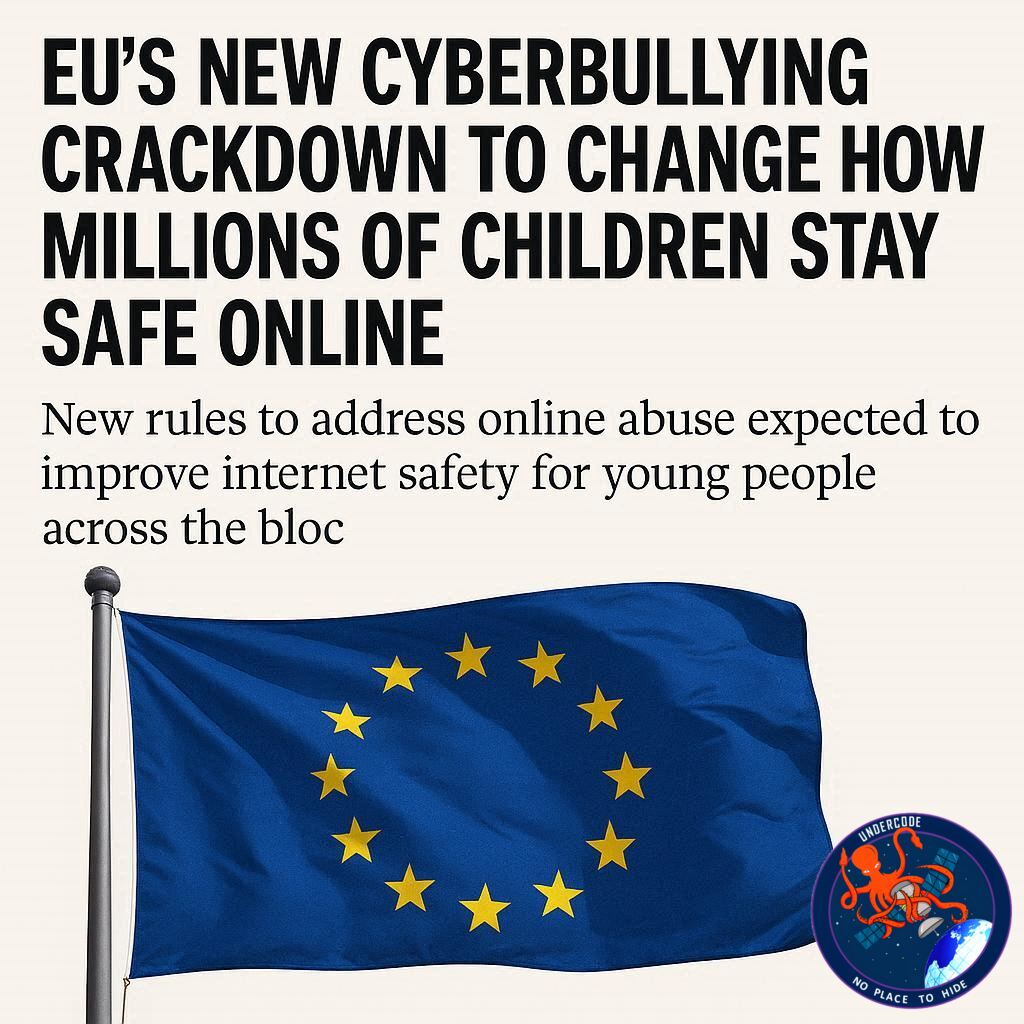
Cyberbullying has quietly become one of the most damaging side effects of the digital age, affecting children across borders, platforms, and cultures. Recognizing the growing scale of the problem, the European Commission has unveiled a new action plan aimed squarely at protecting children and young people from online abuse. At the center of this initiative is a proposed EU-wide online safety app designed to make reporting cyberbullying easier, safer, and more effective. The plan signals a broader shift in how European regulators intend to hold digital platforms accountable while giving young users real tools to defend themselves in an increasingly hostile online environment.
the Original
The European Commission announced a comprehensive action plan to combat cyberbullying, presented to the European Parliament, with a strong focus on helping children and young people safely report online abuse and receive meaningful support. A key pillar of the plan is the development of an EU-wide online safety app that would allow minors to confidentially report incidents of cyberbullying to national helplines, securely store evidence such as screenshots or messages, and share this information with relevant authorities including law enforcement, schools, and child protection services. Although the app is still in an early development phase, the Commission plans to create a common blueprint that all 27 EU member states can adapt to their own national systems. This approach builds on existing successful models, notably France’s “3018” app and helpline, which already provides support for young victims of online abuse. According to the Commission, cyberbullying affects as many as one in six children aged between 11 and 15, highlighting the urgency of coordinated action. EU tech chief Henna Virkkunen emphasized that children have a fundamental right to feel safe online and warned that cyberbullying strips away that sense of security, often leaving victims feeling isolated and humiliated. She called on all member states to adopt coherent national cyberbullying policies based on a shared understanding of the problem. The action plan also fits into a broader EU strategy to protect minors online, which includes exploring age-based restrictions on social media, developing stronger age verification tools, and addressing so-called “addictive design features” used by digital platforms. This comes as regulators intensify scrutiny of major tech companies, with the Commission recently concluding that TikTok’s addictive design may breach the Digital Services Act by failing to adequately protect users, particularly minors. Beyond the app itself, the Commission’s plan calls for tougher enforcement of existing EU laws, including the Digital Services Act and the AI Act, to limit harmful content and prevent the misuse of technologies such as deepfakes for bullying purposes.
What Undercode Say:
The European Commission’s proposal is notable not just for what it introduces, but for what it admits: current systems are failing young users. Cyberbullying has persisted for years despite awareness campaigns, school policies, and platform-level reporting tools, suggesting that fragmented approaches are no longer enough. An EU-wide safety app could finally provide a unified entry point for help, reducing the confusion children face when deciding whether to report abuse to a platform, a school, or the police. Centralizing reporting while keeping it confidential addresses one of the biggest barriers victims face: fear of retaliation or not being taken seriously.
However, the success of this initiative will depend heavily on execution. A blueprint alone will not guarantee equal protection across all 27 member states. National adaptations may vary widely in quality, funding, and responsiveness, potentially creating uneven levels of support. If some helplines are understaffed or poorly integrated with schools and law enforcement, the app risks becoming a symbolic gesture rather than a lifeline. The Commission will need to ensure minimum operational standards and ongoing oversight to prevent this.
The plan’s connection to the Digital Services Act is particularly important. By linking cyberbullying to platform responsibility, the EU is reinforcing the idea that harm caused by “addictive” or poorly moderated systems is not accidental, but structural. The preliminary findings against TikTok send a clear warning to the entire industry: engagement-driven design that ignores child safety will face regulatory consequences. This shifts the narrative from individual responsibility to corporate accountability, a move long demanded by child safety advocates.
There is also a deeper cultural implication. By framing online safety as a fundamental right, the EU is positioning digital well-being alongside physical and psychological protection. This could influence future legislation, education policies, and even product design standards for apps used by minors. The inclusion of AI-related enforcement, particularly against deepfake abuse, shows foresight, as bullying tactics are evolving faster than traditional regulations.
Still, technology alone cannot solve cyberbullying. An app can report harm, but it cannot prevent cruelty rooted in social dynamics, peer pressure, or algorithmic amplification. For this initiative to work, it must be paired with digital literacy education, parental awareness, and meaningful consequences for repeat offenders. The Commission’s action plan is a strong foundation, but its long-term impact will depend on whether enforcement keeps pace with innovation and whether children see real-world results after pressing the “report” button.
Fact Checker Results
The claim that cyberbullying affects roughly one in six children aged 11 to 15 aligns with existing EU-level research on youth online behavior.
The reference to France’s “3018” app as a working model is accurate and verifiable through national child protection services.
The Commission’s findings regarding TikTok and the Digital Services Act are consistent with recent regulatory statements and preliminary investigations.
Prediction
If implemented effectively, the EU-wide cyberbullying app could become the global benchmark for child online safety tools. Over time, similar reporting systems may be adopted outside Europe, especially if enforcement actions under the Digital Services Act lead to measurable reductions in online abuse. At the same time, social media platforms are likely to redesign features aimed at younger users to avoid regulatory penalties, subtly reshaping how the next generation experiences the internet.
🕵️📝✔️Let’s dive deep and fact‑check.
References:
Reported By: www.euronews.com
Extra Source Hub (Possible Sources for article):
https://www.digitaltrends.com
Wikipedia
OpenAi & Undercode AI
Image Source:
Unsplash
Undercode AI DI v2
Bing
🔐JOIN OUR CYBER WORLD [ CVE News • HackMonitor • UndercodeNews ]
📢 Follow UndercodeNews & Stay Tuned:
𝕏 formerly Twitter 🐦 | @ Threads | 🔗 Linkedin | 🦋BlueSky | 🐘Mastodon


