
Listen to this Post
Introduction: A New Malware Loader Slips Through the Cracks
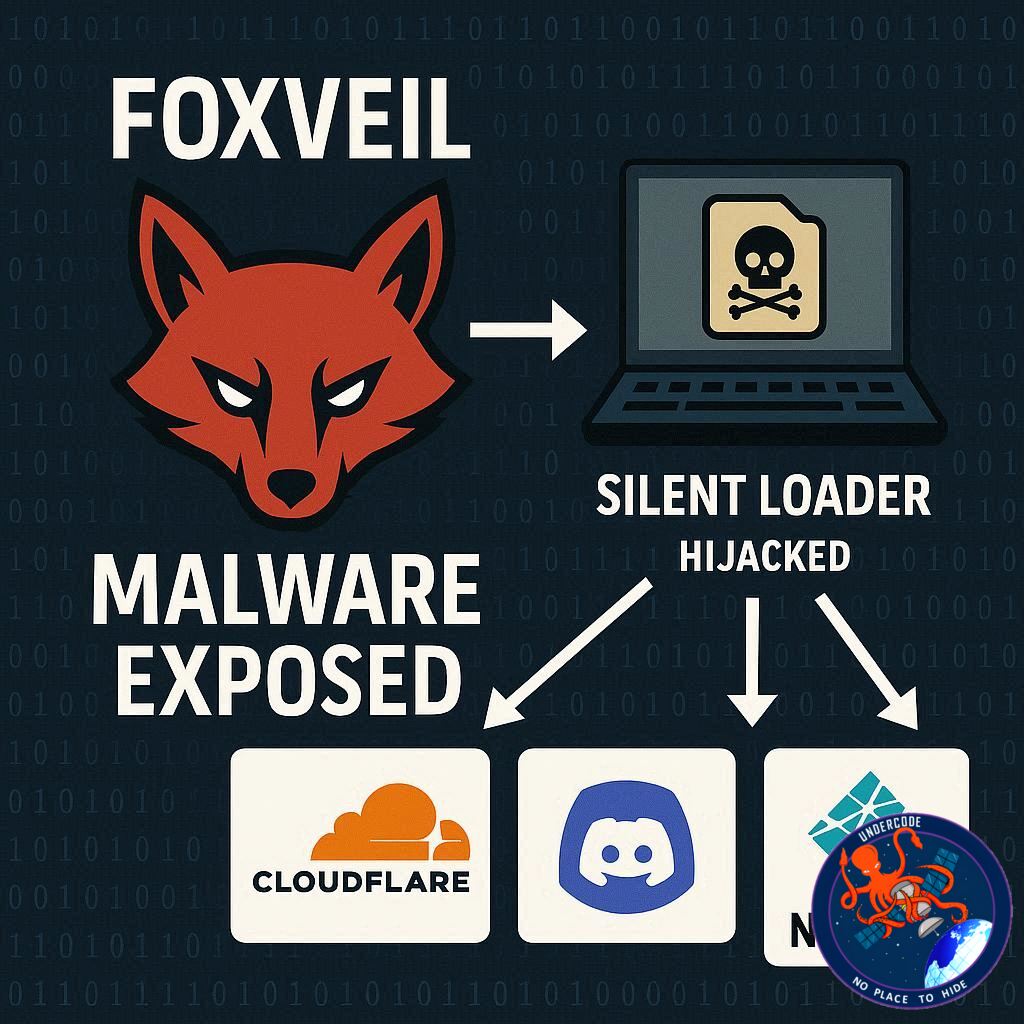
A newly identified malware loader known as Foxveil has quietly entered the threat landscape, leveraging some of the internet’s most trusted platforms to stay hidden. First observed in August 2025, Foxveil represents a growing trend in modern cybercrime: abusing legitimate cloud services to stage, deliver, and persist malicious payloads while evading traditional security defenses. Its emergence highlights how attackers are shifting away from noisy infrastructure toward stealth, memory-only techniques that blend seamlessly into normal enterprise traffic.
the Original Report
Foxveil is a recently discovered malware loader that has been active since at least August 2025, according to threat intelligence shared by Cybersecurity News Everyday. Rather than relying on suspicious or easily blockable infrastructure, Foxveil abuses well-known platforms such as Cloudflare, Discord, and Netlify for payload staging and command-and-control–related activities. This approach allows the malware to hide in plain sight, blending malicious traffic with legitimate cloud and social platform usage.
Technically, Foxveil stands out for its use of in-memory injection, meaning malicious code is executed directly in system memory without leaving obvious traces on disk. This significantly reduces forensic artifacts and makes detection more difficult for signature-based security tools. In addition, the loader employs persistence mechanisms designed to survive reboots and maintain long-term access to compromised systems. These techniques collectively help Foxveil evade traditional endpoint defenses and delay detection.
The report also notes that Cato Networks’ Secure Access Service Edge (SASE) platform was able to block Foxveil activity early in the attack chain, preventing full compromise. This reinforces the importance of early-stage inspection and cloud-aware security controls. While no major widespread outbreak has been publicly confirmed, the malware’s stealthy design and abuse of trusted services suggest it could scale rapidly if left unchecked, particularly in enterprise environments across the United States.
What Undercode Say:
Abusing Trust as a Core Attack Strategy
Foxveil is not innovative because of exotic exploits, but because of how effectively it weaponizes trust. Platforms like Cloudflare, Discord, and Netlify are deeply embedded in everyday enterprise workflows. Blocking them outright is rarely an option, which gives attackers a reliable camouflage layer. This reflects a broader shift where legitimacy itself becomes the attack surface.
Why In-Memory Malware Is the New Normal
The use of in-memory injection signals a clear evolution in loader design. Diskless malware dramatically reduces indicators of compromise, making incident response slower and more expensive. Foxveil aligns with a post-signature world where behavior, not files, is the primary detection challenge for defenders.
Persistence Without Noise
Foxveil’s persistence mechanisms appear designed to be low-friction and low-visibility. Instead of aggressive registry abuse or obvious scheduled tasks, loaders like this increasingly rely on subtle system hooks and living-off-the-land techniques. The goal is longevity, not speed, which suggests Foxveil is optimized for espionage, access brokerage, or downstream ransomware deployment.
SASE as an Early Chokepoint
The early blocking by Cato Networks underscores the growing value of SASE architectures. By inspecting traffic before it reaches endpoints, SASE can disrupt malware loaders at the delivery and staging phase, where they are most vulnerable. This case reinforces that perimeter-less security still needs strong centralized visibility.
A Loader, Not the Final Payload
It is critical to understand that Foxveil is likely just the first step in a larger attack chain. Loaders exist to deliver something more valuable later—ransomware, spyware, or credential stealers. The absence of public data on second-stage payloads should not be interpreted as low risk; it more likely indicates disciplined operational security by the threat actors.
Implications for U.S. Enterprises
Given the malware’s reported activity context and infrastructure choices, U.S.-based organizations are a logical primary target. Enterprises with heavy cloud adoption and relaxed outbound filtering are especially exposed. Foxveil highlights how modern attacks increasingly exploit business convenience as a security weakness.
Detection Requires a Mindset Shift
Defending against threats like Foxveil requires moving beyond static indicators. Memory monitoring, behavioral baselining, and cloud traffic analysis are no longer optional. Organizations that still rely heavily on legacy antivirus approaches are structurally disadvantaged against this class of malware.
🔍 Fact Checker Results
✅ Foxveil has been reported as active since August 2025.
✅ The malware abuses legitimate platforms for staging and delivery.
❌ There is no public evidence yet of a confirmed large-scale outbreak.
📊 Prediction
Foxveil or closely related loaders will likely be reused by multiple threat actors within the next year, evolving into a shared access tool in underground markets. As defenders adapt, attackers will further entrench themselves in trusted cloud ecosystems, making visibility and traffic context the decisive battleground in future malware campaigns.
🕵️📝✔️Let’s dive deep and fact‑check.
References:
Reported By: x.com
Extra Source Hub (Possible Sources for article):
https://www.instagram.com
Wikipedia
OpenAi & Undercode AI
Image Source:
Unsplash
Undercode AI DI v2
Bing
🔐JOIN OUR CYBER WORLD [ CVE News • HackMonitor • UndercodeNews ]
📢 Follow UndercodeNews & Stay Tuned:
𝕏 formerly Twitter 🐦 | @ Threads | 🔗 Linkedin | 🦋BlueSky | 🐘Mastodon


