
Listen to this Post
 Introduction: When a Super Bowl Ad Sparks a Surveillance Firestorm
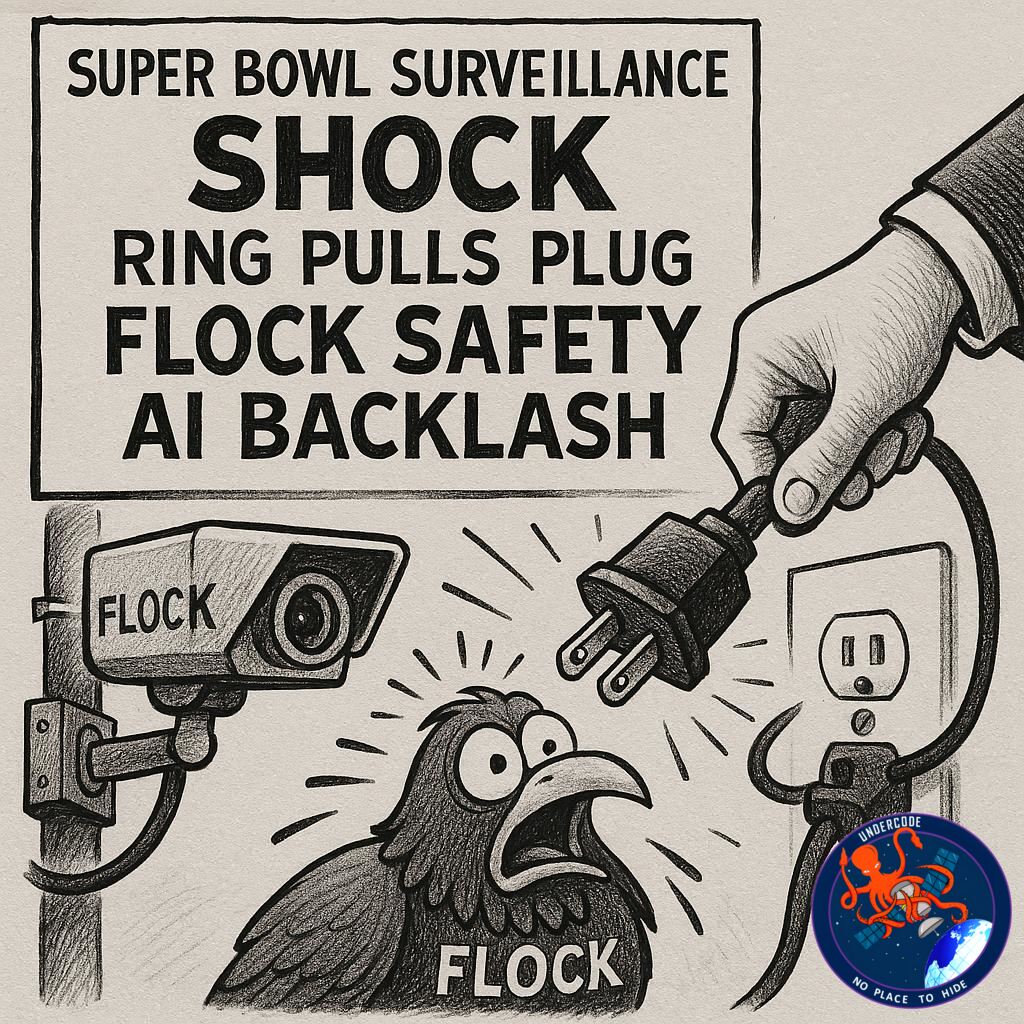
A single Super Bowl advertisement was enough to ignite a national debate about privacy, AI-powered surveillance, and the future of neighborhood monitoring in the United States. What was meant to showcase innovation instead exposed deep public anxiety over how far smart security technology should go. In the aftermath, Ring made a decisive move: canceling its planned integration with Flock Safety, a company known for AI-driven image recognition systems used by neighborhoods and law enforcement alike.
the Original
The controversy began after a Super Bowl advertisement highlighted advanced AI-powered image recognition and neighborhood surveillance capabilities associated with Flock Safety. The ad, amplified during one of the most-watched sporting events in the world, quickly drew backlash from privacy advocates and everyday users who feared increased monitoring and data misuse.
Ring, a major player in the consumer smart security market, had been planning an integration with Flock Safety that would have expanded how visual data and neighborhood intelligence could be used. However, following the public reaction, Ring decided to cancel those plans entirely. The company emphasized that no customer videos were ever shared as part of the proposed integration and that user privacy remained a top priority.
Amazon, Ring’s parent company, issued a statement clarifying that the integration never reached a stage where video data was exchanged. The decision was framed as a response to community concerns rather than a technical or legal failure. Despite this, the situation reignited long-standing criticism of AI surveillance tools, particularly those capable of identifying vehicles, tracking movement, and building behavioral patterns across neighborhoods.
The incident quickly spread across social media and cybersecurity-focused outlets, becoming a flashpoint in the broader discussion around ethical AI, surveillance capitalism, and the balance between safety and civil liberties. While the integration was never launched, the reputational impact was immediate, highlighting how public trust can be shaken even by hypothetical uses of technology.
What Undercode Say:
The cancellation of the Ring–Flock Safety integration is less about a failed partnership and more about a shifting power dynamic between technology companies and the public. For years, surveillance tech expanded quietly, often framed as a tool for “community safety.” The Super Bowl ad disrupted that quiet expansion by placing the technology under the brightest possible spotlight.
Ring’s response shows that public perception now moves faster—and hits harder—than regulatory pressure. Even without evidence of data sharing, the idea of tighter AI-driven neighborhood surveillance was enough to trigger backlash. This suggests a growing intolerance for opaque AI systems, especially those tied to physical-world monitoring rather than abstract data analytics.
From a cybersecurity perspective, this episode also reveals how reputational risk has become a core security concern. No breach occurred. No leak was reported. Yet the damage was real. Trust, once eroded, can undermine entire product ecosystems. For companies like Ring, whose business model depends on consumers voluntarily installing always-on cameras in private spaces, perception is everything.
The involvement of Amazon adds another layer. As a tech giant already under scrutiny for data practices, Amazon cannot afford even indirect associations with controversial surveillance narratives. Pulling the integration early was likely a defensive maneuver designed to contain risk before lawmakers, activists, or regulators escalated the issue.
This case also signals a broader trend: AI image recognition is no longer judged purely on accuracy or effectiveness. Social acceptance, ethical framing, and transparency are becoming just as critical. Companies that fail to communicate clear boundaries around data use will increasingly find themselves forced into reactive decisions.
In the long run, this may slow the rollout of neighborhood-scale surveillance systems—or at least force them into clearer opt-in models with stronger privacy guarantees. The public message is clear: innovation without trust is not innovation at all.
🔍 Fact Checker Results
✅ Ring did cancel its planned integration with Flock Safety following public backlash.
✅ Amazon stated that no customer videos were shared during the proposed collaboration.
❌ There is no evidence that the integration was ever active or operational before cancellation.
📊 Prediction
The backlash following the Super Bowl ad will push smart security companies to rethink how they market AI surveillance. Expect quieter rollouts, stronger privacy messaging, and possibly new industry standards limiting how image recognition data can be shared or integrated across platforms.
🕵️📝✔️Let’s dive deep and fact‑check.
References:
Reported By: x.com
Extra Source Hub (Possible Sources for article):
https://stackoverflow.com
Wikipedia
OpenAi & Undercode AI
Image Source:
Unsplash
Undercode AI DI v2
Bing
🔐JOIN OUR CYBER WORLD [ CVE News • HackMonitor • UndercodeNews ]
📢 Follow UndercodeNews & Stay Tuned:
𝕏 formerly Twitter 🐦 | @ Threads | 🔗 Linkedin | 🦋BlueSky | 🐘Mastodon


