
Listen to this Post
 Introduction: When the World’s Largest Video Platform Suddenly Goes Silent
For billions of people, YouTube is more than just a video platform. It is a search engine, a classroom, a newsroom, and for many creators, a primary source of income. So when the service abruptly stops working, the impact is immediate and global. That is exactly what unfolded during a widespread outage that left users across multiple countries unable to load videos, log in, or stream content. Within minutes, confusion spread. Within hours, hundreds of thousands of complaints piled up. And yet, the official explanation remained notably absent.
Summary: What Happened During the YouTube Disruption
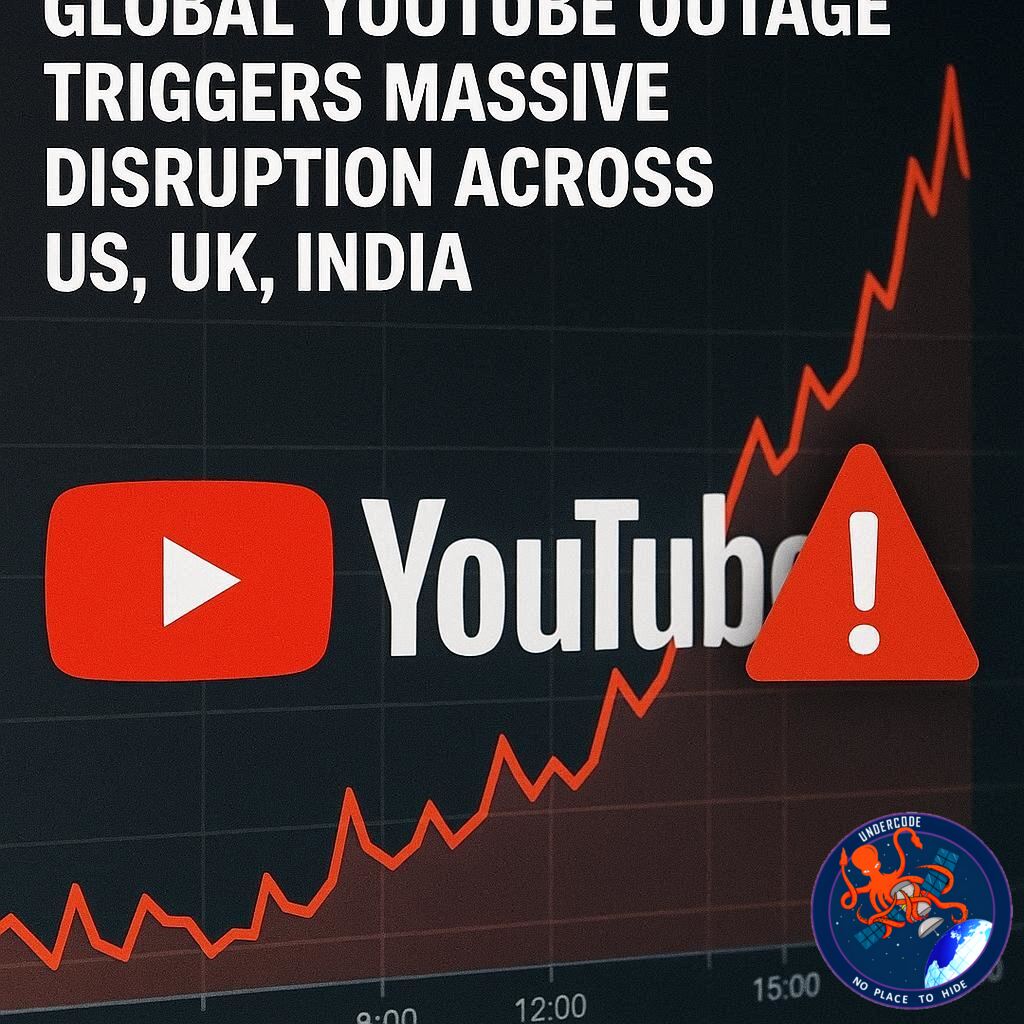
A significant outage hit YouTube, disrupting access for users worldwide. Reports began surfacing of videos failing to load on both the YouTube mobile application and the web version. The disruption was not limited to one region. Users in the United States, the United Kingdom, and India were among the most affected.
According to data from DownDetector, a platform that tracks service outages in real time, the scale of the problem was substantial. At the peak of the disruption in the United States, more than 240,000 reports were recorded. India registered approximately 17,000 complaints, reflecting widespread accessibility issues. These numbers indicate a systemic problem rather than isolated regional glitches.
User-reported data highlighted the nature of the technical failures. Around 56 percent of affected users reported issues specifically with the YouTube app. Meanwhile, 17 percent encountered problems accessing the website through browsers. Approximately 15 percent were unable to log into their accounts at all. These statistics suggest that the malfunction impacted multiple layers of the platform’s infrastructure, from front-end access to authentication systems.
Beyond simple loading failures, users described video playback interruptions, streaming breakdowns on YouTube TV, and repeated error messages. Some reported being unable to start videos altogether, while others experienced abrupt pauses and buffering loops. Login and account access failures added to the frustration, especially for creators attempting to manage their channels.
Several online technical observers suggested that the outage may have stemmed from a backend server configuration error. While no formal confirmation was immediately provided, the scale and pattern of disruption pointed toward a centralized infrastructure issue rather than a localized network failure.
Despite the massive impact and global attention, YouTube did not release a detailed explanation at the time of the outage. The absence of immediate transparency fueled speculation and drove users to alternative platforms in search of answers.
As YouTube went dark for many, users flocked to X, formerly known as Twitter, to confirm whether the issue was widespread. Social media quickly transformed into a live incident dashboard. Hashtags related to the outage began trending, with users sharing screenshots, error messages, and humorous commentary.
One user wrote that YouTube appeared to be down worldwide and described it as a likely temporary server issue. Another noted the irony that whenever YouTube crashes, people rush to X to investigate, effectively turning the social platform into a real-time news hub. The pattern reflects a broader digital behavior: when a dominant platform fails, attention shifts instantly to its competitors.
The outage underscored how deeply integrated YouTube has become in daily life. From entertainment and education to live streaming and television services, the disruption temporarily interrupted a core digital artery used by millions every minute.
What Undercode Say: The Infrastructure Fragility Behind Big Tech Dominance
The YouTube outage reveals something larger than a temporary technical hiccup. It exposes the paradox of digital centralization. Platforms like YouTube operate on highly complex cloud infrastructures, distributed data centers, and automated server configurations. Yet despite this sophistication, a single backend misconfiguration can cascade into a global shutdown.
This event illustrates how scale does not eliminate vulnerability. In fact, scale amplifies it. When a platform serves billions, even minor backend inconsistencies can propagate instantly across regions. A server configuration error is not just a coding mistake. It can interrupt ad delivery systems, streaming pipelines, authentication protocols, and recommendation algorithms simultaneously.
The numbers from the United States alone, exceeding 240,000 reports, demonstrate how quickly digital dependency translates into digital panic. Creators rely on YouTube for monetization. Businesses depend on it for advertising. Students use it for tutorials. When access collapses, economic and informational flows stall.
Another key insight lies in user migration behavior. The immediate shift to X for verification highlights the decentralized nature of information flow. Ironically, while video streaming remains centralized under a few dominant players, outage verification remains social and crowdsourced. Platforms like X become crisis communication hubs during digital breakdowns.
The lack of immediate detailed explanation from YouTube also raises questions about corporate transparency in high-impact outages. In a hyperconnected era, silence can escalate speculation. Users today expect near-instant communication from tech giants. Even acknowledging investigation status can shape public perception.
From a technical perspective, backend server configuration errors often involve routing mismanagement, faulty updates, or synchronization failures between distributed systems. In cloud-driven ecosystems, automated deployment pipelines can sometimes push updates at global scale within seconds. If an error bypasses validation checks, the consequences are immediate and widespread.
The outage also underscores the importance of redundancy architecture. True resilience requires layered failover systems, real-time rollback mechanisms, and predictive monitoring. When any of these safeguards underperform, downtime becomes unavoidable.
Economically, even short outages can carry measurable financial impact. Advertising impressions are lost. Subscription services experience interruptions. Brand trust weakens slightly with each disruption. For creators streaming live content or launching scheduled uploads, timing disruptions can reduce engagement metrics that directly affect income.
Psychologically, the reaction reveals modern digital dependency. The collective rush to confirm outages on social platforms reflects a society conditioned to constant availability. When a dominant service pauses, it creates a brief but noticeable void.
In broader terms, this incident reinforces the fragility of centralized digital ecosystems. While users perceive platforms like YouTube as omnipresent and stable, the infrastructure behind them remains susceptible to human error and software complexity.
Ultimately, the outage is less about temporary inconvenience and more about structural risk concentration. As more economic activity migrates online, infrastructure resilience becomes a matter of public interest rather than corporate concern alone.
Fact Checker Results
✅ DownDetector recorded over 240,000 outage reports in the United States during peak disruption.
✅ Users reported app, website, login, and streaming issues simultaneously.
❌ No confirmed official explanation has yet publicly detailed the precise root technical cause.
Prediction
📊 Short-term stability is likely to be restored quickly as backend configurations are corrected.
📊 Increased infrastructure audits and monitoring enhancements may follow internally.
📊 Future outages could trigger faster official transparency responses to manage global user trust.
▶️ Related Video (86% Match):
🕵️📝✔️Let’s dive deep and fact‑check.
References:
Reported By: timesofindia.indiatimes.com
Extra Source Hub (Possible Sources for article):
https://www.quora.com/topic/Technology
Wikipedia
OpenAi & Undercode AI
Image Source:
Unsplash
Undercode AI DI v2
Bing
🔐JOIN OUR CYBER WORLD [ CVE News • HackMonitor • UndercodeNews ]
📢 Follow UndercodeNews & Stay Tuned:
𝕏 formerly Twitter 🐦 | @ Threads | 🔗 Linkedin | 🦋BlueSky | 🐘Mastodon


