
Listen to this Post
A Long-Closed Door Finally Opens Between Android and Apple
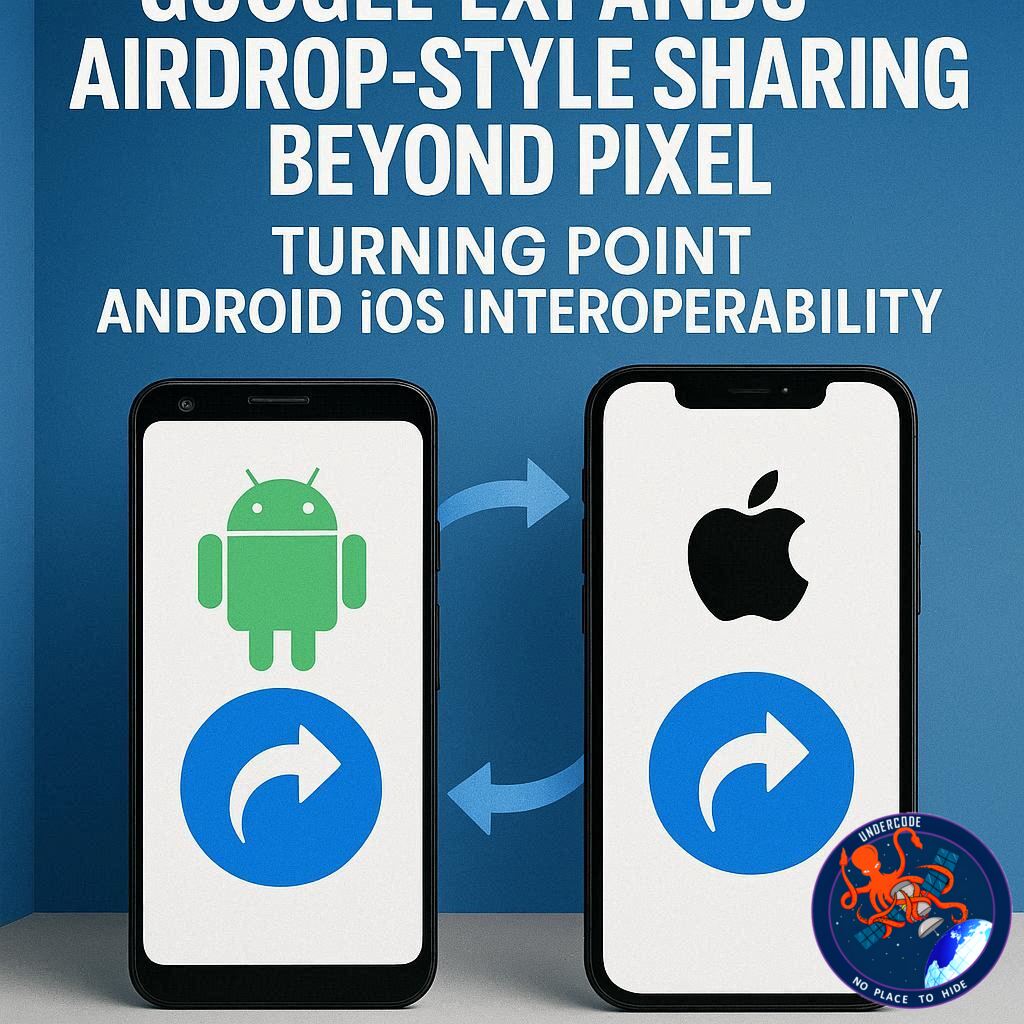
For years, seamless file sharing across Android and Apple devices felt like a fantasy shaped by corporate rivalry and technical roadblocks. Google’s Quick Share existed, Apple’s AirDrop thrived, and the two worlds rarely touched without awkward workarounds. That balance is now shifting. Google has officially confirmed that its AirDrop-compatible file sharing will no longer be locked to the Pixel 10 lineup, signaling a broader Android-wide expansion in 2026 that could permanently change how files move between platforms.
the Original Announcement and Its Implications
Google’s Vice President of Engineering for Android, Eric Kay, confirmed during a press briefing in Taipei that the company is preparing to expand its cross-platform file sharing feature to many more Android devices. The feature, launched quietly in late 2025, allows Android phones to send files directly to iPhones, iPads, and Macs using Quick Share. Until now, this functionality was exclusive to Pixel 10 devices, which made the rollout feel more like a marketing perk than a genuine Android ecosystem upgrade.
Behind the scenes, Google has been collaborating with hardware partners to scale this capability across the Android landscape. While no manufacturers were officially named, companies like Nothing and chipset giant Qualcomm have already hinted at support. Since Snapdragon processors sit at the heart of most premium Android phones, including upcoming foldables and flagship models, the expansion has the potential to reach tens of millions of devices quickly.
What makes this move particularly notable is that Apple did not actively cooperate with Google to make it happen. Instead, European Union regulations forced Apple to adopt the Wi-Fi Aware standard within AirDrop, creating a technical opening Google could legally use. iPhone users must temporarily set AirDrop to accept files from everyone, but that trade-off is minimal compared to relying on cloud links, email attachments, or third-party apps. Google also hinted at improved data migration tools for users switching from iPhone to Android, reinforcing the idea that this is not a one-off feature, but part of a larger strategy to weaken ecosystem lock-in.
What Undercode Say:
A Strategic Shift From Hardware Perks to Platform Power
This expansion marks a quiet but meaningful pivot in Google’s Android strategy. Pixel exclusives generate headlines, but they rarely shift market dynamics. By breaking Quick Share out of Pixel-only territory, Google is signaling that interoperability, not exclusivity, is the real competitive weapon.
Regulatory Pressure as an Innovation Catalyst
The role of the European Union cannot be overstated. Without regulatory pressure forcing Apple to adopt Wi-Fi Aware, this bridge likely would not exist. This is a textbook example of how regulation, often criticized for slowing innovation, can actually unlock it by dismantling artificial barriers.
Qualcomm’s Involvement Changes the Scale Entirely
Qualcomm’s quiet involvement is the multiplier here. Snapdragon-powered devices dominate the premium Android segment, and once chipset-level support is standardized, manufacturers face fewer technical excuses to opt out. This transforms Quick Share interoperability from a niche feature into a default expectation.
Apple’s Ecosystem Lock-In Shows Its First Cracks
Apple’s strength has always been its tightly controlled ecosystem, where convenience rewards loyalty. Google’s workaround does not destroy that model, but it chips away at its psychological hold. When sending a file no longer requires abandoning one platform for another, switching costs begin to fall.
Migration Tools Hint at a Larger Offensive
Kay’s mention of improved data migration tools is not casual. File sharing is only the first step. Contacts, photos, messages, and app data are the real battlegrounds. Google appears to be laying groundwork for a smoother exit ramp from iOS, backed by practical features rather than marketing slogans.
The Risk of Fragmentation Still Lingers
Despite the optimism, Android’s fragmentation remains a concern. OEMs control update schedules, feature toggles, and user interfaces. Google will need firm incentives, or pressure, to ensure Quick Share interoperability does not arrive unevenly or years late on key devices.
A Cultural Shift in Cross-Platform Expectations
Perhaps the biggest impact is cultural rather than technical. Users have grown accustomed to platform walls. Normalizing effortless sharing between Android and Apple reframes what consumers expect from modern devices, and expectations are far harder to reverse than features.
Fact Checker Results
✅ Google confirmed expansion plans publicly through its Android engineering leadership
✅ Pixel 10 exclusivity has been accurately described as temporary
❌ No official manufacturer list has been announced yet, despite strong industry hints
Prediction
📊 Cross-platform file sharing will become a standard feature on flagship Android phones by late 2026
📊 Apple will quietly adjust AirDrop behavior rather than openly block this pathway
📊 Ecosystem lock-in will weaken gradually, driven by convenience rather than confrontation
▶️ Related Video (80% Match):
https://www.youtube.com/watch?v=-qptsMnFFqM
🕵️📝✔️Let’s dive deep and fact‑check.
References:
Reported By: timesofindia.indiatimes.com
Extra Source Hub (Possible Sources for article):
https://www.facebook.com
Wikipedia
OpenAi & Undercode AI
Image Source:
Unsplash
Undercode AI DI v2
Bing
🔐JOIN OUR CYBER WORLD [ CVE News • HackMonitor • UndercodeNews ]
📢 Follow UndercodeNews & Stay Tuned:
𝕏 formerly Twitter 🐦 | @ Threads | 🔗 Linkedin | 🦋BlueSky | 🐘Mastodon


