
Listen to this Post
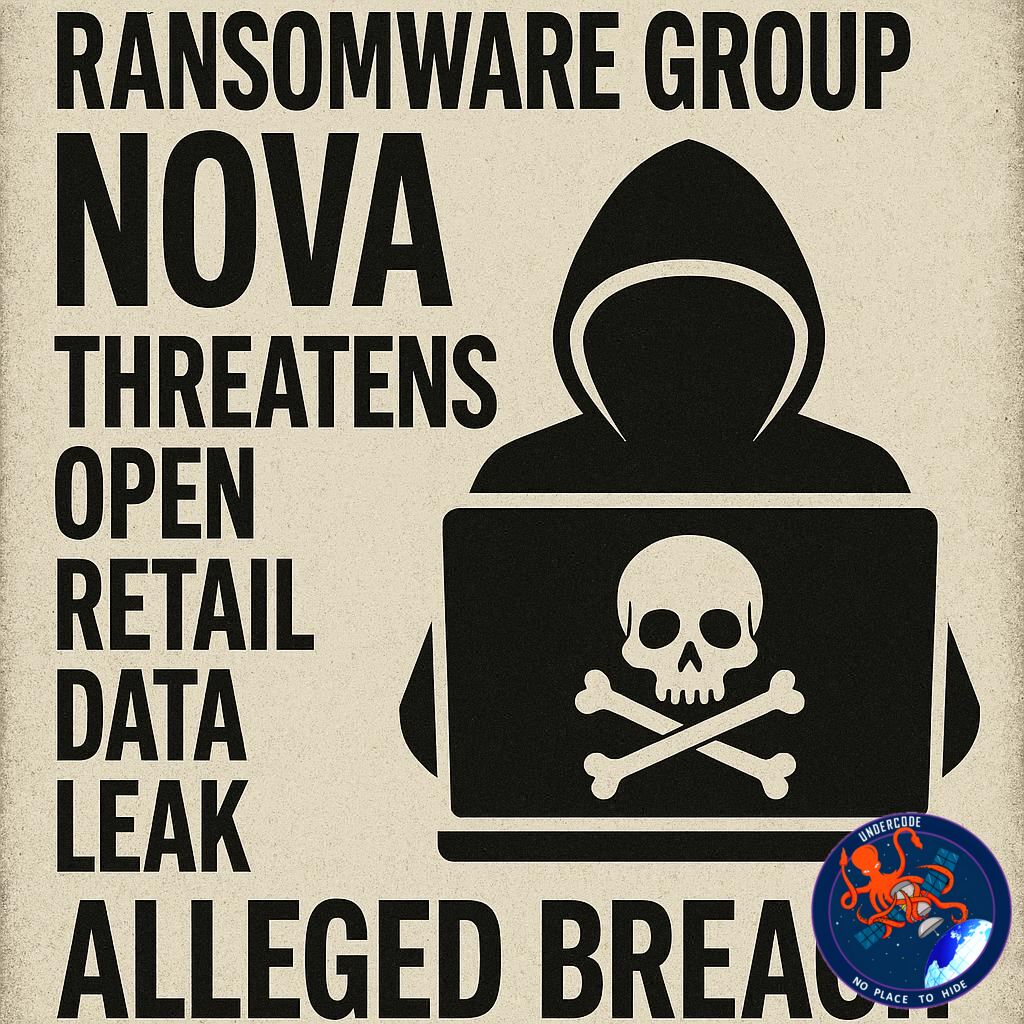
Introduction: A New Ransomware Claim Hits the Commercial Real Estate Sector
The ransomware ecosystem continues to expand its list of targets, and this time the spotlight is on Open Retail, a company known for helping businesses identify and secure prime commercial spaces. A recent claim circulating on social media alleges that the Nova ransomware group has successfully breached Open Retail’s systems, exfiltrated sensitive data, and is now threatening to publish it unless a ransom demand is met. While details remain limited, the claim highlights how professional services and niche real estate technology firms are increasingly being dragged into the global cybercrime economy.
the Original Report: What Is Being Claimed
According to a post shared by a cybersecurity-focused account, the ransomware group Nova claims responsibility for a breach involving Open Retail. The attackers allege that they accessed internal systems and stole company data, which they are now using as leverage in a classic double-extortion scheme. If Open Retail refuses to pay the demanded ransom, Nova says it will release the stolen data publicly.
The claim was sourced from a cybersecurity monitoring website that tracks ransomware disclosures and threat actor activity. At the time of posting, no technical details such as the attack vector, the size of the stolen dataset, or the specific type of information taken were disclosed. There was also no confirmation from Open Retail itself regarding whether an intrusion had occurred or whether customer or partner data was affected.
Open Retail operates in a sector that blends real estate, data analytics, and business advisory services. Companies like this often handle sensitive commercial information, including property data, client business plans, financial projections, and strategic location analyses. If compromised, such data could be valuable not only for extortion but also for competitive intelligence and fraud.
The post gained modest visibility on social media but quickly joined a growing stream of similar ransomware claims being reported daily. As with many early-stage ransomware disclosures, the situation remains fluid. Cybersecurity researchers typically wait for either proof-of-data samples from the attackers or an official statement from the victim organization before confirming the breach.
The Broader Context: Ransomware’s Expanding Target List
The alleged Open Retail breach fits into a wider pattern where ransomware groups increasingly target mid-sized, specialized service providers rather than only large enterprises. These companies often have valuable data but fewer resources dedicated to advanced cybersecurity defenses. Threat actors know this imbalance and exploit it, betting that disruption and reputational risk will push victims toward paying quickly.
In recent months, ransomware groups have shifted tactics, focusing more on data theft and public shaming rather than purely on system encryption. This approach allows attackers to pressure victims even if backups exist or if systems can be restored quickly. For firms operating in trust-based industries like real estate consulting, the fear of client data exposure can be more damaging than temporary operational downtime.
What Undercode Say:
Why This Claim Should Be Taken Seriously, But Not at Face Value
Ransomware claims like the one made by Nova deserve cautious attention. While many groups exaggerate or selectively frame their successes, most established ransomware operations do not announce breaches lightly. Their credibility within underground circles depends on proving they can deliver on threats, which is why data leaks often follow failed negotiations.
The Risk Profile of Real Estate and Location Intelligence Firms
Open Retail’s business model likely involves aggregating detailed commercial and geographic data. From an attacker’s perspective, this type of information has multiple monetization paths. Beyond ransom payments, stolen datasets could be resold, used in corporate espionage, or leveraged to scam affected clients and partners.
Double Extortion as the New Default Strategy
Nova’s alleged threat to release data reflects how double extortion has become the norm rather than the exception. Encryption alone is no longer sufficient leverage. By stealing data first, attackers ensure they maintain pressure even if victims refuse to engage or restore from backups.
Silence From Victims Is a Strategic Choice
The absence of a public response from Open Retail does not necessarily mean the claim is false. Many companies delay disclosure while conducting internal investigations, consulting legal teams, and coordinating with incident response firms. Early confirmation can sometimes worsen negotiations or trigger regulatory obligations prematurely.
Reputational Damage Often Outweighs Operational Loss
For service-oriented firms, trust is currency. Even unverified ransomware claims can cause reputational harm, especially if clients fear their proprietary data may be exposed. This reputational risk is precisely what ransomware groups exploit when targeting advisory and analytics-driven businesses.
The Role of Social Media in Ransomware Amplification
Platforms like X have become informal distribution channels for ransomware news. Threat intelligence accounts, while valuable, can also accelerate panic before facts are fully established. This environment benefits attackers, who rely on rapid visibility to pressure victims into paying.
What This Means for Similar Companies
If the Open Retail claim proves accurate, it should serve as a warning to similar firms operating in commercial real estate, consulting, and data-driven services. These organizations often underestimate their attractiveness as targets and overestimate the obscurity provided by operating in a niche market.
Prevention Is Cheaper Than Negotiation
From an industry perspective, investments in endpoint detection, network segmentation, employee security training, and incident response planning remain far cheaper than dealing with the aftermath of a ransomware incident. Once data is stolen, control shifts almost entirely to the attacker.
Fact Checker Results 🔍
✅ The ransomware claim was publicly shared by a cybersecurity monitoring account.
❌ No independent confirmation from Open Retail has been issued at this time.
❌ No leaked data samples have been publicly verified so far.
Prediction 📊
📈 If Nova provides proof-of-data in the coming days, pressure on Open Retail to respond publicly will increase.
📉 A lack of follow-up leaks could suggest failed extortion or an exaggerated claim.
📊 More real estate and location-intelligence firms are likely to appear on ransomware victim lists in 2026 as attackers diversify targets.
🕵️📝✔️Let’s dive deep and fact‑check.
References:
Reported By: x.com
Extra Source Hub (Possible Sources for article):
https://www.facebook.com
Wikipedia
OpenAi & Undercode AI
Image Source:
Unsplash
Undercode AI DI v2
Bing
🔐JOIN OUR CYBER WORLD [ CVE News • HackMonitor • UndercodeNews ]
📢 Follow UndercodeNews & Stay Tuned:
𝕏 formerly Twitter 🐦 | @ Threads | 🔗 Linkedin | 🦋BlueSky | 🐘Mastodon


