
Listen to this Post
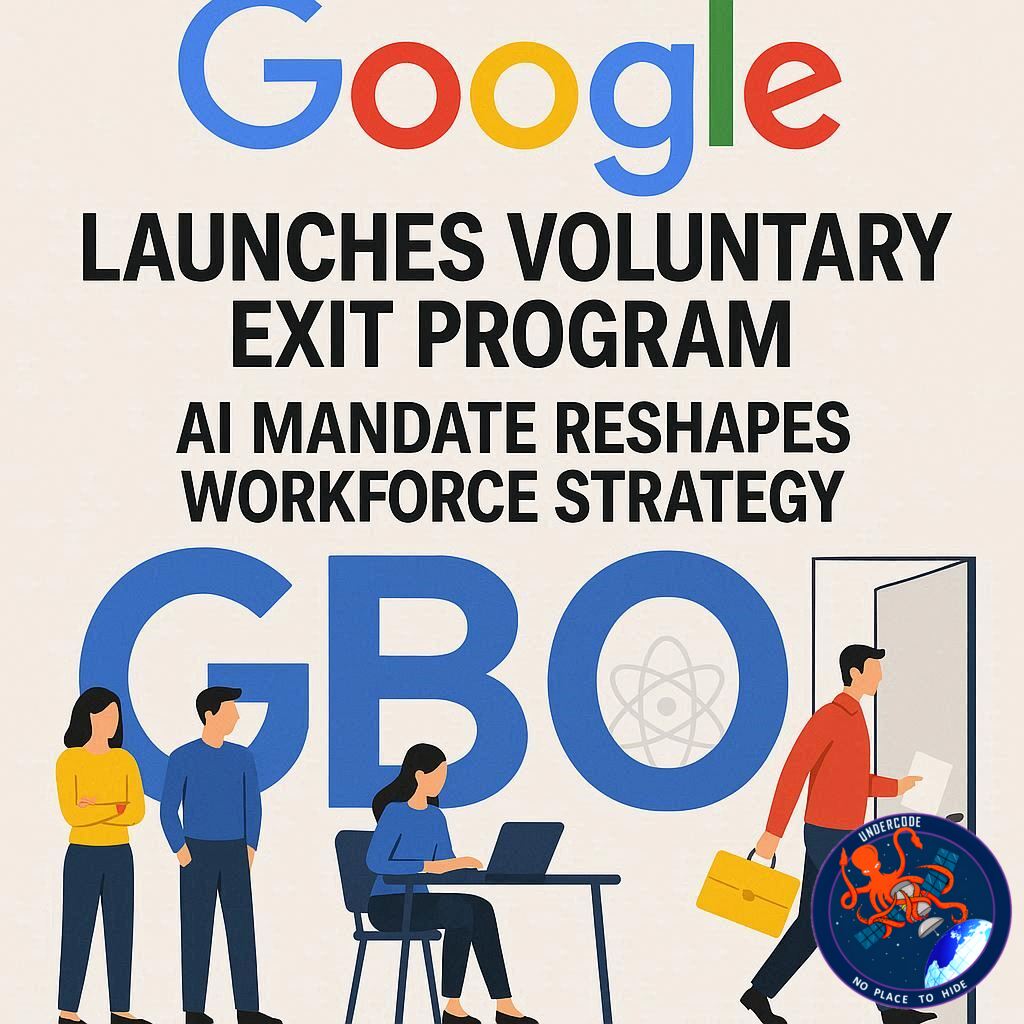
Introduction: A Strategic Shift Inside Google’s Business Core
Google has quietly introduced a new Voluntary Exit Program, a move that signals more than routine corporate restructuring. Behind the language of appreciation and momentum lies a sharper directive, adapt to a faster pace, embrace artificial intelligence, or consider stepping aside. The announcement, reportedly shared through an internal memo by Philipp Schindler and first detailed by Business Insider, reflects a company recalibrating its workforce at a moment when AI is redefining competitive advantage across the tech industry.
The Voluntary Exit Program, commonly known as VEP, is not a mass layoff. Instead, it is a selective buyout offer aimed at specific teams within Google’s Global Business Organization. The message is clear, Google is moving faster, raising expectations, and narrowing its tolerance for misalignment with its AI-driven future.
Internal Memo Signals Confidence and Urgency
The memo reportedly begins on a positive note. Schindler thanks employees for their contributions in 2025 and emphasizes that the company is entering the new year from a position of strength. Google’s advertising and commercial engines remain powerful, and its market position is still dominant across search, cloud, and digital services.
Yet the optimism is paired with unmistakable urgency. Schindler describes the environment as dynamic, electric, and high-stakes. Those words are not casual. They frame a reality in which speed and adaptation determine survival. In technology markets, yesterday’s advantage can vanish in months. Google appears determined to avoid complacency.
AI Adoption Becomes a Non-Negotiable Mandate
One of the strongest themes in the memo is artificial intelligence. Employees within the Global Business Organization are told they must be “all in” on AI. The phrasing suggests more than passive familiarity. It implies operational integration, strategic alignment, and cultural commitment.
This directive reflects the broader transformation underway across Silicon Valley. AI is no longer a research experiment or innovation showcase. It is a revenue engine, a productivity multiplier, and a competitive weapon. Google’s leadership is making it clear that AI fluency is now a baseline expectation, not an optional skill.
Who the Voluntary Exit Program Targets
The Voluntary Exit Program is described as an option for employees who may not be comfortable with the required pace or who are ready to move on from the company. This framing positions the program as mutually beneficial rather than punitive.
The VEP reportedly applies to certain US-based roles within the Global Business Organization, including solutions teams, sales units, corporate development, and related business functions. These are core commercial roles, directly tied to revenue generation and client strategy. Offering voluntary buyouts in such areas suggests Google is recalibrating how its business operations function in an AI-first environment.
Who Is Excluded from the Program
Not every employee in GBO is eligible for the Voluntary Exit Program. America’s large customer sales teams and other customer-facing roles are excluded. According to the memo, this decision is designed to minimize disruption to customers.
This exclusion highlights a critical priority. While internal transformation is necessary, external stability remains paramount. Google cannot afford to destabilize relationships with major clients during a technological transition. Revenue continuity is non-negotiable.
A Pattern of Buyouts Across 2025
The latest Voluntary Exit Program is not an isolated event. Throughout 2025, Google has rolled out similar buyout offers in different parts of the company. In June, some US-based employees were offered packages amid stricter return-to-office enforcement. In October, buyouts were extended to teams within YouTube during a reorganization phase.
These moves suggest a consistent strategy. Rather than relying exclusively on abrupt layoffs, Google appears to prefer controlled workforce adjustments through voluntary departures. It is a softer mechanism, but one that still reduces headcount and reshapes internal dynamics.
Workforce Optimization in an AI-Driven Era
Behind the VEP lies a broader strategic theme, optimization. AI tools can automate reporting, analyze client data, personalize campaigns, and streamline operations. As these capabilities expand, certain roles may become less central, while others require new skill sets.
Google’s leadership likely sees an opportunity to reconfigure its workforce proactively. By encouraging voluntary exits from employees who may not align with future priorities, the company can reduce friction during transformation. This approach lowers the risk of morale shocks that often follow large-scale layoffs.
Corporate Messaging and Psychological Framing
The language in the memo is carefully balanced. It celebrates past achievements while signaling heightened expectations. It invites voluntary departure rather than imposing termination. It emphasizes AI alignment rather than performance deficiency.
This is not accidental. Corporate messaging in high-profile technology firms is designed to protect brand image, investor confidence, and employee morale simultaneously. Google’s framing positions the VEP as a choice for those who feel out of sync with the company’s evolving rhythm.
Industry Context: AI Arms Race Intensifies
Google’s move cannot be viewed in isolation. The global technology sector is in an AI arms race. Major competitors are embedding generative AI into search, advertising, enterprise software, and consumer applications. Productivity expectations are rising, and operational margins are under scrutiny.
In this environment, workforce flexibility becomes a strategic asset. Companies that fail to adapt risk falling behind in innovation cycles measured in quarters rather than years. Google’s Voluntary Exit Program appears to be part of a broader recalibration to maintain competitive speed.
Financial and Operational Implications
Voluntary exit programs typically include severance packages, which carry short-term costs but can reduce long-term payroll obligations. For a company of Google’s scale, even modest percentage reductions translate into significant cost adjustments.
At the same time, restructuring business units around AI could increase productivity per employee. If fewer employees can generate equal or greater output using advanced tools, operating margins may improve. Investors often view such transitions as signs of disciplined management.
Organizational Culture Under Transformation
Google was once known for expansive hiring, generous benefits, and a culture that encouraged experimentation. Over the past few years, that identity has shifted toward efficiency and accountability. The introduction of multiple buyout programs reinforces this transformation.
The message is subtle but unmistakable, adaptability is now central to survival within the organization. Employees are expected to evolve as rapidly as the technology they build and sell.
What Undercode Say:
Strategic Workforce Realignment Through Voluntary Mechanisms
Google’s Voluntary Exit Program represents a calculated restructuring strategy rather than an emergency response. By offering buyouts instead of immediate layoffs, leadership reduces reputational damage while still achieving workforce optimization. This method preserves employer branding in a competitive talent market.
AI as an Operational Filter, Not Just a Tool
The memo’s insistence that employees be fully committed to AI suggests that artificial intelligence is becoming an internal filter. Those who cannot integrate AI into their workflow may gradually find fewer opportunities. This dynamic transforms AI from a productivity enhancer into a gatekeeper of career sustainability within the company.
Protecting Revenue While Reshaping Support Functions
Excluding major customer-facing sales teams from the VEP demonstrates strategic caution. Revenue pipelines must remain stable during transformation. Google appears willing to adjust supporting and strategic roles before touching the frontline commercial engine.
Cultural Signaling to the Broader Organization
Even employees not eligible for the program receive a message. The memo reinforces expectations about pace, adaptability, and alignment. This type of internal communication can influence performance culture without direct policy changes.
Financial Engineering Meets Technological Evolution
Buyout programs carry upfront costs but often improve long-term efficiency metrics. When combined with AI integration, the potential return on investment multiplies. If automation reduces task redundancy, fewer employees can manage larger portfolios with greater analytical depth.
Competitive Positioning in a Rapid Market Cycle
Technology giants face shrinking innovation cycles. AI capabilities evolve monthly, not annually. Google’s workforce recalibration suggests a desire to stay ahead of that curve rather than react after competitors gain ground.
Psychological Impacts on Remaining Employees
Voluntary exit offers can create a dual reaction, relief for some and anxiety for others. Employees who remain may feel pressure to prove alignment with AI mandates. This psychological environment can drive productivity but also risk burnout if not managed carefully.
The Subtle Power of Framing
By presenting the program as an option for those “ready to move on,” Google avoids labeling underperformance. This framing protects individual dignity while still enabling organizational change. It is a sophisticated approach to corporate downsizing.
Long-Term Implications for Tech Employment
If major technology firms continue linking AI adoption to employment expectations, the labor market may shift dramatically. Professionals in business operations will need continuous AI literacy to remain competitive. The future may favor hybrid skill sets that combine strategic thinking with technological fluency.
A Signal Beyond Google
This move may influence other multinational tech corporations. When industry leaders normalize voluntary exit programs tied to AI transformation, smaller firms often follow. Google’s decision could set a precedent for how workforce transitions are managed in the AI era.
Fact Checker Results
Google introduced a Voluntary Exit Program for selected GBO teams in the US. ✅
Certain customer-facing sales roles are excluded from eligibility. ✅
This is the first buyout initiative Google has offered in recent years. ❌
Prediction
AI integration will accelerate workforce reshaping across major tech firms in the next 12 to 24 months. 📊
Voluntary exit programs may become a recurring tool for balancing efficiency and brand reputation. 📊
Companies that fail to align talent strategy with AI adoption risk slower innovation cycles and competitive erosion. 📊
🕵️📝✔️Let’s dive deep and fact‑check.
References:
Reported By: timesofindia.indiatimes.com
Extra Source Hub (Possible Sources for article):
https://www.facebook.com
Wikipedia
OpenAi & Undercode AI
Image Source:
Unsplash
Undercode AI DI v2
Bing
🔐JOIN OUR CYBER WORLD [ CVE News • HackMonitor • UndercodeNews ]
📢 Follow UndercodeNews & Stay Tuned:
𝕏 formerly Twitter 🐦 | @ Threads | 🔗 Linkedin | 🦋BlueSky | 🐘Mastodon


