
Listen to this Post
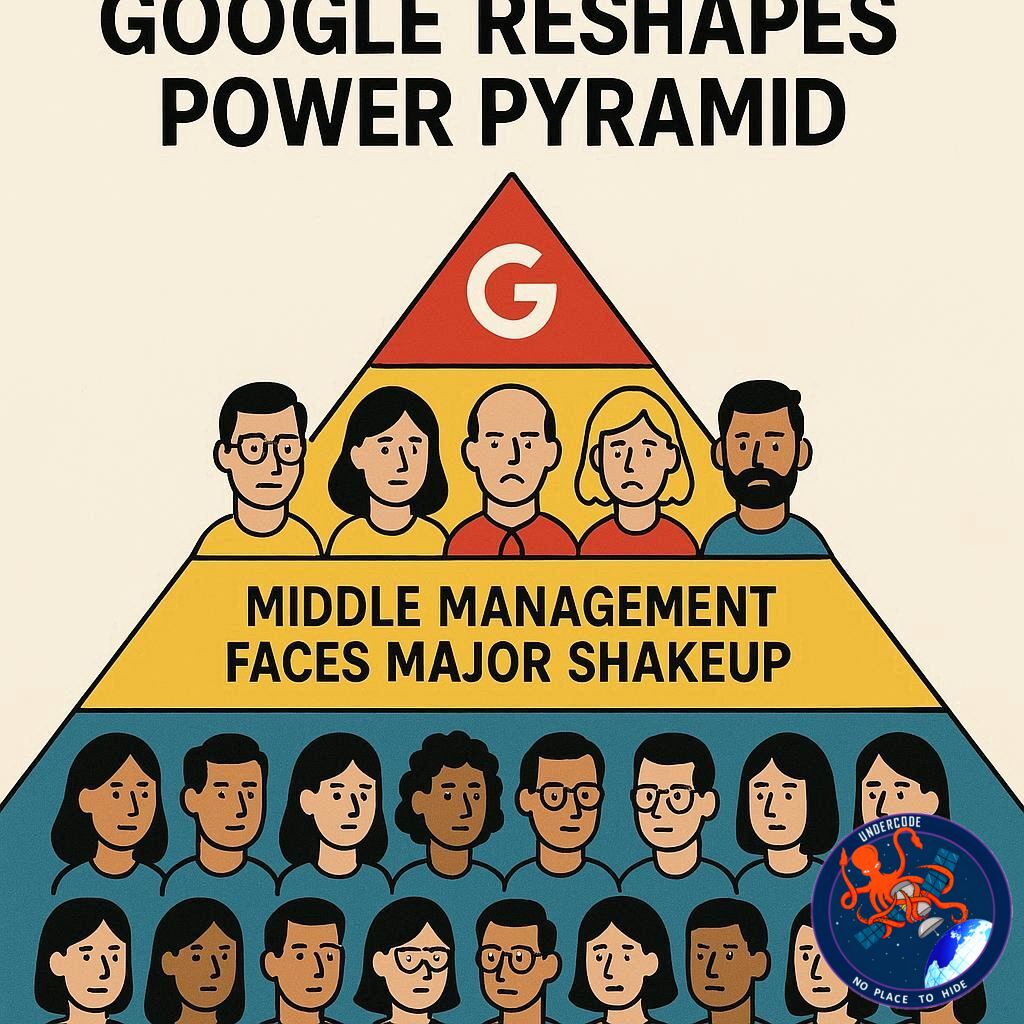
The New Face of Google’s Ad Empire
In a bold move that signals deep structural change, Google is flattening its management hierarchy in one of its most profitable sectors—the U.S. advertising sales division. The transformation targets the Google Customer Solutions (GCS) unit, a key division that manages a client portfolio as large as a Fortune 100 company. According to an internal memo leaked to Business Insider, the restructuring, set to take effect in January, will eliminate an entire layer of middle management.
Rather than issuing mass layoffs, Google plans to reassign affected employees into new positions. The company describes this shift as part of a larger efficiency overhaul designed to streamline workflows, accelerate decision-making, and cut redundant managerial layers that often slow innovation.
This isn’t an isolated decision. At an all-hands meeting in August, executives revealed that Google had already reduced managers overseeing small teams by 35% in the previous year. The new model will transform existing managers into “Heads of Business,” each reporting directly to directors. In the mid-market sales group, the company is also removing the account strategy management role, once a vital bridge between account executives and business heads.
A Reflection of Industry-Wide Shifts
Google’s move mirrors a wider industry trend where tech giants like Amazon, Microsoft, and Intel have similarly flattened their corporate structures. The motivation is consistent across Silicon Valley—fewer layers, faster action, and leaner budgets.
But beneath this surface of “efficiency,” there lies a strategic undercurrent. Google’s ad business, once its golden goose, is showing signs of strain amid fierce competition from AI-driven advertising platforms and emerging analytics startups. CEO Sundar Pichai has been vocal about the need to avoid solving every operational challenge with more headcount. “We must scale efficiently,” he told employees, emphasizing agility over expansion.
In tandem with these internal reforms, Google has also launched voluntary buyout programs across ten product divisions, with participation rates hovering between 3% and 5%. These moves indicate a deeper cultural shift—one that prioritizes productivity per head over headcount itself.
What Undercode Say:
The flattening of Google’s management pyramid is more than a structural reshuffle; it’s a cultural and strategic realignment. Google is betting that fewer layers will foster faster decision-making, tighter communication loops, and a sharper focus on customer outcomes. Yet this gamble carries both promise and peril.
From an operational perspective, removing middle managers often eliminates bureaucratic friction. Decisions that once took weeks can now occur in days. The transformation of managers into “Heads of Business” gives them broader autonomy and accountability, theoretically driving innovation and speed. This is vital as Google faces mounting pressure from AI-native competitors that iterate at breakneck speed.
However, the hidden cost of flattening lies in the erosion of mentorship and organizational balance. Middle managers often serve as cultural anchors—they translate executive vision into actionable plans while nurturing team morale. Without them, frontline employees may find themselves caught between distant directives and unclear priorities.
There’s also the question of scalability. Google’s GCS division handles a portfolio comparable to a Fortune 100 enterprise. In such a high-stakes environment, can a leaner hierarchy maintain quality control, client satisfaction, and strategic alignment simultaneously? Flattening may simplify reporting lines, but it also increases cognitive load for upper management, forcing directors to oversee broader teams without the buffer of experienced intermediaries.
Financially, this move aligns with Wall Street expectations. Investors have grown impatient with bloated corporate structures, particularly in big tech firms balancing AI investment costs with profitability. A flatter organization signals discipline and adaptability—two traits markets reward. But internal morale could wobble. Reassignments, rather than layoffs, sound humane on paper, yet they often bring anxiety, identity loss, and uncertainty among employees accustomed to stable managerial roles.
Strategically, this decision suggests that Google is pivoting toward a leaner, AI-centric operational model, one that mirrors startups more than traditional corporations. By empowering “Heads of Business,” the company is reshaping leadership to function like agile, semi-autonomous teams. This aligns with Google’s broader ambition: integrating machine learning into every operational layer while maintaining its dominance in digital advertising.
Still, this restructuring is a balancing act between speed and stability, efficiency and empathy, profit and purpose. If executed well, it could become a benchmark for corporate reinvention in the age of AI. If mismanaged, it could trigger internal fragmentation and talent drain—especially as competitors like Amazon and OpenAI intensify their talent acquisition efforts.
In essence, Google’s decision isn’t just about cost-cutting. It’s about redefining leadership for the algorithmic era—an experiment that will reveal whether the future of management is flatter, faster, and ultimately, smarter.
🔍 Fact Checker Results
✅ Confirmed: Google is eliminating an entire management layer within its U.S. advertising sales unit (Business Insider report).
✅ Verified: No mass layoffs planned; affected employees to be reassigned to new roles.
✅ Supported: Similar restructuring trends observed across major tech firms like Amazon, Intel, and Microsoft.
📊 Prediction
In 2025 and beyond, expect Google to extend this flattening model beyond GCS to other departments, particularly AI and cloud operations. ⚙️
If successful, this could reshape tech leadership culture, inspiring a wave of flatter, data-driven organizations across Silicon Valley. 🚀
However, if employee morale dips or operational cracks emerge, Google may quietly reintroduce mid-tier roles under new titles by late 2026. 🧩
🕵️📝✔️Let’s dive deep and fact‑check.
References:
Reported By: timesofindia.indiatimes.com
Extra Source Hub (Possible Sources for article):
https://www.quora.com
Wikipedia
OpenAi & Undercode AI
Image Source:
Unsplash
Undercode AI DI v2
Bing
🔐JOIN OUR CYBER WORLD [ CVE News • HackMonitor • UndercodeNews ]
📢 Follow UndercodeNews & Stay Tuned:
𝕏 formerly Twitter 🐦 | @ Threads | 🔗 Linkedin | 🦋BlueSky | 🐘Mastodon


