
Listen to this Post
Introduction: A Growing AI Cybersecurity Crisis
As artificial intelligence reshapes the digital landscape, businesses face an escalating threat: AI-powered cyberattacks. From deepfake scams to advanced phishing operations, attackers are leveraging AI to outpace traditional cybersecurity measures. Yet, while organizations recognize the looming danger, most feel unprepared. A new report by consulting firm EY exposes a worrying gap between awareness and readiness, highlighting both the urgent need for action and the uncertainty surrounding AI integration into security frameworks.
AI Threat Awareness vs. Organizational Readiness
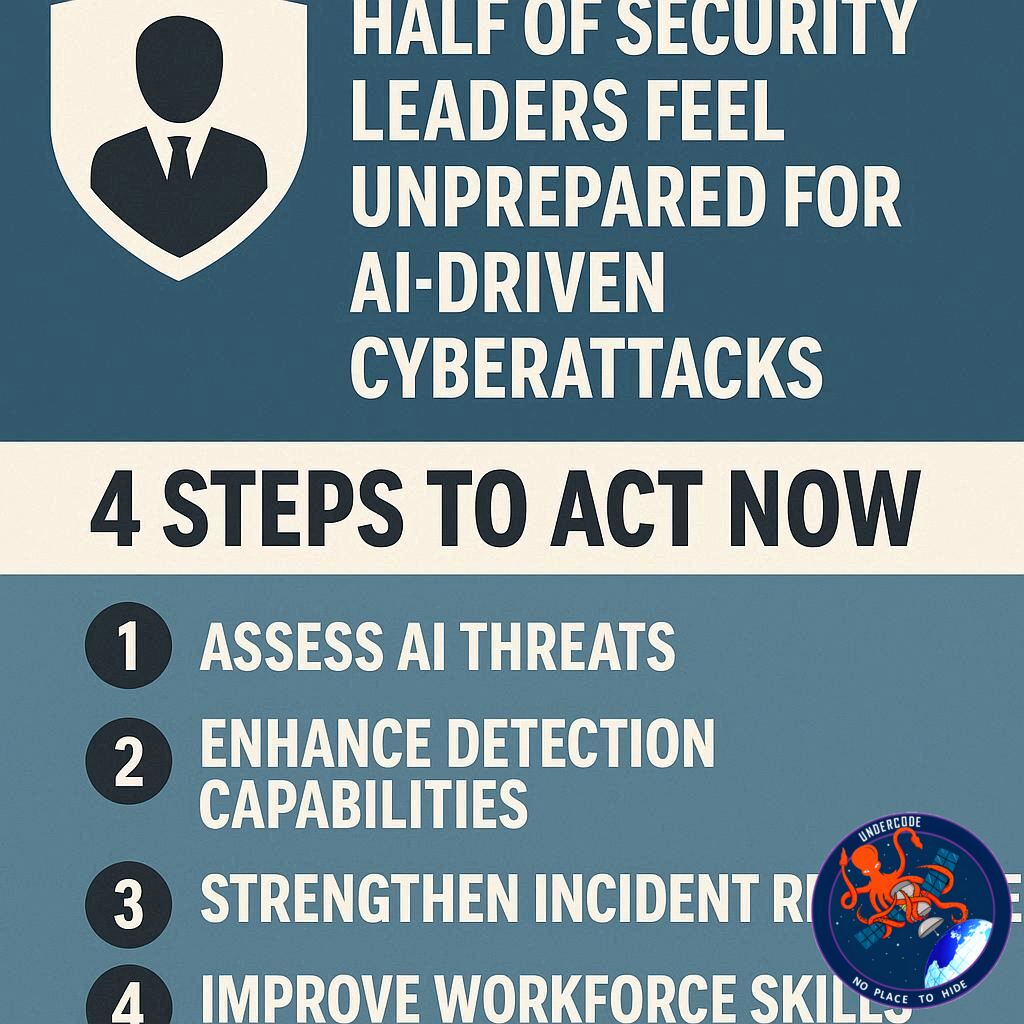
According to EY’s December survey of over 500 senior cybersecurity officials, 96% believe AI-enabled attacks pose a significant risk. Despite this overwhelming concern, only 46% of respondents feel “strongly confident” that their organizations have adequate defenses in place. A striking 67% admit they are still operating in “pilot mode” when formulating AI security strategies—a situation experts warn is far from sufficient in an environment where AI constantly evolves to exploit vulnerabilities.
The Internal AI Plateau
The cybersecurity challenge mirrors broader struggles with internal AI adoption. Many organizations are keen to harness AI but struggle to generate meaningful returns from their initiatives. A study by MIT revealed that 95% of enterprise AI projects failed to deliver substantial ROI, highlighting that intent and investment alone are insufficient. Similarly, a global survey found that while 87% of business leaders expect AI to transform work processes, only 29% report their teams have the training or skills to achieve that transformation.
Budgetary and Governance Constraints
Financial limitations and governance gaps remain key obstacles. EY’s report notes that 85% of organizations consider their cybersecurity budgets insufficient to counter AI-enabled threats. Governance is equally critical: 97% agree that a robust internal AI security framework is essential, yet only 20% have fully established one. This underscores a persistent mismatch between perceived risk and strategic preparedness.
AI as Both Threat and Defense
Despite challenges, AI offers potential solutions. Organizations increasingly plan to allocate resources toward AI-driven cybersecurity, particularly in six areas: advanced persistent threat detection, real-time fraud detection, identity and access management, third-party risk management, data privacy and compliance, and defense against deepfakes. EY projects that companies dedicating at least 25% of cybersecurity budgets to AI solutions will rise from 9% today to 48% within two years, signaling a growing shift toward AI-enabled defenses as the optimal countermeasure.
Four Immediate Actions for Cybersecurity Leaders
EY recommends four strategies to respond effectively to AI threats:
Reprioritize budgets to focus on AI-driven security initiatives.
Move from task-specific AI automation to orchestrated, agent-driven systems, providing centralized oversight and correction capabilities.
Invest in employee training to ensure safe and effective collaboration with AI agents.
Adopt an arms-race mentality, treating governance as a continuously evolving system that balances innovation with security, fostering trust and resilience.
What Undercode Say: An Analytical Perspective
The EY findings reveal a critical paradox in modern cybersecurity: organizations are both hyper-aware of AI threats and structurally unprepared. Awareness alone is insufficient—without clear strategies, budget alignment, and governance structures, organizations remain vulnerable. The “pilot mode” approach is particularly dangerous, creating a false sense of security while adversaries leverage AI to exploit digital environments.
From an analytical standpoint, the interplay of budgetary constraints, governance deficits, and workforce readiness illustrates that AI cybersecurity preparedness is not merely a technological issue—it is an organizational one. Companies must treat AI not just as a tool but as a strategic partner in defense, requiring coordinated human-machine collaboration. Failure to integrate AI effectively can exacerbate existing vulnerabilities, as cybercriminals increasingly deploy AI-driven attacks at scale.
Moreover, the dual role of AI—as both threat amplifier and defense mechanism—demands a holistic mindset. Organizations that silo AI investments into isolated tasks will lag behind those adopting top-down, agent-driven models that enhance visibility, control, and adaptability. Governance must evolve from static compliance frameworks to dynamic, culturally embedded systems that continuously monitor, adjust, and improve security postures.
The report also highlights the broader adoption challenge facing enterprises: successful AI deployment demands not only technological investment but also organizational change management. Employee skill gaps, unclear processes, and limited executive oversight undermine AI’s potential. Addressing these gaps proactively will determine whether businesses can convert AI from a source of vulnerability into a durable competitive advantage.
In financial and operational terms, the shift to AI-powered cybersecurity is both necessary and inevitable. As AI-enabled attacks grow in sophistication, the cost of inaction escalates, from regulatory penalties to reputational damage and operational disruption. The path forward is clear: orchestrated AI systems, integrated governance, and workforce readiness are no longer optional—they are essential pillars of resilience.
Ultimately, the EY findings underscore that cybersecurity in the AI era is a race between adaptation and vulnerability. Organizations must move beyond awareness and pilot programs toward full-scale integration of AI into strategic defense, creating an environment where human expertise and machine intelligence reinforce one another in real time.
Fact Checker Results
✅ 96% of surveyed cybersecurity leaders view AI-enabled attacks as a significant threat.
✅ Less than half of organizations feel confident in current defenses.
❌ Current budgets and governance frameworks largely fail to meet AI-driven threat levels.
Prediction
📊 Over the next two years, AI-driven cybersecurity will become the industry standard, with nearly half of organizations dedicating 25% or more of their security budgets to AI solutions. Expect the rise of agent-driven orchestration models and a surge in real-time AI defenses against advanced phishing, deepfakes, and identity attacks, fundamentally reshaping enterprise risk management.
▶️ Related Video (80% Match):
🕵️📝✔️Let’s dive deep and fact‑check.
References:
Reported By: www.zdnet.com
Extra Source Hub (Possible Sources for article):
https://www.medium.com
Wikipedia
OpenAi & Undercode AI
Image Source:
Unsplash
Undercode AI DI v2
Bing
🔐JOIN OUR CYBER WORLD [ CVE News • HackMonitor • UndercodeNews ]
📢 Follow UndercodeNews & Stay Tuned:
𝕏 formerly Twitter 🐦 | @ Threads | 🔗 Linkedin | 🦋BlueSky | 🐘Mastodon


