
Listen to this Post
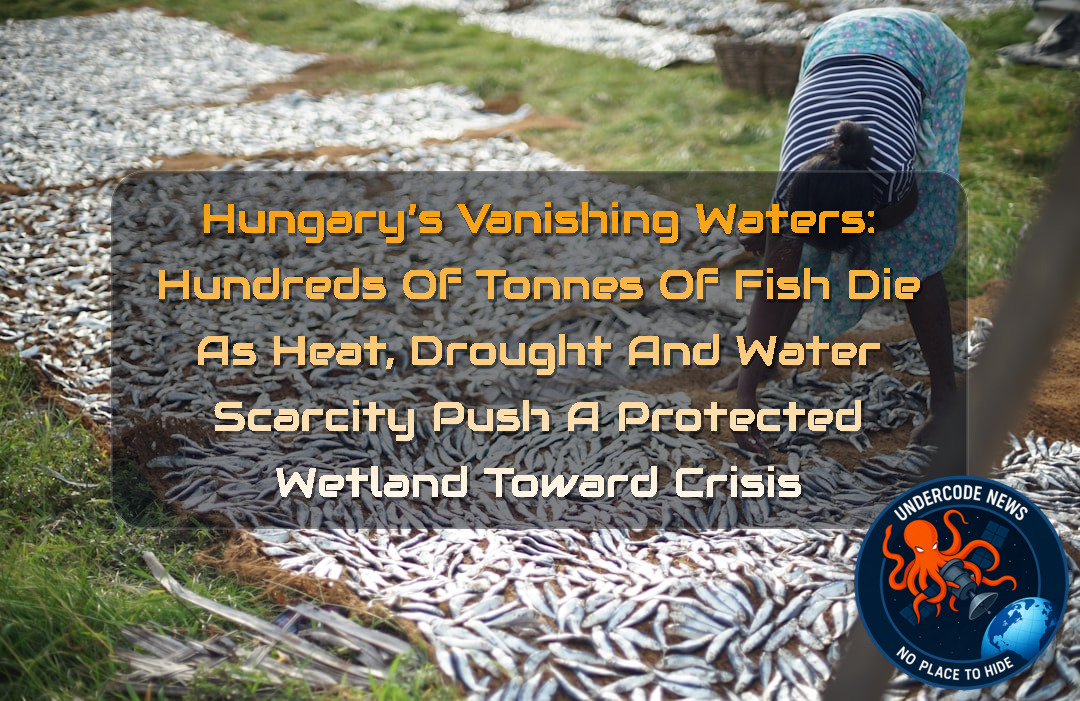 A Summer of Heat Turns a Thriving Fish Farm Into a Disaster Zone
What happens when a landscape built around water begins to lose the very resource that keeps it alive?
In southern Hungary, the answer has been devastating. During August, several hundred tonnes of fish died at the Rétimajor fish farm complex, one of the country’s largest and most important fish-farming areas. The disaster unfolded as extreme heat, intense evaporation and critically low water levels transformed parts of the vast fishpond system into shallow, overheated pools.
The crisis has also triggered a dispute over water management. Ferenc Lévai, the owner and chief executive of Aranyponty Zrt., believes inadequate water distribution and upstream irrigation contributed to the catastrophe. The regional water authority rejects the accusation, arguing that water was allocated according to emergency restrictions and that the unprecedented heat and evaporation were the primary causes.
But beyond the disagreement lies a much larger warning. Rétimajor is not simply a commercial fish farm. It is part of a historically important wetland ecosystem, home to rare birds, amphibians and other wildlife protected under European conservation frameworks.
The death of hundreds of tonnes of fish may therefore be more than an agricultural disaster. It could represent a glimpse into a future where drought, extreme heat and competition for water place food production, biodiversity and local economies on the same collision course.
The Original Story: A Massive Fish Die-Off in Hungary
The crisis struck the Rétimajor fishpond complex, located south of Budapest in Hungary. The system covers roughly 800 hectares of water surface and occupies part of what remains of the former Sárrét marshlands.
During August, between 300 and 350 tonnes of fish reportedly died after water levels fell dramatically and temperatures rose.
According to Ferenc Lévai, around 150 hectares of the complex had already dried out. Across approximately 400 additional hectares, fish were surviving in only 30 to 40 centimetres of water. Only around 200 to 250 hectares reportedly retained more than half of their normal water depth.
The financial damage was estimated at approximately 400 to 500 million Hungarian forints, equivalent to roughly €1.1 million to €1.4 million based on the figures provided in the original report.
The
Rétimajor Is More Than a Fish Farm
The importance of the Rétimajor complex extends far beyond commercial aquaculture.
The fishpond system consists of shallow lakes, reedbeds, muddy shorelines and islands, creating a highly concentrated wetland habitat. Such environments can support large populations of water birds and provide breeding and feeding areas for amphibians and other wildlife.
The surrounding Rétszilasi Lakes area has strong conservation protections. It is associated with the Natura 2000 network and is recognized under the Ramsar Convention as a wetland of international importance.
This means the water crisis cannot be measured solely by the number of dead fish or the financial losses suffered by the farm.
When wetlands lose water, the effects can spread through an entire ecosystem. Birds may lose feeding grounds. Amphibians can lose breeding habitats. Aquatic organisms may face oxygen depletion and sudden changes in water chemistry. Reedbeds and shoreline ecosystems can also suffer from prolonged drying.
A commercial emergency can quickly become an ecological emergency.
Fish Trapped in Only Centimetres of Water
One of the most alarming details from the crisis was the reported depth of the remaining water.
Lévai said that fish across hundreds of hectares were struggling in water only 30 to 40 centimetres deep.
For large populations of fish, shallow water becomes increasingly dangerous during periods of intense heat.
A smaller volume of water warms faster than a deeper body of water. As temperatures increase, the amount of oxygen that water can hold generally decreases. At the same time, fish require oxygen to survive, and warmer conditions can increase biological activity and stress within the ecosystem.
The result can become a dangerous chain reaction.
Water levels fall. Temperatures rise. Oxygen levels decline. Fish become stressed. Organic material and sediment may contribute to further deterioration in water quality.
Eventually, a tipping point can be reached.
At Rétimajor, the farm reported that gases released from sludge contributed to poisoning the fish as the water became warmer and shallower.
The Financial Cost of the Fish Deaths
The destruction of 300 to 350 tonnes of fish represents a serious economic blow.
Lévai estimated the losses at between 400 million and 500 million Hungarian forints.
But the direct value of the fish may represent only part of the total damage.
Fish farms operate through complex production cycles. Young fish are raised, fed and managed over time before reaching commercial size. When a mass mortality event occurs, producers can lose not only the animals themselves but also the investment already made in feed, labour, maintenance and future production.
Recovery can also require significant additional spending.
Ponds may need to be restored. Water systems may require repairs or changes. Fish stocks may need to be replaced. Future production schedules can be disrupted.
For an integrated agri-tourism estate such as Rétimajor, the consequences could also affect activities beyond the direct sale of fish.
The Farm Owner Blames Water Distribution Problems
Ferenc Lévai believes the crisis was intensified by the way available water was managed.
According to his account, upstream irrigation users received water while the fishpond system failed to receive enough to maintain what he described as the ecological water level.
He argued that the protected wetland should have maintained at least 50 percent water coverage across its surface.
Instead, he said the farm was unable to maintain that level.
From his perspective, the combination of inadequate incoming water and extreme evaporation created the conditions for disaster.
This argument raises an increasingly important question for regions facing climate pressure: when water becomes scarce, who should receive priority?
Agriculture needs irrigation.
Fish farming needs stable water.
Livestock requires reliable supplies.
Communities need drinking water.
Industry depends on water.
And ecosystems themselves require enough water to remain alive.
These demands can all exist within the same watershed.
During a severe drought, satisfying every demand may simply become impossible.
Water Authorities Reject the Accusation
The Central Transdanubian Water Directorate offered a very different explanation.
According to the authority, it had prepared for drought conditions, but the severity of the summer heat-dome phenomenon created an emergency situation across Hungary that exceeded normal expectations.
Regional water restrictions were introduced from 26 July.
Under those restrictions, the use of water by fishponds could be reduced by a maximum of 20 percent, while irrigation could face reductions of up to 60 percent.
The authority said it followed these rules and did not deliberately withhold water from the Rétimajor fishponds.
Instead, officials pointed to the extraordinary scale of evaporation.
According to their estimate, as much as 100,000 cubic metres of water could have evaporated each day from the approximately 800-hectare water surface during the extreme heat.
That number illustrates the scale of the challenge.
Even when additional water is released into a system, extreme heat can rapidly remove it.
More Than One Million Cubic Metres of Water Released
The water authority said it released approximately 1.18 million cubic metres of water over a two-week period in August from the Fehérvárcsurgó reservoir to replenish the fishpond system.
The reservoir water largely consists of treated wastewater from Székesfehérvár.
Officials said that after the release, only around 1.4 million cubic metres remained in the reservoir.
This reveals another critical problem.
Emergency water reserves are not unlimited.
Once a reservoir is heavily depleted, authorities must consider future drought risks, drinking water requirements, environmental needs and other users within the water system.
A decision to release water today may reduce the amount available for a future emergency.
The crisis therefore becomes a difficult balancing act between immediate survival and long-term water security.
Extreme Heat May Have Been the Decisive Factor
The authority argues that restricted irrigation upstream did not materially affect the enormous volume of water required to compensate for evaporation.
Instead, it believes the main cause of the fish deaths was the condition of the water itself.
As temperatures increased, water became warmer and increasingly oxygen-depleted.
This is a critical distinction.
The
The authority focuses on the environmental conditions within the remaining water.
Both factors can exist at the same time.
A fishpond may suffer because insufficient water is available to maintain its normal depth. At the same time, the remaining water may become lethally warm and oxygen-poor during an extreme heat event.
The debate over responsibility should therefore not distract from the possibility that the disaster was caused by a combination of climate conditions, water scarcity and infrastructure limitations.
A Protected Wetland Faces an Ecological Threat
The death of farmed fish is only one part of the story.
Lévai warned that the drying of the ponds also threatens protected wildlife.
Wetlands are highly dependent on water stability. Even relatively small changes in water depth can alter food availability, breeding conditions and the movement of wildlife.
For amphibians, the loss of shallow breeding pools can be especially damaging.
For water birds, shrinking ponds may reduce feeding areas and expose nesting or resting locations to new risks.
For aquatic plants and microorganisms, changes in water chemistry can disrupt the foundation of the ecosystem.
The danger is that ecological damage may continue even after the immediate heatwave ends.
Some species can recover quickly.
Others may require several successful breeding seasons.
A wetland that experiences repeated droughts may gradually change into a different ecosystem altogether.
The Growing Competition Between Agriculture and Nature
The Rétimajor crisis highlights a problem that is likely to become increasingly common.
Water is no longer simply an environmental resource.
It is becoming a strategic economic resource.
During periods of abundance, conflicts between users may remain largely invisible.
During drought, however, every cubic metre becomes important.
Crop growers want irrigation to protect harvests.
Fish farmers need water to maintain healthy ponds.
Nature conservation requires minimum ecological water levels.
Municipal systems must protect water for communities.
Governments and water authorities are forced to make decisions that may protect one sector while creating pressure on another.
The challenge is not simply deciding who deserves the water.
The larger challenge is redesigning systems so fewer users are forced into direct competition during emergencies.
The Proposed Solution: Store Water Before the Crisis Arrives
Ferenc Lévai says he is more interested in finding solutions than assigning blame.
One of his proposed approaches is for crop-growing businesses to build their own reservoirs.
During wetter periods, these reservoirs could capture and store available water.
During droughts, farmers could draw from their own reserves rather than competing directly with fish farms, livestock operations and environmentally protected wetlands.
The idea reflects a broader principle of climate adaptation.
A water system designed only for average weather may fail when extreme weather arrives.
Future infrastructure may need to assume that droughts, heatwaves and sudden changes in rainfall will occur.
Storage, conservation and more efficient distribution may become essential rather than optional.
Authorities Are Now Examining the Entire Water System
The Central Transdanubian Water Directorate has also acknowledged the need to review the system.
According to the authority, a hydrological study is examining the condition of the water network and the demands created by users holding water-management operating licences.
The objective is to determine how water requirements can be met in the future.
The authority indicated that permits and operating practices may need to be reviewed.
This could become one of the most important outcomes of the crisis.
Investigating a disaster after it happens is necessary.
Redesigning the system so the same disaster becomes less likely is even more important.
The future of the Rétimajor fishponds may depend not only on the next rainfall but also on decisions made about water storage, allocation, infrastructure and ecological protection.
What Undercode Say:
A Disaster With No Single Villain
The Rétimajor fish deaths should not be reduced to a simple argument between a fish farmer and a water authority.
The evidence described in the original report points to a much more complex failure scenario.
Extreme heat created extraordinary evaporation.
Falling water levels made the remaining ponds warmer.
Warmer water held less oxygen.
Biological and chemical processes inside the shallow ponds created additional stress.
At the same time, the farm believed incoming water was insufficient to maintain ecological water levels.
The authorities argued that upstream irrigation restrictions were already in place.
Both sides are effectively describing different parts of the same crisis.
The real vulnerability may be the lack of resilience in a water system exposed to extreme climate conditions.
Water Allocation Systems Need Digital Visibility
Modern water management cannot rely only on administrative decisions and historical usage patterns.
During a drought, authorities need real-time information.
They need to know how much water exists.
They need to know how quickly it is disappearing.
They need to monitor evaporation.
They need to understand water quality.
They also need transparent information about where water is being consumed.
A digitally monitored watershed could allow authorities, farmers and environmental organizations to work from the same operational picture.
Without shared data, every crisis can turn into an argument over responsibility.
Sensors Could Detect the Next Crisis Earlier
Fish farms and wetlands could benefit from continuous environmental monitoring.
Water depth sensors could identify rapid declines.
Temperature sensors could detect dangerous warming.
Dissolved oxygen sensors could provide early warnings before a mass mortality event begins.
Automated systems could then trigger emergency responses.
Water transfers could be accelerated.
Aeration systems could be activated.
Fish could potentially be moved from the most dangerous ponds.
The technology cannot create water where none exists.
But it can provide valuable time.
In environmental disasters, time is often the most important resource.
Artificial Intelligence Could Improve Water Forecasting
Machine learning systems could combine weather forecasts, reservoir levels, historical evaporation patterns and water demand.
The objective would be to estimate when a critical shortage may occur before the ponds reach dangerous levels.
For example, a predictive system could calculate how many days remain before water levels reach a predefined danger threshold.
A simplified monitoring workflow could begin with basic system tools:
!/bin/bash
date
df -h
free -h
uptime
For environmental infrastructure, the same principle applies.
Measure continuously.
Record changes.
Detect anomalies.
Respond before the situation becomes irreversible.
A Real Monitoring System Requires Environmental Data
A practical data pipeline could collect sensor information from multiple locations.
For example:
python3 collect_water_data.py \n--location retimajor \n--metrics water_depth,temperature,dissolved_oxygen \n--interval 300
The collected data could then be stored for analysis:
sqlite3 water_monitoring.db \n"SELECT timestamp, water_depth, temperature, oxygen
FROM sensors
ORDER BY timestamp DESC
LIMIT
A system like this could identify dangerous combinations rather than looking at a single measurement.
Low water alone may not kill fish.
High temperature alone may not kill fish.
But low water combined with high temperature and collapsing oxygen levels can create a rapidly escalating emergency.
Climate Resilience Must Become an Infrastructure Priority
The deeper lesson from Hungary is that climate adaptation cannot remain a theoretical discussion.
Infrastructure must be designed for extreme conditions.
Reservoirs may need additional capacity.
Canals may require modernization.
Water losses may need to be reduced.
Emergency ecological reserves may need stronger protection.
Users may need automated restrictions based on real-time conditions rather than static schedules.
The question is not whether extreme weather will create pressure again.
The question is whether the system will be prepared when it does.
Wetlands Should Not Be Treated as Leftover Water Users
Protected wetlands provide ecological services that are often ignored until they disappear.
They support biodiversity.
They can store water.
They influence local ecosystems.
They provide habitat for wildlife.
When a wetland dries, the consequences can spread far beyond its boundaries.
Water policy should therefore avoid treating environmental needs as optional demands that can simply be reduced during every emergency.
An ecological minimum may be essential to prevent permanent damage.
The Conflict Could Become a Model for Future Policy
Rétimajor may eventually become a case study for how European water systems respond to climate stress.
The central issue is not simply who received more water.
The central issue is whether the total system has enough stored resilience to survive extreme heat.
If every sector must fight for the same shrinking supply, conflict is inevitable.
Building storage during wet periods could reduce this pressure.
Improving forecasting could provide earlier warnings.
Protecting critical ecological water levels could reduce environmental damage.
Transparent monitoring could reduce disputes.
Data Transparency Could End the Blame Game
One of the strongest lessons is the need for publicly understandable data.
If water allocation, reservoir levels and environmental measurements are available in near real time, debates can move from accusations to evidence.
A basic reporting process could generate daily summaries:
python3 generate_report.py \n--input water_monitoring.db \n--output daily_water_status.html
The report could show water levels.
It could show evaporation estimates.
It could show reservoir capacity.
It could show dissolved oxygen trends.
It could also identify which thresholds are approaching critical levels.
Transparency would not eliminate difficult decisions.
But it would make those decisions easier to understand and audit.
The Real Threat Is Repeated Crisis
One extreme summer can destroy hundreds of tonnes of fish.
Repeated extreme summers could permanently transform the entire system.
That is the long-term danger.
Recovery from a single event may be possible.
Recovery becomes much harder when the next drought arrives before ecosystems and businesses have recovered from the previous one.
The Rétimajor disaster should therefore be treated as an early warning.
Water infrastructure built for yesterday’s climate may no longer be sufficient for tomorrow’s extremes.
The Final Undercode Perspective
The tragedy at Rétimajor is ultimately a story about vulnerability.
A huge fish farm and protected wetland existed within a water system that suddenly faced extraordinary pressure.
Fish died.
Large areas dried out.
Wildlife habitats came under threat.
A dispute emerged over water allocation.
And the available emergency reserves themselves became limited.
The most important response is not simply to identify a culprit.
It is to build a system capable of surviving the next crisis.
That means better monitoring.
Better forecasting.
More storage.
Clearer allocation rules.
Stronger ecological protections.
And infrastructure designed for extreme heat rather than historical averages.
The fish deaths in Hungary may be a local disaster today.
But the underlying challenge is global.
✅ The article consistently describes the mass fish mortality, severe water loss and financial damage as events reported in the original account.
✅ The water authority’s position is presented as a denial that water was deliberately withheld, while acknowledging emergency restrictions and major evaporation.
❌ It would be inaccurate to state that upstream irrigation alone was definitively proven to have caused the fish deaths, as the original account presents a dispute and identifies extreme heat and oxygen depletion as major factors.
Prediction
(+1) Hungary and other drought-prone regions are likely to increase investment in water monitoring, storage capacity and emergency allocation planning as extreme heat places greater pressure on agriculture and ecosystems.
Fish farms may increasingly deploy automated sensors for water depth, temperature and dissolved oxygen.
Water authorities may review operating permits and allocation models to account for more frequent extreme weather.
Reservoir construction and water-retention projects could become more important during wetter periods.
Without stronger climate adaptation, repeated heatwaves could create additional fish mortality events and accelerate the degradation of vulnerable wetlands.
▶️ Related Video (66% Match):
🕵️📝Let’s dive deep and fact‑check.
🎓 Live Courses & Certifications:
Join Undercode Academy for Verified Certifications
🚀 Request a Custom Project:
Secure, high-velocity infrastructure and disruptive technological engineering. Contact our engineering team for high-tier development and proprietary systems:
[email protected]
💎 Smart Architecture | 🛡️ Secure by Design | ⭐ Trusted by Thousands
References:
Reported By: www.euronews.com
Extra Source Hub (Possible Sources for article):
https://www.quora.com/topic/Technology
Wikipedia
OpenAi & Undercode AI
Image Source:
Unsplash
Undercode AI DI v2
🔐JOIN OUR CYBER WORLD [ CVE News • HackMonitor • UndercodeNews ]
📢 Follow UndercodeNews & Stay Tuned:
𝕏 formerly Twitter 🐦 | @ Threads | 🔗 Linkedin | 🦋BlueSky | 🐘Mastodon | 📺Youtube


