
Listen to this Post
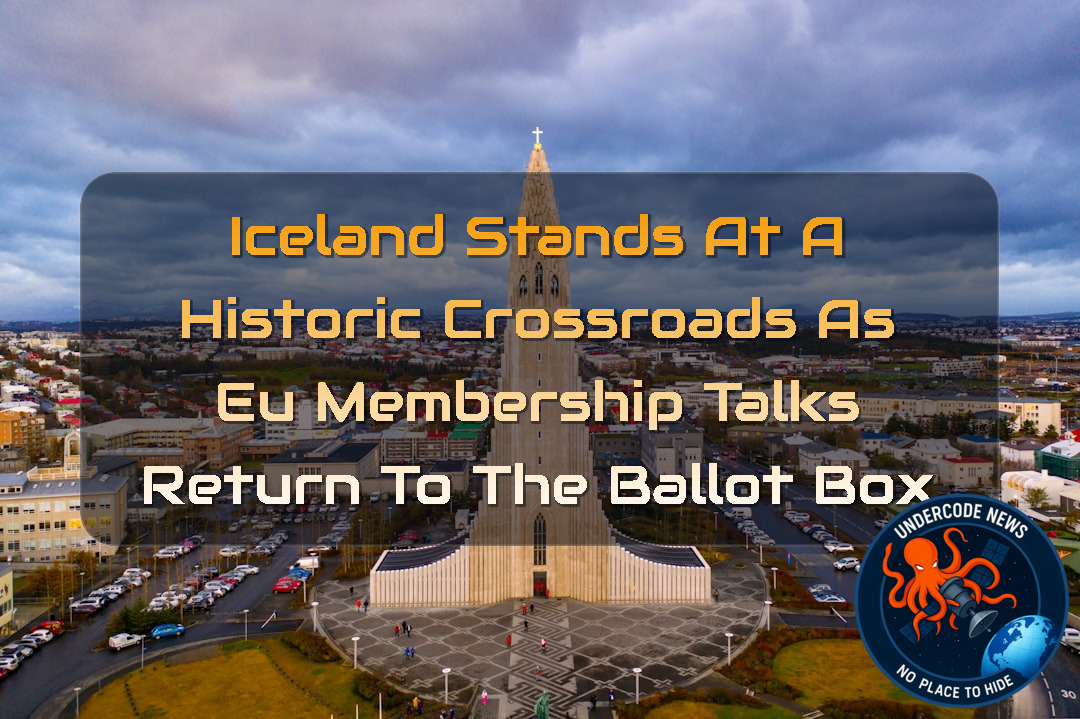 A Nation Between Independence and a Changing Europe
For years, Iceland’s relationship with the European Union has remained unfinished, suspended somewhere between economic integration and political independence. The country already enjoys deep access to Europe’s single market through the European Economic Area, yet it has deliberately remained outside the European Union itself.
Now, Icelanders are preparing to make a decision that could reopen one of the most consequential political debates in the country’s modern history.
The August 29 referendum is not a direct vote on whether Iceland should become an EU member. Instead, voters are being asked whether the government should resume accession negotiations with Brussels and discover what the final terms of membership could look like.
A victory for the “Yes” campaign could put Iceland back on the European enlargement map, restart negotiations that were abandoned more than a decade ago, and force Reykjavík and Brussels to confront difficult questions surrounding fisheries, agriculture, sovereignty and control over natural resources.
A “No” vote, however, could close the door for years or even decades.
At the center of the debate is a question that goes far beyond economics: in an increasingly unpredictable world, does Iceland become more secure by moving closer to the European Union, or does its independence remain one of its greatest strategic assets?
The Referendum Is About Negotiating, Not Immediate EU Membership
One of the most important aspects of the upcoming referendum is also one of the most frequently misunderstood.
A “Yes” vote would not automatically make Iceland a member of the European Union.
Instead, it would give the Icelandic government a political mandate to restart negotiations with Brussels. Those negotiations would determine the conditions under which Iceland could potentially join the bloc.
Prime Minister Kristrún Frostadóttir has emphasized that Icelanders would remain central to the process. The government would negotiate an agreement, but the people could ultimately have the final word on whether Iceland actually joins the EU.
This means Iceland could potentially hold another referendum once negotiations are completed and the terms of a membership agreement become clear.
In other words, the August 29 vote is a decision about whether Iceland wants to see what membership would actually look like.
It is not yet the final decision on membership itself.
That distinction is politically important because some voters who remain uncertain about joining the EU may still support reopening negotiations simply to obtain more information and evaluate the final agreement.
Others, however, argue that restarting negotiations could create political momentum toward membership and gradually make a future accession more difficult to reject.
Iceland’s Long and Complicated Relationship With Brussels
Iceland’s relationship with the European Union has never followed a straight line.
The country formally applied for EU membership in 2009, during one of the darkest periods of its modern economic history. Iceland had been severely affected by the global financial crisis, and joining the EU appeared to some policymakers as a possible route toward greater economic stability and political integration.
Accession negotiations began, and Iceland made significant progress.
Because Iceland was already deeply integrated with the European economic system through the European Economic Area, it had already adopted or aligned with many European rules.
Negotiations therefore moved faster than they might for a completely new candidate country.
However, political attitudes inside Iceland began to change.
The economy recovered, reducing the sense of urgency that had surrounded the original membership application. At the same time, difficult negotiations over fisheries and sovereignty strengthened Eurosceptic opposition.
When a Eurosceptic coalition came to power in 2013, negotiations were suspended.
By 2015, Iceland formally informed Brussels that it had no intention of continuing the accession process and no longer wished to be treated as an EU candidate.
For many Icelanders, the question appeared settled.
But history rarely stays settled forever.
A New Government Reopens an Old European Question
The political landscape changed again in 2024 when a more pro-European coalition government came to power.
The coalition agreement included a commitment to hold a referendum on whether Iceland should resume accession negotiations before 2027.
That decision brought the EU question back into Icelandic politics.
What had once been viewed as an abandoned political project suddenly became a national debate again.
Supporters of renewed negotiations argue that Iceland should reconsider its position because the world around it has changed dramatically.
The geopolitical environment that existed when Iceland abandoned its accession process is no longer the same.
Europe is confronting new security challenges, economic uncertainty, geopolitical competition and increasing instability in the Arctic.
For Iceland, a small but strategically important island nation in the North Atlantic, those changes cannot simply be ignored.
The Arctic Is Becoming More Strategically Important
Iceland’s EU debate is also taking place during a period of growing competition in the Arctic and North Atlantic.
The region is becoming increasingly important because of emerging shipping routes, access to natural resources and rare earth minerals, military positioning and geopolitical competition among major powers.
The international system that shaped Iceland’s post-Cold War security environment is changing.
The United States remains one of Iceland’s most important strategic partners, particularly through NATO. However, unpredictable foreign policy decisions and renewed debates surrounding Greenland and Arctic sovereignty have contributed to a broader sense of uncertainty.
For Iceland, geography is no longer simply a matter of isolation.
Its location gives it strategic importance.
That could make closer cooperation with the European Union increasingly attractive to those who believe Iceland needs additional political partnerships in a rapidly changing international environment.
At the same time, opponents argue that Iceland already has strong international relationships through NATO, the Nordic countries, the European Economic Area and bilateral partnerships.
From their perspective, full EU membership may not be necessary to strengthen Iceland’s international position.
The Campaign Could Be Decided by a Narrow Margin
Opinion polls suggest that Iceland’s referendum could be extremely close.
One survey showed a narrow advantage for the “Yes” side, while another found an almost perfectly divided electorate, with a significant number of voters still undecided.
This means turnout could become one of the most important factors in the final result.
A referendum campaign can change dramatically during its final days.
Voters who are deeply committed to either side are more likely to participate, while undecided voters may ultimately determine whether Iceland chooses to reopen negotiations or leave the issue dormant.
The closeness of the polls also reveals something deeper about Icelandic society.
The debate is not simply divided between people who love Europe and people who oppose it.
Many Icelanders appear to support strong cooperation with Europe while remaining uncertain about surrendering additional political authority to European institutions.
That distinction defines much of the entire referendum.
Fisheries Have Become the Heart of the Political Battle
If Iceland resumes EU negotiations, fisheries are expected to become the most difficult issue.
Fishing is not merely another industry in Iceland.
It is a major part of the economy, a source of national wealth and an important element of Icelandic identity.
Fish and marine products represent a significant share of the country’s exports, making control over fishing resources an issue with both economic and emotional importance.
For many Icelanders, the country’s ability to independently manage its territorial waters represents one of the clearest symbols of national sovereignty.
That is why the
The policy establishes rules involving fishing quotas, catch limits and access to marine resources among EU member states.
Iceland would likely seek special arrangements if it returned to accession negotiations.
The central question would be whether Brussels would be willing to create a framework that allows Iceland to protect what it considers a uniquely important national resource.
The Common Fisheries Policy Could Become the Ultimate Test
Icelandic fishing organizations have warned that EU membership could weaken the country’s ability to operate as an independent coastal state.
Their concern is straightforward.
Would Iceland retain sufficient authority over its own waters and marine resources after joining the EU?
This question has no simple political answer.
European accession negotiations often involve compromises, transition periods and special arrangements.
Iceland’s existing economic integration with Europe could make negotiations easier in some areas.
Fisheries, however, are likely to be fundamentally different.
Brussels would have to balance Iceland’s demands with the expectations of existing member states.
Any special treatment granted to Iceland could also encourage other countries or industries to demand similar exemptions.
Irish fishing organizations, for example, could closely examine any special arrangement granted to Iceland and argue that their own industry deserves comparable treatment.
This creates a wider political challenge for Brussels.
An agreement designed to solve
The Legacy of the Mackerel Wars Still Shapes the Debate
Fishing disputes between Iceland and European partners are not theoretical.
The issue of mackerel quotas has previously created major tensions.
Iceland adopted its own position regarding mackerel catches, while European countries and other North Atlantic actors developed different arrangements.
The disagreement highlighted the broader conflict between national control over marine resources and multilateral management of shared fish stocks.
Fish do not recognize national borders.
Their migration patterns can change because of environmental conditions and climate change.
That means countries often have competing interests over who should receive the right to catch a particular stock.
For Iceland, these disputes reinforce the importance of maintaining control.
For Brussels, cooperation and shared management are central principles.
Any future EU membership agreement would therefore need to bridge two very different political philosophies.
A “Yes” Vote Would Restart an Intensive Negotiation Process
If the “Yes” side wins, Iceland would return to the EU accession process.
The European Commission would likely need to organize the administrative and negotiating structure required to handle Iceland’s candidacy.
Iceland already completed negotiations in several policy areas before the process was suspended.
Its deep integration with the European single market could potentially allow negotiations to move relatively quickly compared with many other candidate countries.
However, speed should not be confused with simplicity.
The most politically sensitive chapters were never fully resolved.
Agriculture and fisheries remain particularly difficult.
Iceland would need to determine exactly what it wants from Brussels.
Brussels would then need to decide what it is willing to offer.
The final result could involve years of negotiations, compromises and domestic political battles.
But Iceland would at least have something it currently does not possess: a clear and concrete membership agreement that voters could evaluate.
Brussels Could Gain a Valuable New Enlargement Candidate
For the European Union, Iceland’s return to accession negotiations would provide a major symbolic victory.
The EU has placed renewed emphasis on enlargement, particularly after Russia’s invasion of Ukraine transformed Europe’s security environment.
Several countries are already moving through various stages of the accession process.
However, Iceland would represent a very different type of candidate.
Unlike many current candidate countries, Iceland is wealthy, politically stable and already deeply integrated with the European economic system.
Its accession could therefore demonstrate that EU enlargement is not only focused on integrating poorer or post-conflict states.
It could show that the European project remains attractive to prosperous and highly developed democracies.
Iceland’s geographic location would also strengthen the
From Brussels’ perspective, this would be both an economic and strategic opportunity.
Iceland Could Become One of the Fastest-Moving Candidates
If negotiations restart successfully, Iceland could potentially move faster than many other candidate countries.
The country already has a long history of regulatory alignment with the European Union through the European Economic Area.
Much of the technical work associated with accession has therefore already been completed or partially addressed.
However, political negotiations are often more difficult than technical negotiations.
A country can adopt thousands of pages of regulations relatively quietly.
Negotiating sovereignty, fisheries and natural resources is different.
Those issues can mobilize voters, industries and political parties.
The final stages of Iceland’s potential accession could therefore be more politically difficult than the technical preparation that precedes them.
A “No” Vote Could Freeze the Debate for Years
If the “No” side wins, the consequences could extend far beyond the referendum itself.
The Icelandic government has framed the vote as a significant moment in the country’s political future.
A rejection could make it politically difficult for future governments to revive the accession process.
The issue could disappear from mainstream political debate for years or even decades.
Pro-European parties would suffer a major setback.
Eurosceptic forces would emerge stronger.
The political message would be clear: Icelanders are not prepared, at least for now, to reopen the path toward EU membership.
The result would be especially significant because voters would not be rejecting a completed membership agreement.
They would be rejecting the process of finding out what such an agreement could look like.
That could become one of the most important arguments in the debate.
Is Iceland voting against EU membership, or against even reopening the conversation?
A Rejection Would Also Affect Brussels
A “No” vote would not only be an Icelandic political event.
It could also be interpreted as a setback for the European Union’s broader enlargement strategy.
Brussels has invested considerable political energy in presenting the EU as a source of stability during a period of geopolitical uncertainty.
If a wealthy, highly developed European country decides that even reopening accession negotiations is unattractive, critics could argue that the limits of the EU’s appeal are becoming visible.
That would not necessarily affect the accession ambitions of countries such as Ukraine, Montenegro or others seeking closer European integration.
Their political and economic circumstances are very different.
Nevertheless,
It would show whether the European Union remains attractive to a country that already enjoys many economic benefits without full political membership.
The EEA Status Quo Remains a Powerful Alternative
One reason the referendum is so complicated is that Iceland does not face a simple choice between Europe and isolation.
The country already participates in the European Economic Area.
That arrangement gives Iceland access to the EU single market while allowing it to remain outside the European Union’s political institutions.
This creates an attractive middle ground.
Iceland benefits from economic integration without becoming a full member state.
However, critics of the arrangement point to an important limitation.
Iceland must adopt many European rules connected to the single market but does not have a full seat at the table when those rules are developed.
Supporters of EU membership argue that full participation could give Iceland more influence.
Opponents argue that the current arrangement protects
The referendum is therefore partly a debate about whether influence inside the room is more valuable than sovereignty outside it.
Sovereignty Remains the Most Emotional Question
Economic statistics alone cannot explain the Icelandic debate.
The deeper issue is sovereignty.
Iceland is a small country with a powerful national identity and a history of protecting its independence.
Control over fisheries, territorial waters and natural resources is closely connected to that identity.
Joining a large political and economic union could therefore raise concerns that are impossible to resolve through spreadsheets alone.
Supporters may argue that sovereignty in the modern world does not simply mean standing alone.
They could argue that real influence comes from participating in the institutions that shape international rules.
Opponents may respond that participation is not the same as control.
This philosophical disagreement sits beneath almost every argument surrounding the referendum.
The Decision Could Reshape Iceland’s Political Future
Regardless of the result, the referendum is likely to reshape Icelandic politics.
A “Yes” vote would open years of negotiations and public debate.
Political parties would have to define their positions more clearly.
Fishing organizations, farmers, businesses, trade groups and civil society organizations would become increasingly involved.
A future membership agreement could eventually trigger another referendum.
A “No” vote would reshape politics differently.
The government’s European strategy would need to change.
Reykjavík would have to determine how to strengthen cooperation with the EU without pursuing full membership.
Security, defense, Arctic policy and economic cooperation could become more important areas of partnership.
Either result would therefore produce consequences.
The referendum is not the end of
It is a decision about what direction that relationship should take next.
What Undercode Say:
Iceland Is Voting on Information as Much as Membership
The most interesting part of this referendum is that Icelanders are not directly voting to join the European Union.
They are voting on whether to restart the process of discovering what membership would actually require.
That makes a “No” result particularly powerful.
It would effectively reject negotiations before Iceland even knows the final terms available to it.
A “Yes” result, meanwhile, would not surrender sovereignty overnight.
It would simply reopen a diplomatic process.
This distinction could become decisive among undecided voters.
Fisheries Are More Than an Economic Sector
The fishing debate should not be underestimated.
For Iceland, fisheries are connected to employment, exports, history and national identity.
Any politician who treats the issue as a simple technical chapter in EU negotiations could seriously misunderstand Icelandic public opinion.
The future of the
Brussels may have to develop a highly customized framework if it wants Icelandic membership to remain politically realistic.
The EEA Gives Iceland an Unusual Strategic Advantage
Iceland is not approaching the EU as an outsider.
The country already participates deeply in
That creates a unique negotiating position.
Iceland understands the benefits of integration because it already experiences many of them.
At the same time, it also understands the political value of remaining outside the EU.
This means voters can compare two real systems rather than choosing between a familiar arrangement and an unknown alternative.
Brussels Must Be Careful Not to Overplay Its Hand
The European Commission would benefit from
However, Brussels must avoid creating the perception that it is trying to pressure Iceland.
The referendum is ultimately about Icelandic sovereignty.
External political pressure could strengthen the “No” campaign.
A successful strategy would therefore require Brussels to remain open, flexible and patient.
The EU needs to demonstrate the advantages of membership without appearing to interfere in Iceland’s democratic process.
Special Fisheries Arrangements Could Become the Real Negotiating Battlefield
If Iceland votes “Yes,” the most important negotiations may not involve general economic alignment.
They may focus on the precise legal and political architecture surrounding fisheries.
Reykjavík could seek exemptions, transitional arrangements or other forms of special protection.
The difficulty is that every exception creates a precedent.
Other EU members could immediately begin asking why Iceland deserves special treatment.
This could transform a national Icelandic issue into a broader European political dispute.
Iceland’s Arctic Position Adds a New Dimension
The Arctic is becoming increasingly important.
Shipping routes, climate change, mineral resources and geopolitical competition are transforming the region.
Iceland’s location gives it strategic importance that extends beyond its population size.
A closer relationship with the EU could strengthen Brussels’ position in the North Atlantic.
But Iceland must also consider whether deeper integration could limit its ability to independently navigate relationships with the United States, Nordic partners and other strategic actors.
A “Yes” Could Strengthen EU Enlargement Momentum
The EU currently wants enlargement to look achievable.
Iceland could provide a different kind of candidate success story.
The country is economically advanced and already highly aligned with European standards.
If negotiations moved quickly, Iceland could demonstrate that the enlargement process is capable of producing visible progress.
That would have symbolic value far beyond Iceland itself.
A “No” Would Not Mean Iceland Is Turning Away From Europe
This is an important distinction.
A rejection of negotiations would not mean Iceland wants economic or political isolation.
The country would remain connected to Europe through the EEA and other frameworks.
Instead, it would suggest that Icelanders believe the existing relationship provides enough benefits without full membership.
That message could be more nuanced than a simple anti-European vote.
The Biggest Risk Is Political Polarization
The longer accession negotiations continue, the more difficult the domestic debate could become.
Fishermen may clash with businesses.
Rural communities may have different concerns from urban voters.
Security arguments may collide with sovereignty arguments.
A process designed to provide clarity could therefore initially produce even more political division.
The Final Membership Vote Would Be the Real Moment of Truth
Even if Iceland votes “Yes” now, the most important referendum could still be years away.
Once the exact terms are known, voters would be able to judge the actual costs and benefits.
That future vote could become one of the defining democratic moments in modern Icelandic history.
The August referendum is therefore potentially the beginning of the story, not the ending.
Deep Analysis
Iceland’s EU Question Can Be Viewed as a Strategic Decision Tree
From an analytical perspective, Iceland is facing three broad strategic models.
The first is the current EEA-based arrangement.
The second is renewed EU accession negotiations.
The third is eventual full EU membership.
Each model involves different levels of market access, political influence and national control.
A simplified analytical approach could begin by mapping possible scenarios:
echo "Scenario A: Maintain EEA status"
echo "Scenario B: Resume EU negotiations"
echo "Scenario C: Complete accession and hold final referendum"
The Referendum Outcome Can Be Modeled as a Political Branch
A basic decision model shows how the August vote could influence the future:
if [ "$REFERENDUM_RESULT" = "YES" ]; then
echo "Restart accession negotiations"
echo "Negotiate fisheries and agriculture chapters"
echo "Prepare potential final membership referendum"
else
echo "Maintain EEA framework"
echo "Pause EU accession debate"
echo "Develop alternative EU cooperation strategy"
fi
The “Yes” path creates uncertainty but also creates new opportunities.
The “No” path creates political stability around the current framework but may reduce Iceland’s influence over future European decisions.
Fisheries Represent the Highest-Risk Negotiation Variable
The accession process can be imagined as a system in which several negotiation chapters are relatively manageable while a few represent critical bottlenecks.
chapters=("single_market" "environment" "agriculture" "fisheries")
for chapter in "${chapters[@]}"; do
echo "Evaluating negotiation difficulty: $chapter"
done
In
That is because the issue combines economics with sovereignty.
Technical compromise may therefore be politically insufficient.
An agreement must also be acceptable to the Icelandic public.
The EEA Versus EU Membership Debate Is Essentially a Trade-Off
The current EEA model can be viewed as an optimization problem.
Iceland receives substantial market access while preserving a higher degree of political independence.
Full membership could increase formal influence inside EU institutions but require greater policy integration.
A simplified conceptual calculation might look like this:
EEA_VALUE=$((MARKET_ACCESS + SOVEREIGNTY - LIMITED_INFLUENCE))
EU_VALUE=$((MARKET_ACCESS + POLITICAL_INFLUENCE - POLICY_AUTONOMY_COST))
The actual values cannot be reduced to simple numbers.
But this model demonstrates the political trade-off.
The referendum asks Icelanders which strategic model they believe will create the best future.
The Arctic Could Change the Long-Term Equation
The geopolitical environment may eventually matter more than the current economic debate.
If Arctic competition intensifies, Iceland could place greater value on institutional relationships with larger political and security partners.
A simple monitoring framework could theoretically track major variables:
while true; do
echo "Monitoring Arctic security developments"
echo "Monitoring EU enlargement policy"
echo "Monitoring North Atlantic trade routes"
sleep 3600
done
The point is not the command itself.
The point is that
A country can reject membership today and reconsider it in the future if global circumstances become fundamentally different.
✅ The referendum described in the article is about whether Iceland should resume EU accession negotiations, not an immediate automatic entry into the European Union.
✅ Iceland already has deep economic integration with the EU through the European Economic Area, while remaining outside full EU membership and its decision-making institutions.
❌ A “Yes” vote should not be interpreted as meaning Iceland has already decided to join the EU, because further negotiations and potentially another public vote would still be required before membership could become reality.
Prediction
(+1) A narrow “Yes” result could restart Iceland’s EU accession negotiations and place fisheries at the center of one of the most politically sensitive enlargement discussions Brussels has faced in years.
Iceland is likely to seek strong protections, exemptions or special arrangements involving fisheries and control over marine resources.
The European Union could gain strategic momentum in the North Atlantic and Arctic if Iceland moves closer to full membership.
If negotiations fail to produce an agreement that protects Icelandic concerns over sovereignty and fisheries, public support for eventual EU membership could collapse even after a successful vote to restart talks.
A narrow “No” result could freeze Iceland’s membership debate for years while forcing Reykjavík to develop new ways to deepen cooperation with Europe without entering the EU.
▶️ Related Video (78% Match):
🕵️📝Let’s dive deep and fact‑check.
🎓 Live Courses & Certifications:
Join Undercode Academy for Verified Certifications
🚀 Request a Custom Project:
Secure, high-velocity infrastructure and disruptive technological engineering. Contact our engineering team for high-tier development and proprietary systems:
[email protected]
💎 Smart Architecture | 🛡️ Secure by Design | ⭐ Trusted by Thousands
References:
Reported By: www.euronews.com
Extra Source Hub (Possible Sources for article):
https://www.medium.com
Wikipedia
OpenAi & Undercode AI
Image Source:
Unsplash
Undercode AI DI v2
🔐JOIN OUR CYBER WORLD [ CVE News • HackMonitor • UndercodeNews ]
📢 Follow UndercodeNews & Stay Tuned:
𝕏 formerly Twitter 🐦 | @ Threads | 🔗 Linkedin | 🦋BlueSky | 🐘Mastodon | 📺Youtube


