
Listen to this Post
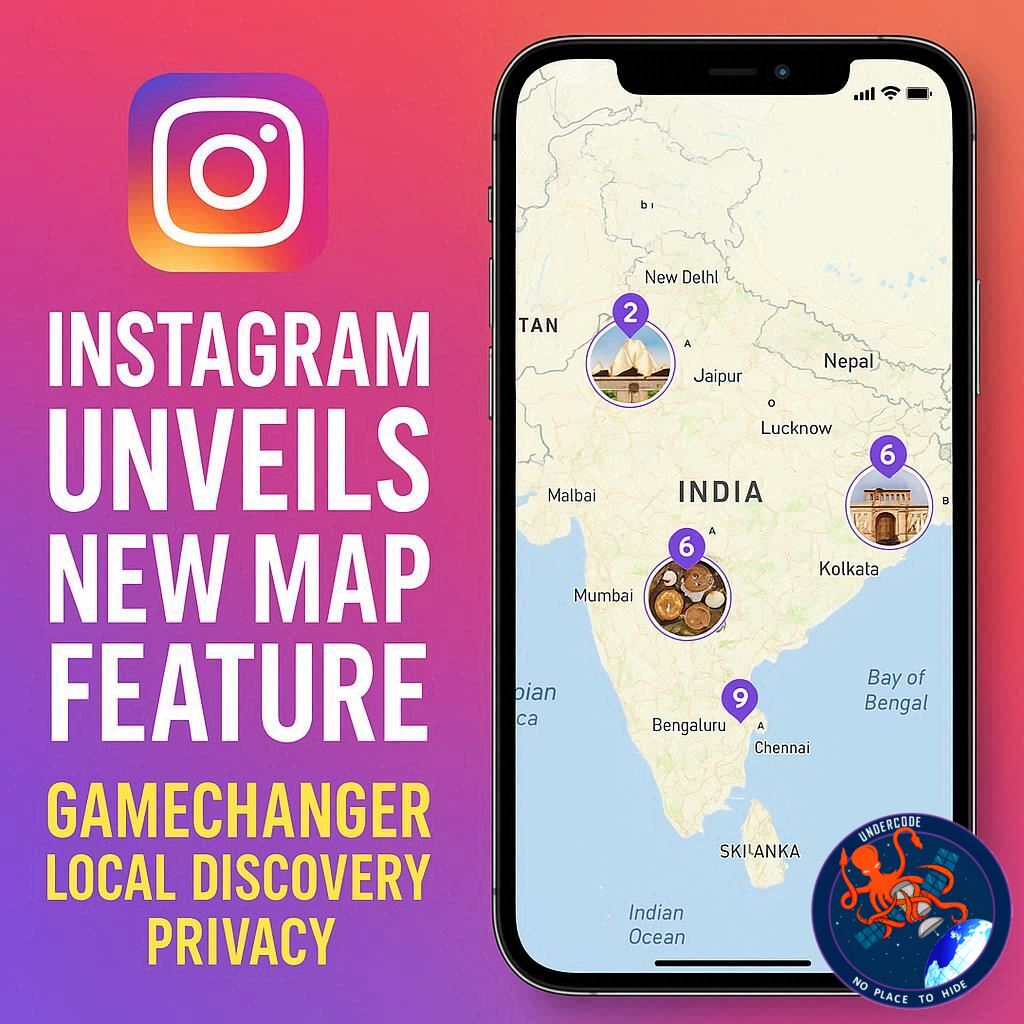
The Digital Exploration Revolution Begins
Instagram has officially introduced its long-awaited Map feature in India, marking a significant leap in how users explore the world around them. This dynamic update lets people discover restaurants, cafes, landmarks, and events directly through a visually interactive map driven by user-generated content. The goal is simple yet powerful — to make local exploration more personal, engaging, and community-based.
With India’s massive 300 million-plus Instagram users, the feature arrives as part of Meta’s larger plan to strengthen its presence in one of the world’s most vibrant digital markets. The rollout doesn’t just add convenience — it signals a deeper shift toward how digital communities shape physical experiences.
Discovering India, One Geo-Tag at a Time
The new Map feature allows users to tap on location tags found in posts or stories to explore that exact spot. From there, users can filter by category, such as cafes, landmarks, or trending hotspots, to find exactly what suits their mood or curiosity. This interactive system is not just about maps — it’s about building digital word-of-mouth through photos, stories, and recommendations shared by real users.
Whether you’re searching for the newest rooftop café in Delhi or a serene beach spot in Goa, the map curates suggestions based on community activity, giving every user the chance to uncover what’s trending nearby.
Local Businesses Step Into the Spotlight
Instagram’s Map isn’t just a tool for users — it’s a lifeline for small businesses and creators. The feature provides local entrepreneurs and venues with an organic way to gain visibility and attract new customers. With posts and stories tagged to their locations, businesses can appear in search results and reach audiences beyond their immediate followers.
This move aligns perfectly with Meta’s ongoing strategy to empower small businesses in emerging markets. As India continues to be a hub for digital growth, this feature can fuel local economies through increased engagement and footfall.
Privacy Takes Center Stage
Alongside this rollout, Instagram has unveiled enhanced privacy controls tailored specifically for Indian users. Now, users have granular control over whether their location-tagged posts appear on the map. They can remove or disable visibility anytime, ensuring that privacy remains in the hands of the creator.
Only public posts with location tags are eligible to appear on the map, and users receive notifications before inclusion. This ensures that transparency is embedded at every level. Instagram’s renewed privacy focus underscores Meta’s intent to balance innovation with user safety and consent, especially in markets where data sensitivity is high.
India Leads the Global Launch
Interestingly, India isn’t just a participant — it’s a priority market for Instagram. Being among the first countries to get the Map feature speaks volumes about how important the Indian user base has become to Meta’s global strategy. With hundreds of millions of active users, influencers, and businesses, India represents both a testing ground and growth engine for new social tools.
This launch may redefine how people experience the blend of digital and physical life — where social media recommendations guide real-world exploration in real time.
What Undercode Say:
The rollout of Instagram’s Map feature in India is more than a technical update; it’s a sociotechnological milestone. This feature transforms Instagram from a content-sharing platform into a hyperlocal discovery engine, directly competing with services like Google Maps, TripAdvisor, and Zomato.
At its core, the Map feature introduces a new kind of social navigation, where personal taste and peer influence replace algorithmic search dominance. Instead of sifting through generic search results, users can explore based on community energy — seeing what’s buzzing, where people are gathering, and what experiences are trending.
From a business perspective, this shift is revolutionary. Micro and nano influencers can now anchor their digital content to real-world locations, creating a hybrid marketing model that merges storytelling with geography. For example, a travel blogger tagging a hidden café in Pondicherry may inadvertently drive hundreds of visitors through organic discovery. This naturally boosts engagement rates and reshapes how marketing analytics interpret local trends.
Privacy control remains a smart strategic inclusion. By giving users the ability to opt in or out, Instagram acknowledges rising concerns over data sovereignty — especially in India, where users are increasingly vocal about digital transparency. This decision enhances trust, turning privacy into a competitive advantage rather than an afterthought.
Moreover, Instagram’s decision to prioritize India is no coincidence. India’s digital ecosystem is mobile-first, youth-driven, and socially integrated — a perfect testing ground for new features that depend on active sharing. This rollout positions India as a trend incubator for features that may later expand globally, based on user behavior and adoption patterns.
For Meta, this move also strengthens its data localization strategy. By encouraging in-country engagement through region-specific features, Instagram not only boosts user retention but also aligns with potential data compliance requirements.
If this experiment succeeds, we could see Instagram Maps evolving into a crowd-powered alternative to search engines, where discovery is driven by social proof rather than corporate listings. It’s a subtle but profound shift in how digital discovery operates.
In essence, Instagram’s new Map is a visual search engine powered by emotion and experience. It rewards authenticity and engagement rather than paid visibility. Businesses that adapt to this shift — by encouraging tagging, influencer visits, and visual storytelling — will dominate the next wave of local discovery.
Undercode’s perspective sees this as part of a larger metamorphosis in social media: from platforms built on global reach to ecosystems centered around localized influence. India’s massive youth demographic, mobile penetration, and love for visual content make it the ideal catalyst for this transformation.
Fact Checker Results:
✅ Instagram’s Map feature is officially launched in India and confirmed by Meta.
✅ Only public, location-tagged posts appear on the map, with full privacy controls.
✅ India is among the first countries to receive the rollout, verifying its strategic priority.
Prediction 🧭
Instagram’s Map feature will evolve into a major discovery engine, rivaling Google’s local ecosystem within two years. It will inspire businesses to invest more in social visibility, and users will increasingly trust peer-driven recommendations over ads. India’s early adoption may shape how future social exploration tools develop worldwide.
🕵️📝✔️Let’s dive deep and fact‑check.
References:
Reported By: timesofindia.indiatimes.com
Extra Source Hub:
https://www.discord.com
Wikipedia
OpenAi & Undercode AI
Image Source:
Unsplash
Undercode AI DI v2
🔐JOIN OUR CYBER WORLD [ CVE News • HackMonitor • UndercodeNews ]
📢 Follow UndercodeNews & Stay Tuned:
𝕏 formerly Twitter 🐦 | @ Threads | 🔗 Linkedin | 🦋BlueSky | 🐘Mastodon


