
Listen to this Post
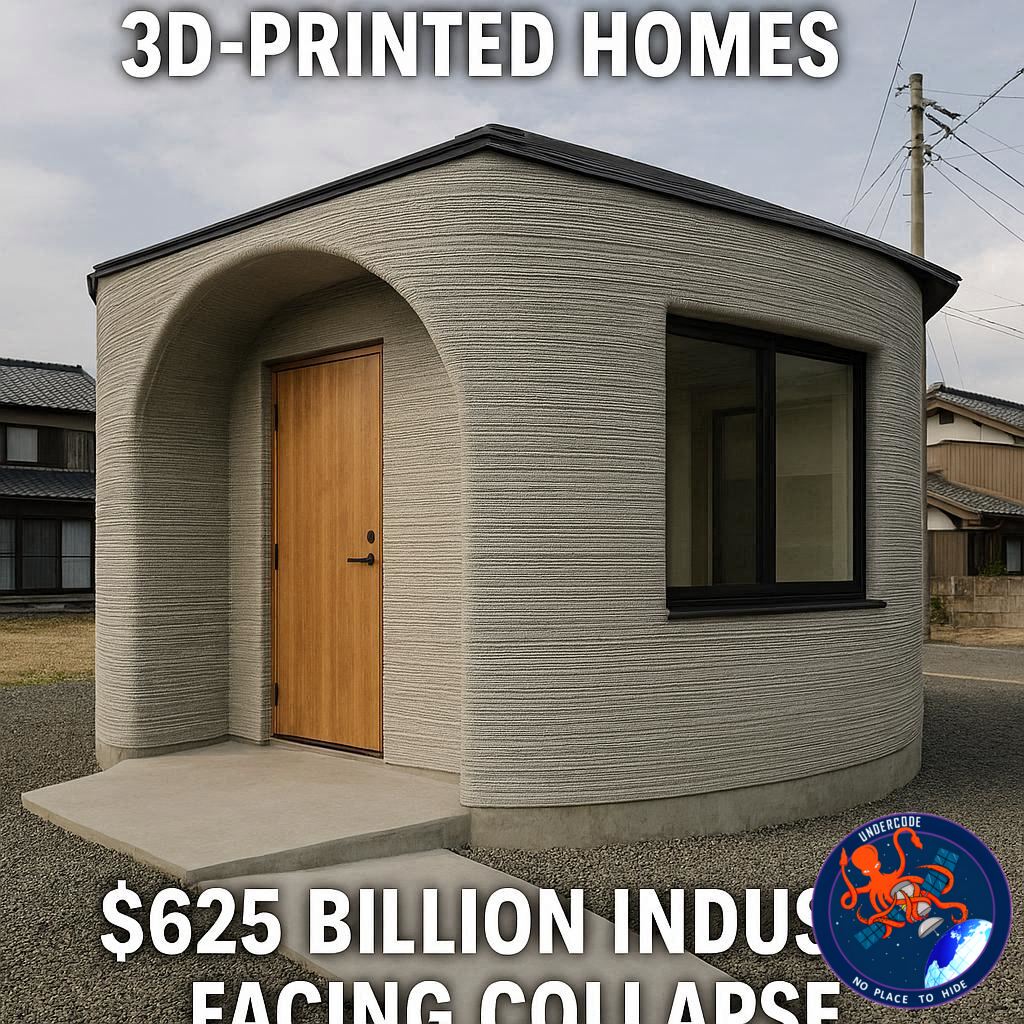
A New Era of Construction Begins in Japan
Japan’s construction industry is entering one of the most critical turning points in its modern history. Rising material prices, labor shortages, and an aging workforce are placing enormous pressure on a sector worth nearly $625 billion USD. At the same time, the country faces constant seismic threats, forcing engineers and developers to build structures that can survive powerful earthquakes while remaining affordable and efficient.
Against this backdrop, a groundbreaking innovation has emerged: Japan’s first fully realized two-story 3D-printed home. Known as “Stealth House,” the futuristic structure may look like something from a science-fiction movie, but experts believe it could represent the beginning of a major transformation in how homes are built across the country.
The project was developed by Japanese startup Kizuki in collaboration with more than 20 partner companies, including ONOCOM. Unlike earlier experimental 3D-printed structures seen around the world, this home was not merely a prototype or demonstration. It was fully constructed, approved under Japan’s strict earthquake regulations, and ultimately sold to a buyer — proving there is genuine market demand for this technology.
Standing approximately 6 meters tall and covering 50 square meters of space, the home was printed on-site in just 14 days using a giant gantry-style printer. The design draws inspiration from natural cave formations, giving it a futuristic and organic appearance. Its walls use a hollow structural system reinforced with concrete frames to comply with Japan’s demanding seismic standards.
The achievement is significant because Japan is one of the toughest environments in the world for architectural innovation. Building codes are extremely strict due to frequent earthquakes and natural disasters. Any new construction method must undergo extensive scrutiny before it can be accepted by regulators or consumers.
For years, 3D-printed construction technology has been praised globally for its potential to reduce labor needs, lower material waste, shorten construction timelines, and improve worker safety. However, many governments and financial institutions have remained cautious about adopting the technology on a large scale.
Japan’s demographic crisis is making that caution increasingly difficult to maintain. The country’s birthrate continues to fall, while millions of skilled workers approach retirement age. Industry estimates suggest that nearly 45% of Japan’s construction workforce — roughly 1.5 million people — could retire within the next decade.
This looming labor shortage is already slowing development projects and increasing costs nationwide. Construction productivity in Japan remains significantly below levels seen in the United States and other advanced economies. Experts believe technologies such as 3D printing could help close that gap.
Consultants in the Japanese construction industry argue that 3D printing can combine several traditional building trades into a single streamlined process. Tasks that once required multiple specialized crews can now be handled by a smaller group of machine operators and engineers. This could dramatically improve efficiency while reducing dependence on manual labor.
So far, most 3D-printing projects in Japan have focused on infrastructure rather than residential housing. Projects include 3D-printed train stations and large road structures. Yet residential demand is beginning to grow rapidly, especially in areas affected by natural disasters.
One major example came after the devastating 2024 earthquake in the Noto Peninsula, where 3D-printed housing solutions were deployed to provide fast and affordable shelter for displaced residents. These projects demonstrated how additive manufacturing could become an essential tool during emergency recovery efforts.
Kizuki also sees strong opportunities in Japan’s rural and depopulated regions. Many remote communities struggle to attract construction workers, making traditional housing projects slow and expensive. 3D printing could allow small teams to construct durable homes quickly in places where labor shortages are severe.
Despite the excitement surrounding the technology, major obstacles still remain. The biggest challenges are no longer technical — they are institutional and financial.
Currently, each 3D-printed building in Japan must go through individual approval processes because standardized regulations for additive construction do not yet exist. Experts say the lack of unified rules creates delays, uncertainty, and additional costs for developers.
University researchers and engineering organizations are now pushing for national technical standards that would simplify approval procedures and encourage broader adoption of the technology. Japanese authorities appear increasingly open to these changes, especially after the success of the Stealth House project.
Still, financial concerns continue to worry investors and homebuyers. Long-term durability data for 3D-printed homes remains limited compared to conventional buildings. Insurers and banks are cautious because resale values and maintenance costs are still uncertain.
Mortgage regulations also create barriers. Some Japanese housing loans require detached homes to meet minimum floor-size requirements larger than most current 3D-printed houses. As a result, many buyers must rely on cash purchases rather than traditional financing.
Even with these concerns, momentum is clearly building. Japan has spent decades investing in automated construction technologies. Since 2015, the government’s “i-Construction” initiative has promoted digitization and advanced machinery across the sector. A second phase launched in 2024 aims to reduce labor needs by 30% before 2040.
Industry analysts believe 3D printing could become one component of a much larger automated ecosystem that includes prefabrication, AI-powered design systems, robotics, and autonomous heavy equipment. Combined together, these technologies could potentially improve productivity by as much as 40% before the end of the decade.
Kizuki is already preparing for that future. The company plans to launch a dedicated “3DPC Academy” to train operators and specialists in large-scale 3D-printing construction techniques. Executives believe education and public awareness will play a critical role in normalizing the technology.
For many people, 3D-printed homes still feel futuristic or unrealistic. But projects like Stealth House are changing perceptions by showing that the technology can move beyond theory into real-world residential living.
What Undercode Says:
The Real Crisis Goes Beyond Construction
Japan’s 3D-printed housing breakthrough is not just a story about architecture or engineering. It is a warning signal about how demographic collapse is beginning to reshape advanced economies.
The construction industry is simply one of the first sectors experiencing the full force of labor depletion. As millions retire and fewer young workers enter physically demanding jobs, automation is no longer optional — it becomes a survival mechanism.
What makes Japan especially important is that it often acts as a preview of future global trends. Countries across Europe, East Asia, and even parts of North America are moving toward similar demographic realities. Shrinking workforces combined with rising infrastructure demands create an unsustainable equation under traditional construction methods.
3D-printed housing addresses multiple crises simultaneously. It reduces labor dependency, lowers waste, accelerates construction timelines, and enables highly customizable designs. In disaster-prone regions, these advantages become even more critical.
The seismic engineering aspect of Stealth House may actually be the project’s biggest achievement. Many countries have experimented with 3D-printed structures, but proving that such buildings can meet Japan’s earthquake standards gives the technology enormous credibility internationally.
That credibility matters because investors and regulators historically treat construction conservatively. Buildings are expected to last decades, sometimes centuries. Any failure could result in catastrophic financial and human consequences. Convincing governments and insurance companies to trust a radically different construction method is incredibly difficult.
The financial system may now become the biggest obstacle. Technology is advancing faster than regulation, financing rules, and insurance models. This mismatch often slows innovation far more than engineering challenges themselves.
Another overlooked issue is urban planning. Smaller 3D-printed homes may fit modern living trends, but many mortgage systems were designed decades ago around traditional suburban housing assumptions. If governments fail to modernize lending frameworks, adoption could remain artificially limited.
There is also a psychological barrier. Consumers still associate concrete homes with manual craftsmanship and decades of proven reliability. Convincing buyers that a machine-built house is equally safe requires years of trust-building and successful real-world performance.
However, once public confidence reaches a tipping point, adoption could accelerate rapidly.
The automotive industry experienced similar skepticism during early robotic manufacturing transitions. Today, highly automated production lines are considered standard. Construction may be heading toward the same future.
The economic implications are massive. Faster and cheaper housing production could significantly impact real-estate affordability in countries facing severe housing shortages. Governments dealing with disaster recovery could deploy emergency housing far more efficiently.
There is also geopolitical significance. Nations capable of rapidly constructing resilient infrastructure gain strategic advantages during climate disasters, population shifts, and economic instability.
Japan’s investment in automation since the 1980s now appears remarkably forward-thinking. The country recognized decades ago that labor shortages would eventually force technological transformation. What once seemed experimental is becoming economically necessary.
The integration of AI with 3D construction could push this even further. AI-driven structural optimization may eventually design buildings specifically tailored for local weather conditions, seismic activity, and energy efficiency.
In the future, construction sites may look radically different from today. Instead of hundreds of workers performing dangerous physical labor, small teams of engineers and operators may supervise autonomous systems handling most of the building process.
This could also change the public image of construction careers. Younger generations often avoid the sector because it is viewed as physically exhausting and low-tech. Automation may transform it into a more attractive engineering-oriented profession.
Still, major risks remain.
Long-term durability remains largely untested at scale. Many 3D-printed structures are relatively new, meaning there is limited evidence of how they will perform after 30 or 50 years under real environmental conditions.
Cybersecurity may also emerge as an unexpected issue. If construction increasingly relies on digital design systems and automated machinery, vulnerabilities in software could create entirely new categories of infrastructure risk.
Environmental claims around 3D printing should also be examined carefully. While material waste may decline, the energy demands of industrial-scale printing equipment could offset some sustainability benefits depending on energy sources.
Another concern involves architectural homogenization. If automated templates dominate the industry, cities could risk losing regional design identity and craftsmanship traditions.
Yet despite these concerns, the momentum behind construction automation appears unstoppable.
The reality is simple: many countries no longer have enough workers to maintain traditional building models at the speed modern economies require.
Japan’s Stealth House may eventually be remembered not as a novelty, but as one of the earliest symbols of a global industrial transition.
🔍 Fact Checker Results
✅ Japan’s Construction Workforce Is Rapidly Aging
Industry estimates showing that nearly 45% of construction workers could retire within the next decade are consistent with broader demographic trends affecting Japan’s labor market.
✅ The Stealth House Was Successfully Built and Sold
Kizuki’s two-story 3D-printed home was not merely experimental. It completed construction under Japanese seismic standards and was reportedly purchased by a buyer.
❌ 3D Printing Alone Will Not Solve Housing Problems
While the technology improves efficiency, experts agree that financing rules, insurance systems, regulations, and consumer trust remain major barriers to mass adoption.
📊 Prediction
The Next Construction Boom Could Be Fully Automated
Within the next 10 to 15 years, Japan is likely to become one of the world leaders in automated housing production. Earthquake-resistant 3D-printed homes could become increasingly common in rural regions, disaster zones, and affordable housing projects.
As AI, robotics, and prefabrication technologies merge with additive manufacturing, traditional construction methods may gradually become too expensive and too slow to compete.
Banks and insurers will eventually adapt once enough long-term performance data becomes available. When that happens, 3D-printed housing could transition from niche innovation to mainstream residential infrastructure.
Countries facing severe labor shortages and housing crises will closely watch Japan’s progress. If Stealth House proves durable over time, it may become the blueprint for the next generation of global construction.
🕵️📝Let’s dive deep and fact‑check.
References:
Reported By: edition.cnn.com
Extra Source Hub (Possible Sources for article):
https://www.twitter.com
Wikipedia
OpenAi & Undercode AI
Image Source:
Unsplash
Undercode AI DI v2
Bing
🔐JOIN OUR CYBER WORLD [ CVE News • HackMonitor • UndercodeNews ]
📢 Follow UndercodeNews & Stay Tuned:
𝕏 formerly Twitter 🐦 | @ Threads | 🔗 Linkedin | 🦋BlueSky | 🐘Mastodon


