
Listen to this Post
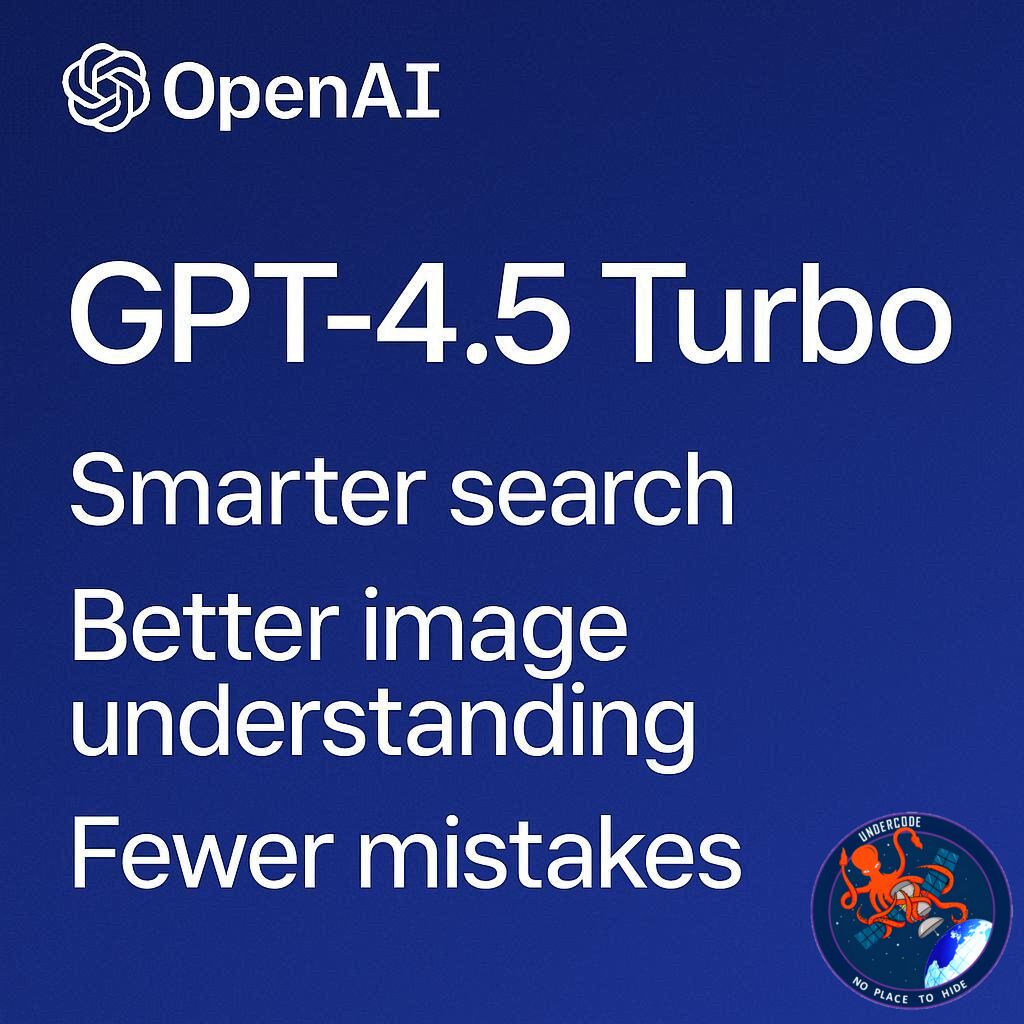
A Major Upgrade Quietly Changes ChatGPT for Everyone
OpenAI has officially rolled out GPT-5.5 Instant as the new default model inside ChatGPT, replacing the older version for users around the world. The update arrived on May 5, 2026, and affects both free and paid users immediately. While the change may appear subtle on the surface, it represents one of the biggest practical improvements ChatGPT has received so far.
The company focused this release on solving one of artificial intelligence’s biggest credibility problems: hallucinations. These are situations where AI confidently gives false or misleading information. According to OpenAI’s internal testing, GPT-5.5 Instant reduces hallucinated claims by 52.5% in sensitive areas such as medicine, finance, and law.
For millions of people who use ChatGPT every day for work, study, coding, writing, or research, this update changes the entire experience. OpenAI is no longer only chasing bigger models. It is now trying to make AI feel more dependable, more human, and more useful in real-world situations.
GPT-5.5 Instant Focuses on Everyday Conversations
Unlike previous upgrades that mostly targeted developers or enterprise customers, GPT-5.5 Instant was designed for ordinary daily use. OpenAI says the model now responds with shorter and cleaner answers instead of producing long, repetitive blocks of text.
Users had also complained for months about excessive formatting and unnecessary emoji usage. OpenAI appears to have listened carefully. The new model tones down exaggerated conversational habits and delivers responses in a more natural style.
The improvement may sound small, but it dramatically changes how ChatGPT feels during long conversations. Responses now appear more direct, less robotic, and more efficient.
Better Image Analysis Expands AI Capabilities
One of the most important upgrades is image understanding. GPT-5.5 Instant can now analyze photos and screenshots more accurately than before. This includes recognizing visual details, understanding diagrams, reading text from images, and identifying contextual information inside pictures.
This makes the AI more useful for students, researchers, designers, developers, and everyday users who often upload screenshots for troubleshooting or explanation purposes.
The image-analysis upgrade also moves ChatGPT closer to becoming a true multimodal assistant instead of just a text chatbot.
Smarter Web Search Decisions Improve Accuracy
OpenAI also upgraded the model’s ability to decide when it should search the web instead of relying only on internal memory. Older AI systems often answered questions incorrectly because they tried to respond without verifying information.
GPT-5.5 Instant now makes more intelligent decisions about when real-time web information is needed. This helps reduce outdated answers and improves reliability for current events, statistics, and rapidly changing topics.
The improvement is especially important because users increasingly depend on AI for fast information gathering instead of traditional search engines.
Math and STEM Performance Receive Noticeable Improvements
The model also performs better in STEM-related questions. OpenAI says GPT-5.5 Instant is more capable of catching its own mathematical errors before responding.
For users solving equations or analyzing technical concepts, this reduces frustration caused by incorrect calculations.
For example, mathematical reasoning tasks now feel more stable and consistent:
a
2
+b
2
=c
2
a
b
c=
a
2
+b
2
≈21.21
a
2
+b
2
=c
2
≈225.00+225.00=450.00
a
b
c
The AI’s stronger reasoning abilities are particularly useful for coding, engineering, physics, and academic work where precision matters more than conversational creativity.
Personalization Becomes Far More Advanced
One of the biggest additions is expanded personalization for Plus and Pro subscribers. GPT-5.5 Instant can now pull information from previous conversations, uploaded documents, and even connected Gmail accounts to provide more context-aware answers.
This means the AI can remember projects, writing styles, recurring tasks, and ongoing discussions more effectively.
OpenAI also introduced “memory-source visibility,” allowing users to see exactly which information influenced a response. Users can remove incorrect memories, edit outdated information, or disable specific sources entirely.
This transparency is important because personalization without visibility could easily become uncomfortable or invasive. OpenAI appears to understand that users want control over how AI remembers them.
Privacy Controls Receive More Attention
Another important detail is that shared chats do not expose personal memory sources. If a user shares a ChatGPT conversation with someone else, connected memories and personalized context remain private.
This separation between conversation sharing and memory visibility helps reduce privacy concerns that have followed AI systems over the past few years.
Free-tier users already receive GPT-5.5 Instant immediately, while some personalization features will arrive gradually in the coming weeks.
GPT-5.5 and GPT-5.5 Pro Target Power Users
GPT-5.5 Instant is only one part of OpenAI’s broader rollout. The company also launched GPT-5.5 and GPT-5.5 Pro on April 23, targeting more advanced workflows such as coding, research, debugging, and document creation.
These premium models are available for Plus, Pro, Business, and Enterprise subscribers.
OpenAI President Greg Brockman described the release as part of a long-term strategy to transform ChatGPT into a unified “super app” that combines AI chat, coding assistance, browsing, and productivity tools into one ecosystem.
That vision suggests OpenAI is no longer positioning ChatGPT as only a chatbot. Instead, it aims to become a full digital operating system powered by artificial intelligence.
The Quiet Shift Users Are Already Feeling
Many users may not even realize they are already interacting with GPT-5.5 Instant because the update automatically replaced the previous default model.
Still, the differences become noticeable after extended use. Responses are cleaner. Errors appear less frequently. Conversations flow more naturally. The AI also seems more willing to admit uncertainty instead of confidently inventing answers.
That final point may actually be the most important improvement of all.
AI systems become dangerous when they sound convincing while being wrong. By reducing hallucinations and improving self-awareness, OpenAI is trying to build trust rather than simply chasing larger model benchmarks.
What Undercode Say:
The launch of GPT-5.5 Instant reveals something bigger happening inside the AI industry. OpenAI is shifting focus away from flashy demonstrations and moving toward reliability, personalization, and ecosystem dominance.
For years, AI companies competed mainly on model size and benchmark scores. Now the battle is becoming more practical. Users care less about abstract intelligence claims and more about whether the AI actually helps them without wasting time or generating false information.
This update directly targets user frustration. People were tired of inflated responses, fake confidence, unnecessary emojis, and weak factual consistency. GPT-5.5 Instant appears designed to solve those exact complaints.
The reduction in hallucinations is especially important because AI is increasingly used in high-risk situations. Students rely on ChatGPT for learning. Developers use it for debugging. Professionals use it for legal summaries, financial research, and business communication. Even a small percentage of incorrect information can create major consequences.
Another major signal is personalization. OpenAI clearly wants ChatGPT to become deeply integrated into users’ digital lives. Access to conversation history, uploaded files, and Gmail context transforms the AI from a generic assistant into a personalized productivity layer.
That strategy also creates competitive pressure for companies like Google, Anthropic, and Microsoft. The AI race is no longer just about intelligence. It is about retention and ecosystem lock-in.
If ChatGPT remembers your projects, writing style, work habits, and documents better than competitors, switching away becomes harder.
The “super app” idea mentioned by Greg Brockman may be the most important clue about OpenAI’s long-term ambitions. OpenAI seems to envision a future where users no longer jump between search engines, browsers, coding tools, and productivity apps. Instead, AI becomes the main interface connecting everything together.
This is similar to how smartphones replaced many separate devices into one platform. OpenAI may be attempting the same transformation for software itself.
There is also an important psychological shift happening here. Earlier AI models often tried too hard to appear intelligent. GPT-5.5 Instant seems more focused on usefulness and humility. An AI that occasionally says “I don’t know” can actually become more trustworthy than one pretending to know everything.
The image-analysis improvements are another major strategic step. Multimodal AI is becoming the standard future of computing. Users increasingly communicate through screenshots, photos, PDFs, and visual data instead of plain text alone.
By strengthening image understanding, OpenAI is preparing ChatGPT for a future where AI assistants interact naturally with every type of information format.
The cleaner response style also matters more than many people realize. Human users quickly become exhausted by bloated AI replies. Shorter, sharper communication improves productivity and makes the AI feel less artificial.
This update may also indicate that OpenAI is collecting enormous amounts of real-world feedback and optimizing the model around actual user behavior rather than academic benchmarks.
Another fascinating detail is memory-source visibility. That feature suggests OpenAI understands the growing public concern around AI privacy and hidden data usage. Giving users control over AI memory could become an industry standard later.
The timing of this rollout is important too. Competition in AI has become extremely aggressive in 2026. Every major tech company is racing to dominate personal AI assistants. OpenAI cannot afford stagnation because user expectations are rising incredibly fast.
GPT-5.5 Instant does not feel like a revolutionary sci-fi leap. Instead, it feels like a refinement focused on trust, usability, and long-term engagement.
Ironically, that may be more important than raw intelligence upgrades.
The future winners in AI may not be the companies with the smartest models alone. They may be the ones building AI systems people actually enjoy using every day.
Fact Checker Results
✅ OpenAI officially rolled out GPT-5.5 Instant globally as the new default ChatGPT model for free and paid users.
✅ The article correctly states that OpenAI focused heavily on reducing hallucinations and improving accuracy in high-risk subjects.
❌ There is still no independent public verification yet for all internal benchmark claims, including the exact 52.5% hallucination reduction figure.
Prediction
🔮 GPT-5.5 Instant will likely accelerate the trend of AI replacing traditional search behavior for everyday information gathering.
🔮 Personalized AI assistants connected to emails, files, and browsing history may become the default digital workspace within the next few years.
🔮 Competitors such as Google, Anthropic, and Microsoft will likely respond with similar memory-driven AI ecosystems focused on reliability rather than only raw model power.
🕵️📝Let’s dive deep and fact‑check.
References:
Reported By: zeenews.india.com
Extra Source Hub (Possible Sources for article):
https://www.pinterest.com
Wikipedia
OpenAi & Undercode AI
Image Source:
Unsplash
Undercode AI DI v2
Bing
🔐JOIN OUR CYBER WORLD [ CVE News • HackMonitor • UndercodeNews ]
📢 Follow UndercodeNews & Stay Tuned:
𝕏 formerly Twitter 🐦 | @ Threads | 🔗 Linkedin | 🦋BlueSky | 🐘Mastodon


