
Listen to this Post
Introduction
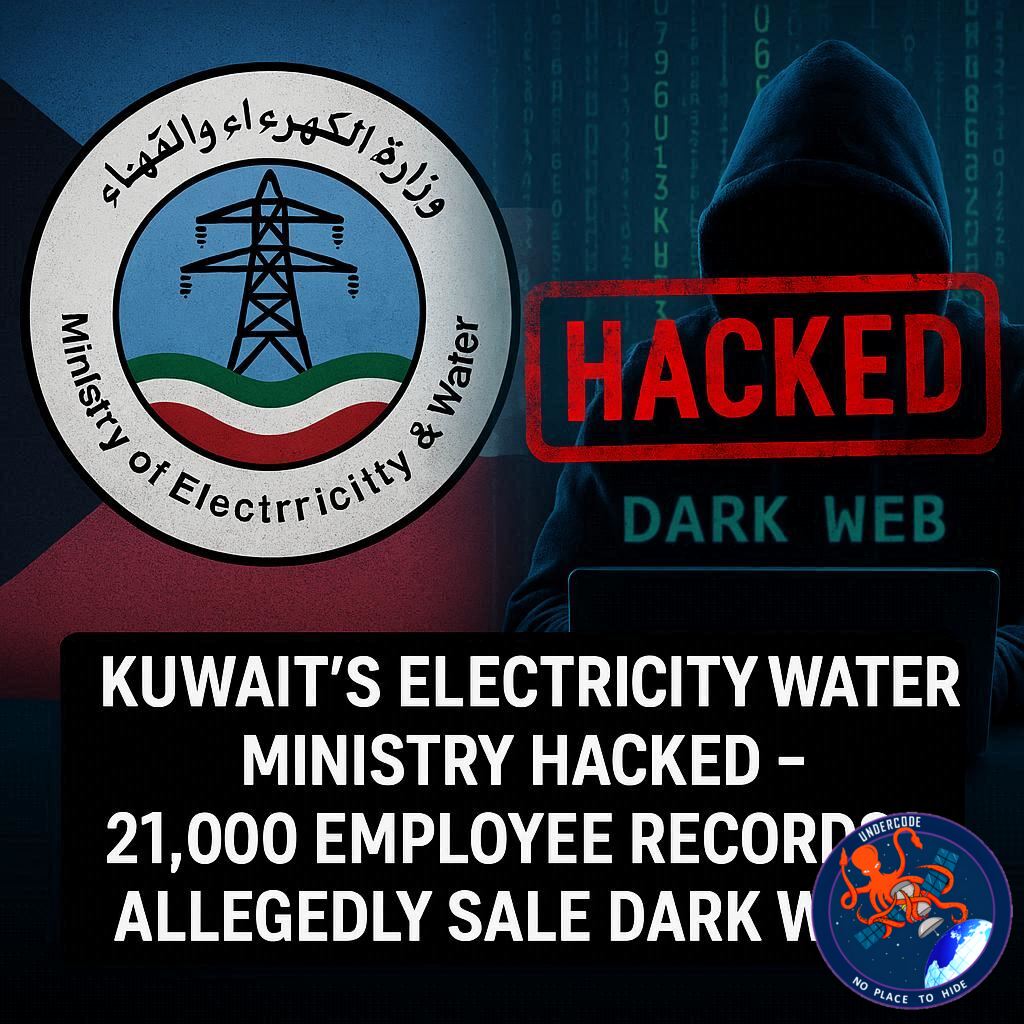
In a shocking revelation, Kuwait’s Ministry of Electricity and Water (MEW) has reportedly become the latest government institution targeted by cybercriminals. According to dark web monitoring sources, a threat actor is claiming to sell a massive database containing personal details of more than 21,000 employees. If proven true, this breach could expose sensitive government data, raise national security concerns, and put thousands of individuals at risk of identity theft and cyber fraud.
the Alleged Breach
The report emerged from Daily Dark Web Intelligence, highlighting that a hacker group claims to possess classified data from the Ministry of Electricity & Water in Kuwait. The leak allegedly involves private information of 21,000 government employees, potentially including names, phone numbers, addresses, job details, and other sensitive records.
The cybercriminal behind the breach is advertising the data for sale on underground dark web forums, sparking fears of identity misuse, phishing attempts, and financial fraud. Such incidents are not uncommon in the Middle East, as government agencies remain high-value targets for hackers seeking both financial gain and political leverage.
Although the ministry has not officially confirmed the breach, cybersecurity analysts stress that even the possibility of such an exposure is alarming. If verified, this would represent one of the largest cyber incidents in Kuwait’s recent history, raising urgent questions about data security policies, IT infrastructure resilience, and employee protection measures.
The event highlights how the dark web economy thrives on stolen government databases, turning sensitive employee records into commodities. Criminals often purchase this type of information to craft spear-phishing campaigns, commit fraud, or sell to intelligence groups with hostile intent.
What Undercode Say:
Cyberattacks on government entities are increasing at an unprecedented rate. Hackers today do not simply look for credit card numbers—they want comprehensive identity profiles, which are far more valuable. A breach involving thousands of ministry employees could allow malicious actors to:
Launch targeted scams against officials using authentic-looking details.
Exploit insider threats, offering money to employees in exchange for confidential access.
Undermine national stability, as government workers may feel unsafe and demoralized knowing their private data is circulating online.
Undercode’s analysis suggests that the Kuwaiti case could be part of a wider regional campaign. Neighboring countries in the Gulf have also reported similar incidents in the past, often traced back to sophisticated hacker groups with advanced tools.
Another concerning factor is the commercialization of stolen data. On the dark web, government employee records are more than just numbers—they carry a premium value. Buyers may include rival intelligence agencies, organized cybercriminals, or even extremist groups seeking to exploit vulnerabilities within a nation’s institutions.
From a geopolitical perspective, such breaches weaken public trust in government systems. For Kuwait, which plays a vital role in the Gulf’s energy landscape, protecting critical infrastructure and personnel data should be a top priority.
If the claim turns out to be accurate, Kuwait must not only investigate the breach but also:
1. Enhance cybersecurity protocols within ministries.
2. Offer identity protection and support for affected employees.
- Collaborate with international cyber intelligence agencies to trace and neutralize the hacker’s operations.
The case also sheds light on how digital warfare is evolving. Instead of attacking power grids directly, hackers are increasingly choosing to compromise employee data, using it as leverage to infiltrate deeper into networks.
For organizations and governments alike, the key lesson is clear: data is the new battlefield, and neglecting its protection invites disaster.
✅ Fact Checker Results
So far, the breach remains unverified. While a hacker is indeed advertising the data, no independent source has confirmed its authenticity. The ministry has yet to release an official statement, leaving the claim in a gray zone between rumor and reality.
🔮 Prediction
If this breach is confirmed, Kuwait may soon announce nationwide cybersecurity reforms, mandatory employee data protection protocols, and possible collaboration with Gulf neighbors to combat cross-border cybercrime. Cyberattacks targeting government bodies are only expected to rise in 2025 and beyond, making regional cooperation a necessity rather than an option.
🕵️📝✔️Let’s dive deep and fact‑check.
References:
Reported By: x.com
Extra Source Hub:
https://www.quora.com/topic/Technology
Wikipedia
OpenAi & Undercode AI
Image Source:
Unsplash
Undercode AI DI v2
🔐JOIN OUR CYBER WORLD [ CVE News • HackMonitor • UndercodeNews ]
📢 Follow UndercodeNews & Stay Tuned:
𝕏 formerly Twitter 🐦 | @ Threads | 🔗 Linkedin | 🦋BlueSky | 🐘Mastodon


