
Listen to this Post
Introduction
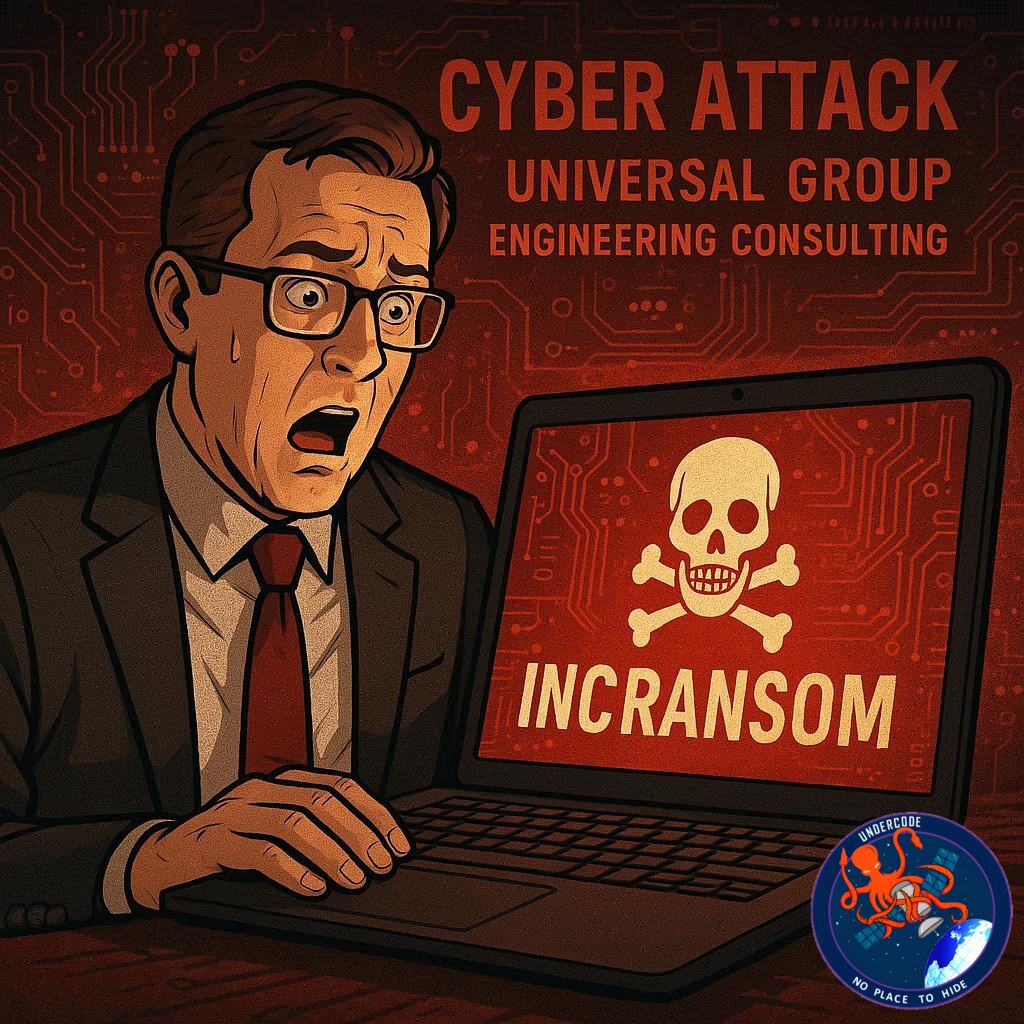
Ransomware continues to dominate global cybercrime headlines, targeting businesses, hospitals, and institutions with devastating consequences. Recently, a major cybersecurity alert was raised when the notorious ransomware group Incransom claimed responsibility for attacking the Universal Group for Engineering and Consulting. This revelation came through ThreatMon’s ransomware monitoring service, which tracks dark web activity and identifies victims added to hacker leak sites.
Such attacks not only compromise sensitive data but also threaten business continuity, financial stability, and reputation. Alongside this incident, another report surfaced involving the Qilin ransomware gang striking the Fullerton Surgical Center (FSC), proving once again that cybercriminals are casting a wide net across different industries.
the Incident
ThreatMon’s latest update revealed that on August 21, 2025, at 05:47:40 UTC +3, the Incransom ransomware group listed the Universal Group for Engineering and Consulting as a victim on their dark web portal.
The intelligence highlighted that this was not an isolated case. Only hours earlier, another dark web posting showed the Qilin ransomware group claiming responsibility for breaching the Fullerton Surgical Center (FSC) on August 20, 2025, at 23:36:02 UTC +3.
Both groups are well-known in the cybercriminal ecosystem for using double extortion tactics: not only encrypting files but also threatening to leak stolen sensitive data if ransom demands are not met.
The victims, Universal Group and Fullerton Surgical Center, represent two vastly different sectors—engineering consultancy and healthcare—but share the same vulnerability: exposure to advanced ransomware groups that exploit weak cybersecurity defenses.
Ransomware gangs like Incransom and Qilin have been aggressively expanding their victim pool across industries, often choosing targets with high operational stakes. This means downtime or data leaks could result in huge financial and reputational losses, pushing organizations to consider paying hefty ransoms.
ThreatMon’s monitoring platform, which specializes in detecting Indicators of Compromise (IOC) and Command-and-Control (C2) infrastructure, continues to provide early alerts to businesses worldwide. However, the rising volume of ransomware incidents indicates that proactive defense strategies are not keeping pace with the evolving cybercrime landscape.
This double attack demonstrates how ransomware gangs coordinate and operate almost like multinational corporations—complete with negotiation portals, PR strategies on the dark web, and financial laundering pipelines through cryptocurrency.
The growing concern is not just about the immediate impact but also the ripple effect: leaked data can later appear on underground forums, fueling identity theft, fraud, and even corporate espionage.
For Universal Group, the attack raises questions about how engineering firms safeguard project data, architectural blueprints, and client contracts. For Fullerton Surgical Center, the threat is more severe as stolen medical records can be weaponized for blackmail or sold to fraudulent healthcare operators.
The incidents also underline the importance of threat intelligence sharing between industries, governments, and private cybersecurity providers to disrupt ransomware ecosystems before they escalate.
What Undercode Say:
The back-to-back attacks highlight a dangerous escalation in ransomware targeting strategies. Let’s break down the implications:
Cross-Industry Targeting: Ransomware gangs no longer limit themselves to high-profile corporations. From engineering firms to healthcare centers, every sector is vulnerable. This unpredictability makes it harder for organizations to assess risk.
Healthcare in the Crosshairs: The Fullerton Surgical Center attack is especially alarming. Medical institutions remain a favorite target because downtime can cost lives, forcing many to consider ransom payments rather than lengthy recovery processes.
Engineering Firms as High-Value Targets: For Universal Group, intellectual property such as blueprints, designs, and confidential projects represent lucrative data. Criminals understand that losing such information can derail billion-dollar projects, making engineering firms attractive targets.
Psychological Warfare: Beyond financial loss, ransomware gangs use fear as a weapon. Public shaming on dark web portals pressures victims to comply quickly.
Rise of Dark Web PR Tactics: Groups like Incransom and Qilin are professionalizing their operations. Public announcements of new victims act as intimidation and advertisement to other gangs, showcasing their reach and power.
Cryptocurrency’s Role: Bitcoin and privacy coins remain central to ransom payments. Tracking funds has become challenging, allowing ransomware to remain one of the most profitable cybercrimes.
Threat Intelligence Importance: Organizations that actively monitor dark web chatter, like ThreatMon, are better equipped to anticipate attacks. However, intelligence alone is not enough—companies must also invest in layered defense strategies.
Data Leaks as Secondary Attacks: Even if victims refuse to pay, data leaks can lead to long-term reputational damage and secondary cybercrimes such as phishing, fraud, and insider threats.
Regulatory Pressures: Governments worldwide are pushing for stricter cybersecurity compliance. Attacks like these increase regulatory pressure on businesses to secure customer and client data.
The Business Model of Ransomware: Today’s gangs operate like startups—outsourcing tasks, recruiting affiliates, and using ransomware-as-a-service (RaaS). This lowers entry barriers for new criminals and accelerates global ransomware spread.
In essence, ransomware is no longer a rare cyber event but a global epidemic. Organizations must view cybersecurity not as a cost but as a survival necessity.
✅ Fact Checker Results
Both incidents—the Universal Group attack by Incransom and the Fullerton Surgical Center breach by Qilin—are confirmed ransomware activities reported by ThreatMon’s monitoring service. No evidence suggests exaggeration or misinformation.
🔮 Prediction
The frequency and diversity of ransomware attacks will only increase in the coming months. Engineering and healthcare sectors will remain prime targets due to the high value of their data and the urgency of their operations. Expect to see more multi-industry waves of ransomware attacks, with threat actors using data leaks as leverage to force quicker ransom payments.
🕵️📝✔️Let’s dive deep and fact‑check.
References:
Reported By: x.com
Extra Source Hub:
https://www.pinterest.com
Wikipedia
OpenAi & Undercode AI
Image Source:
Unsplash
Undercode AI DI v2
🔐JOIN OUR CYBER WORLD [ CVE News • HackMonitor • UndercodeNews ]
📢 Follow UndercodeNews & Stay Tuned:
𝕏 formerly Twitter 🐦 | @ Threads | 🔗 Linkedin | 🦋BlueSky | 🐘Mastodon


