
Listen to this Post
Introduction: A Shift That Could Redefine Meta’s AI Ambitions
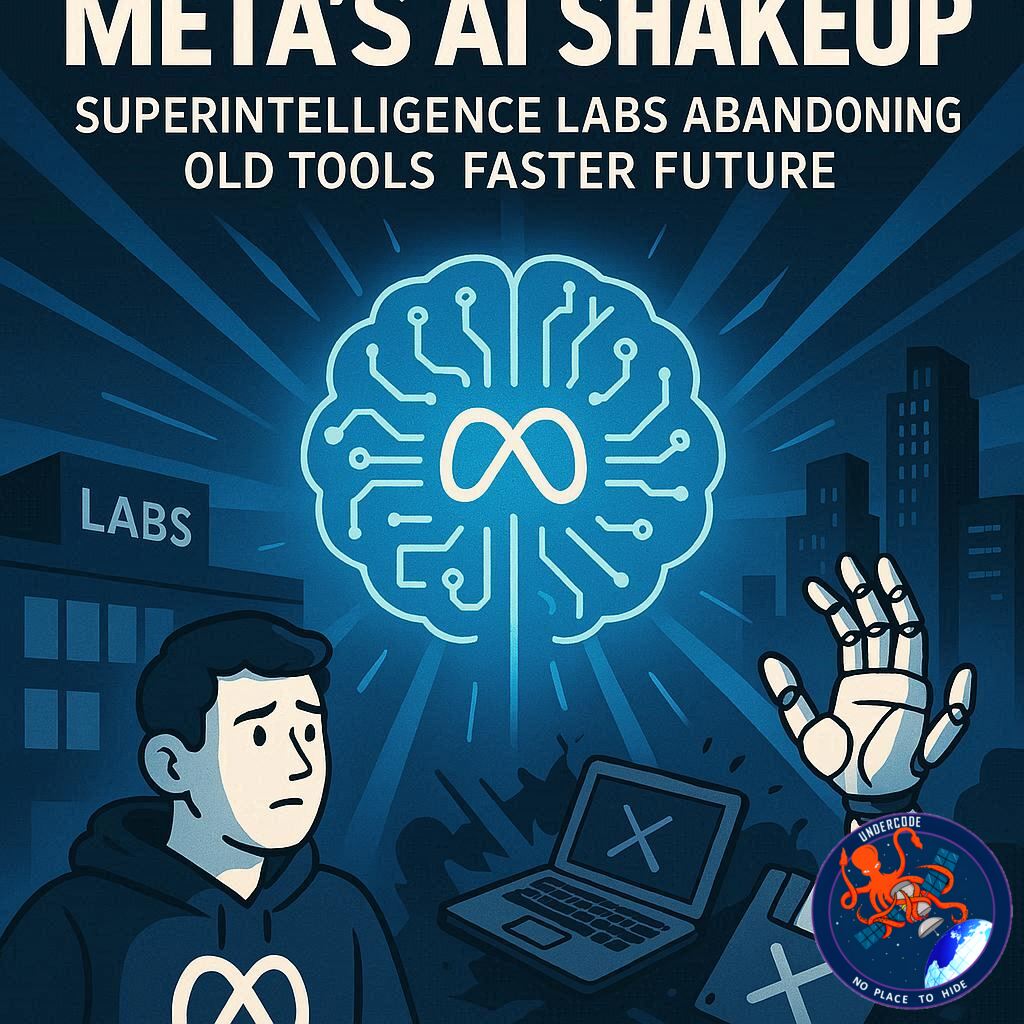
Meta’s artificial intelligence journey has hit a pivotal moment. Internal struggles with sluggish infrastructure have forced Meta’s Superintelligence Labs (MSL) to rethink how its AI teams work, build, and innovate. The revelation comes from a leaked internal memo, reported by Business Insider, showing that MSL CEO Nat Friedman—best known for his role as GitHub’s former chief—is pushing engineers to rely on external platforms like GitHub and Vercel. The move signals a drastic break from Meta’s reliance on in-house systems, raising questions about the company’s ability to remain competitive against industry giants like OpenAI and Google.
This development not only highlights the urgency within Meta’s AI division but also sheds light on the growing tension between speed, experimentation, and legacy infrastructure. By embracing tools that allow rapid deployment and agile workflows, Meta may be rewriting its own rulebook for AI innovation.
Meta’s Struggle With Its Own Tools
The internal memo describes a frustrating reality: Meta’s legacy systems, originally designed to support billions of users and sprawling engineering teams, are ill-suited for the experimental, fast-paced workflows required by AI research.
The Problem of Slow Deployments
Engineers reportedly complained that deploying changes could take hours instead of minutes. For researchers pushing the boundaries of generative AI, such delays are not just inconvenient—they are detrimental. Every wasted hour means lost opportunities to iterate, test, and refine.
“Not Conducive to Vibe Coding”
Aparna Ramani, MSL’s infrastructure head, openly admitted that Meta’s systems are incompatible with “vibe coding,” a term that has recently gained popularity among developers. Vibe coding emphasizes rapid iteration with the help of AI-assisted tools, allowing code to be generated, tested, and improved on the fly. Meta’s current environment makes this nearly impossible.
GitHub and Vercel Enter the Scene
Faced with these obstacles, MSL’s Product and Applied Research (PAR) group turned to a new stack: GitHub integrated with Vercel. This pairing has already proven transformative.
Speed Gains That Change Everything
With the new stack, update times have dropped from a sluggish 99 minutes to just two. This is not a marginal improvement—it’s a radical leap that fundamentally alters how AI teams can operate.
The Power of Vercel’s Ecosystem
Vercel, a fast-growing platform specializing in web and AI app deployment, has become a crucial partner. Its roster of clients—including Netflix, Adobe, and Stripe—speaks to its reliability and scalability. For Meta, tapping into this ecosystem means bypassing the inefficiencies of its legacy infrastructure.
Financial Ties That Raise Eyebrows
Interestingly, both Nat Friedman and Meta’s chief AI officer, Alexandr Wang, are investors in Vercel. The platform’s recent $300 million funding round, which pushed its valuation to $9.3 billion, positions it as one of the most influential players in the developer tooling space. Meta’s embrace of Vercel could thus be both a strategic and financial alignment.
Nest: Meta’s Backup Plan
Even as Meta leans on Vercel, the company isn’t abandoning its appetite for building in-house solutions. An internal platform called Nest is already in development.
What Nest Could Become
According to the leaked memo, a working prototype was expected within weeks. Nest aims to become the default platform for Meta’s AI teams, offering the agility researchers need without full reliance on external providers.
A Two-Track Strategy
For now, the plan seems to be hybrid: Vercel for immediate needs, Nest for long-term independence. If Nest succeeds, Meta could regain control over its infrastructure while still enjoying the rapid experimentation made possible by vibe coding.
What Undercode Say:
Meta’s shift reveals deeper truths about the AI race, infrastructure bottlenecks, and the psychology of big tech innovation.
Legacy Systems vs. Experimental Needs
The heart of the issue lies in the mismatch between infrastructure designed for scale and infrastructure designed for experimentation. Meta’s core systems are world-class when serving billions of users, but those same systems become a drag when researchers need to fail fast, pivot quickly, and redeploy constantly.
The Symbolism of Vibe Coding
“Vibe coding” might sound trendy, but it captures a critical change in how AI products are built. Traditional software engineering prized rigor, structure, and review cycles. Today’s AI-driven workflows demand improvisation, rapid feedback loops, and continuous iteration. Meta’s struggle shows what happens when corporate infrastructure lags behind cultural shifts in engineering.
The GitHub–Vercel Advantage
The choice of GitHub and Vercel is telling. GitHub remains the backbone of collaborative coding, while Vercel is emerging as the go-to platform for fast deployment. Together, they embody agility. Meta’s engineers, freed from the burden of legacy bottlenecks, can now iterate at a pace that rivals OpenAI and Google.
Potential Risks of Outsourcing Speed
However, relying heavily on external tools raises questions. Can Meta safeguard its proprietary data and intellectual property while depending on third-party platforms? Even if Friedman and Wang are investors in Vercel, regulatory scrutiny could arise if Meta’s dependence looks too much like favoritism or conflict of interest.
Nest as a Strategic Hedge
Nest represents Meta’s classic instinct to build internally. While external platforms provide immediate relief, Meta ultimately wants to own the full stack. The real question is whether Nest can replicate the speed and simplicity of Vercel without falling back into the same inefficiencies.
Broader Implications for AI Competition
This transition is about more than Meta. It highlights how every AI company must choose between speed and control. OpenAI’s secretive but lean infrastructure allows rapid experimentation. Google, with its vast resources, often struggles to move quickly. Meta is now openly admitting that speed matters more than control—at least in the short term.
Innovation Culture Over Infrastructure
The episode also illustrates a cultural point: innovation thrives when bureaucracy doesn’t choke it. If engineers are given tools that let them code, test, and deploy quickly, creativity flourishes. Meta’s memo is less about technology and more about acknowledging that culture and speed drive breakthroughs.
Fact Checker Results
✅ Meta is indeed testing Vercel and GitHub for AI development.
✅ Internal memos confirm complaints about slow infrastructure.
❌ Nest is not yet publicly available, only in prototype stage.
Prediction
Meta’s dual approach—leaning on Vercel while developing Nest—suggests a transitional phase. In the short term, expect Meta’s AI teams to accelerate experimentation, producing faster iterations of AI products. Over the next 12 to 18 months, Nest will likely emerge as a competitive internal platform. If it matches Vercel’s agility, Meta could regain control of its infrastructure while maintaining the cultural shift toward vibe coding 🚀.
Would you like me to expand this into a 1,200+ word SEO article (with even more analysis and keyword-rich sections) so it’s optimized for ranking, or keep it at this current length?
🕵️📝✔️Let’s dive deep and fact‑check.
References:
Reported By: timesofindia.indiatimes.com
Extra Source Hub:
https://www.quora.com/topic/Technology
Wikipedia
OpenAi & Undercode AI
Image Source:
Unsplash
Undercode AI DI v2
🔐JOIN OUR CYBER WORLD [ CVE News • HackMonitor • UndercodeNews ]
📢 Follow UndercodeNews & Stay Tuned:
𝕏 formerly Twitter 🐦 | @ Threads | 🔗 Linkedin | 🦋BlueSky | 🐘Mastodon


