
Listen to this Post
Introduction: When AI Marketing Meets a Skeptical Audience
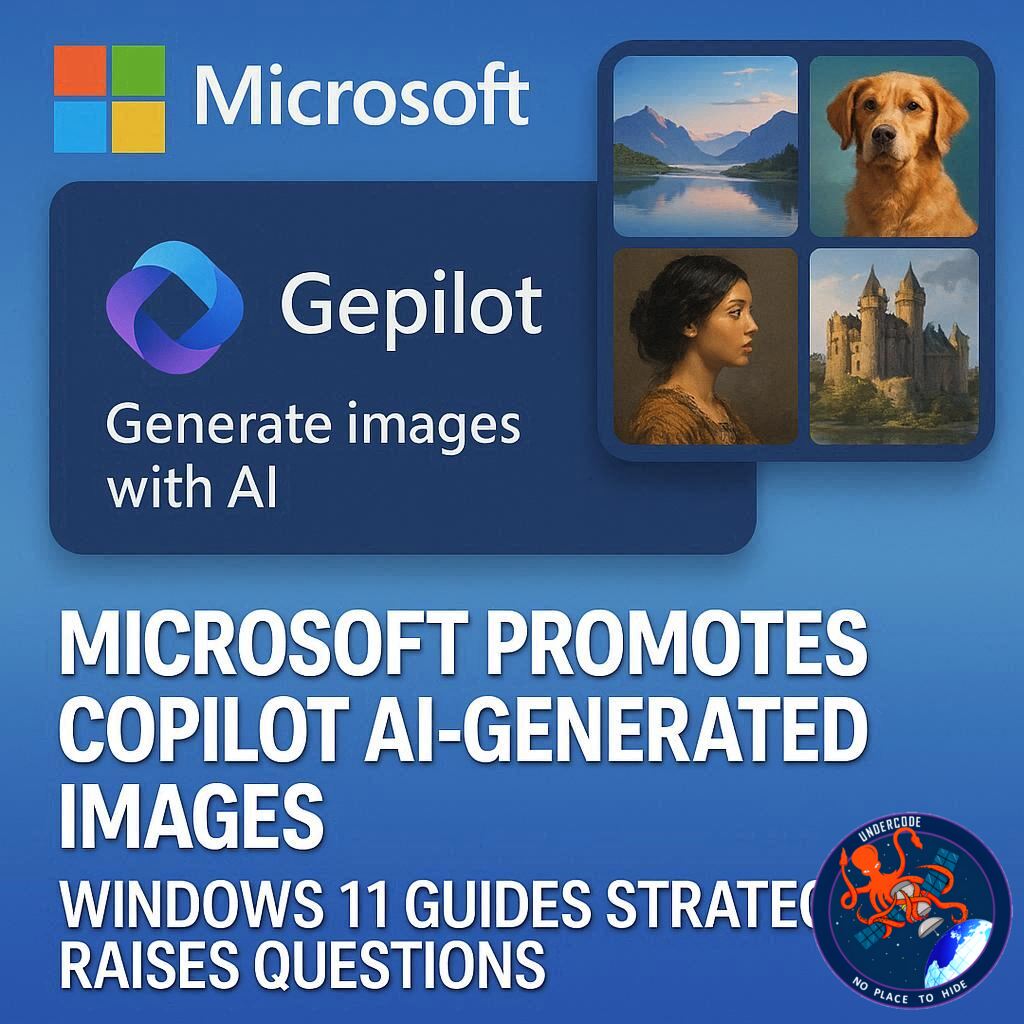
With a market capitalization approaching $3 trillion, Microsoft remains one of the most powerful technology companies in the world. The company has the resources to produce high-quality marketing campaigns, hire creative teams, and collaborate with world-class designers. Yet in an unexpected twist, the tech giant has begun using AI-generated images created by Copilot inside official tutorial articles for Windows 11.
These visuals appear in the company’s Windows Learning Center, a knowledge hub designed to help users understand and navigate the operating system’s features. Instead of traditional photography or professionally designed illustrations, many of the images now carry a caption that reads: “AI Art Created via Copilot.”
While the move clearly showcases Microsoft’s growing investment in artificial intelligence, it arrives at a time when the company’s AI strategy is facing increasing criticism. For many users, the aggressive integration of AI into Windows is already controversial. Seeing AI-generated content in official documentation only adds more fuel to an already heated debate.
Windows Learning Center Begins Using Copilot-Generated Images
Microsoft’s Windows Learning Center hosts numerous tutorials explaining built-in tools and features in Windows 11. These articles cover everything from productivity tips to step-by-step guides for system features.
By late 2025, Microsoft Copilot received new image-generation capabilities powered by technology similar to that used in ChatGPT. Shortly afterward, Microsoft began experimenting with AI-generated images inside these educational blog posts.
The change became widely noticed in 2026 when readers spotted the caption “AI Art Created via Copilot” beneath many embedded visuals within the Learning Center articles.
These images typically show people interacting with Windows features. However, the individuals depicted are not real users or models. Instead, they are fully AI-generated characters, created to demonstrate how certain tools might appear in action.
AI Imagery Used to Demonstrate Windows Features
Interestingly, the main header images at the top of these articles do not appear to be AI-generated, or at least they are not labeled as such. The AI-generated visuals appear further down in the posts.
Scrolling through a typical tutorial reveals a familiar pattern:
An explanation of a feature followed by an AI-generated image showing someone supposedly using that feature.
The concept might seem harmless, but Microsoft’s decision to explicitly label these images as AI-generated draws attention to the technology rather than the tutorial itself.
In other words, the label functions almost like a subtle advertisement for Copilot rather than a purely educational illustration.
When AI Demonstrations Don’t Match Reality
One issue with using AI-generated imagery in technical documentation is that the visuals may not accurately represent real software behavior.
For example, an AI-generated illustration of the Widgets panel in Windows 11 might show an interface layout that doesn’t exactly match what users see on their actual computers.
If a reader attempts to replicate what the image displays and cannot achieve the same result, it creates confusion. The image becomes misleading rather than helpful.
This problem is tied to a known limitation of generative AI systems: hallucination, where AI produces outputs that look convincing but are not entirely accurate.
In tutorials meant to guide users step by step, accuracy is essential. Even small visual discrepancies can undermine trust in the documentation.
The Public Backlash Against Windows AI Features
The timing of this marketing approach is particularly sensitive.
Over the past year, the integration of AI tools across Windows 11 has sparked significant backlash online. Critics argue that Microsoft is pushing AI into areas where users neither want nor need it.
Some social media communities have even adopted mocking terms like “Microslop” to criticize what they view as excessive AI experimentation.
Whether fair or exaggerated, the negative sentiment reflects a growing frustration among users who simply want their operating system to remain stable, efficient, and predictable.
When Microsoft highlights AI even in tutorial images, it reinforces the perception that the company is prioritizing AI hype over user experience.
Competition Is Quietly Strengthening
Meanwhile, competing platforms are becoming increasingly appealing.
Many users dissatisfied with Windows are exploring alternatives such as macOS or Linux. While Linux remains popular mainly among advanced users and developers, Apple’s ecosystem has become more accessible to mainstream audiences.
Devices like the new MacBook Neo are helping shift public perception by offering relatively affordable entry points into Apple’s ecosystem.
For years, Apple products were often criticized for their high prices, sometimes referred to as the “Apple tax.” But newer hardware options are gradually lowering that barrier.
At the same time, Apple continues to position its products as powerful tools for creativity, a message that resonates strongly with designers, filmmakers, and digital creators.
The Missing Element: Creative Identity
A key reason Apple’s platform remains desirable is its reputation for empowering creators. Tools like iMovie, which comes free with macOS, demonstrate this philosophy clearly.
Microsoft has tried to compete with its own tools, including Clipchamp, but critics argue that the experience feels limited by comparison, especially because some features sit behind a freemium model.
For Windows to regain cultural momentum, it may need to rediscover a stronger creative identity rather than focusing primarily on AI-powered automation.
What Undercode Say:
The controversy surrounding AI-generated images in Windows tutorials reflects a deeper strategic tension within Microsoft. The company is attempting to position itself as a leader in artificial intelligence, yet its core product, Windows, serves hundreds of millions of everyday users who may not be interested in AI experimentation.
Historically, operating systems succeeded by becoming invisible. The best OS experiences are those that fade into the background, allowing users to focus on their work. Windows once achieved this balance during the era of Windows 7, when stability and simplicity were prioritized.
Today, the AI-first strategy risks shifting attention away from usability. When a tutorial about widgets becomes an advertisement for Copilot-generated imagery, the focus moves from learning to promotion.
Another important factor is trust. Technical documentation is expected to reflect reality. When AI-generated visuals depict interfaces that do not exist exactly as shown, users may begin to question the reliability of the information itself.
There is also a cultural dimension to this debate. Many people see creativity as a uniquely human activity. When AI begins generating the visuals used to explain software, some users interpret it as replacing human designers rather than assisting them.
From a branding perspective, this matters. Apple successfully built its reputation by celebrating human creators. Advertising campaigns often feature photographers, filmmakers, musicians, and designers using Apple products.
Microsoft, by contrast, risks presenting technology as something that replaces people instead of empowering them.
Ironically, Windows still holds enormous potential in the creator space. The platform supports a massive ecosystem of hardware and software used by professionals in gaming, animation, engineering, and film production.
If Microsoft focused its messaging on human creativity powered by Windows, it could shift the narrative entirely.
Instead of showcasing AI-generated people using Windows features, the company could highlight real creators building real projects.
In the long run, AI will certainly remain part of Microsoft’s strategy. But AI works best as an invisible assistant, not the central character of every marketing message.
The companies that succeed in the AI era will likely be those that balance automation with human expression rather than presenting the two as competitors.
Fact Checker Results
✅ Microsoft has integrated Copilot-powered AI features across multiple Windows 11 experiences and documentation materials.
✅ AI-generated images labeled “AI Art Created via Copilot” have appeared in Windows Learning Center tutorials.
❌ There is no confirmed evidence that Microsoft banned the term “Microslop” in official review systems.
Prediction
🔮 Microsoft will likely scale back overt AI promotion in user-facing Windows documentation as backlash grows.
🔮 Future updates to Windows 11 may focus more heavily on performance improvements and usability rather than AI experimentation.
🔮 Marketing strategies may shift toward highlighting real creators and practical workflows, mirroring the branding success seen in Apple’s ecosystem.
🕵️📝✔️Let’s dive deep and fact‑check.
References:
Reported By: www.windowslatest.com
Extra Source Hub (Possible Sources for article):
https://stackoverflow.com
Wikipedia
OpenAi & Undercode AI
Image Source:
Unsplash
Undercode AI DI v2
Bing
🔐JOIN OUR CYBER WORLD [ CVE News • HackMonitor • UndercodeNews ]
📢 Follow UndercodeNews & Stay Tuned:
𝕏 formerly Twitter 🐦 | @ Threads | 🔗 Linkedin | 🦋BlueSky | 🐘Mastodon


