
Listen to this Post
 Introduction: A Strategic Retreat or Just a Change in Appearance?
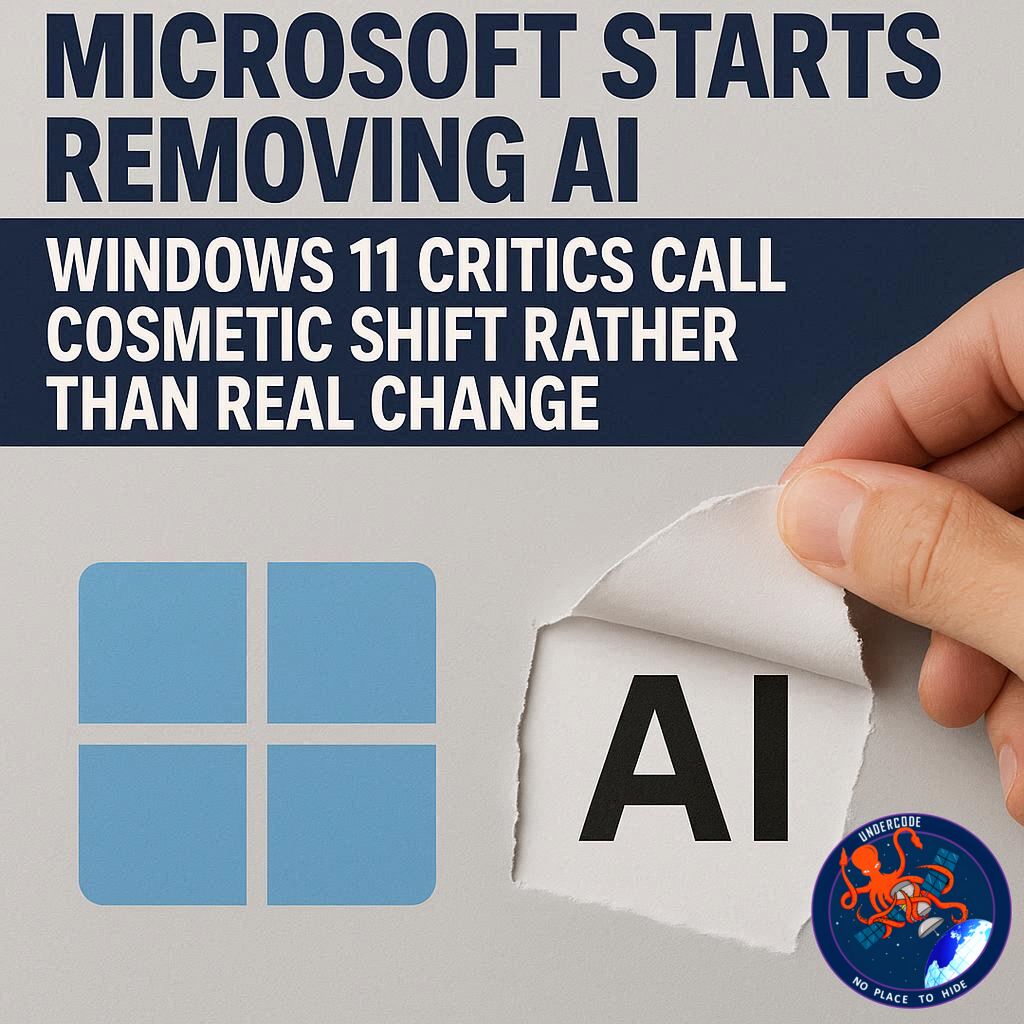
Microsoft has quietly begun dialing back its aggressive push of AI features in Windows 11, a move that initially appears to respond to growing user fatigue with built-in artificial intelligence. However, as the first wave of changes rolls out, a deeper look reveals something less decisive. Instead of fully eliminating AI, Microsoft seems to be reshaping how it is presented, raising questions about whether this is a genuine shift in direction or simply a calculated attempt to soften public backlash.
Main Summary: AI Removal Begins, But Not Without Controversy
Microsoft has initiated the process of removing AI integrations from Windows 11, starting with small but noticeable changes in core applications. One of the clearest examples comes from the Snipping Tool, where the Copilot feature has been completely removed for all users. This suggests that Microsoft is willing, at least in some cases, to fully strip out AI-driven functionality.
However, the situation becomes more complex when examining updates to Notepad. In preview versions of the app, Microsoft has not removed AI capabilities but has instead rebranded them. The Copilot icon has disappeared, replaced by a more neutral “writing tools” label accompanied by a simple pen icon. The functionality remains intact, only the branding has changed.
This subtle shift has sparked widespread criticism among users. Many interpret the move as an attempt to disguise AI features rather than eliminate them. Online discussions, particularly on forums like Reddit, reflect frustration and skepticism. Users argue that renaming Copilot does little to address their concerns, with some describing the effort as deceptive or purely cosmetic.
The backlash highlights a growing divide between Microsoft’s vision for AI integration and the preferences of a segment of its user base. While some embrace AI-powered tools, others prefer a simpler, more lightweight operating system without additional layers of automation or background processes.
Critics also point out that rebranding does not reduce the potential performance impact associated with these features. Even if AI tools are hidden or renamed, they still exist within the system, potentially consuming resources and contributing to what some users perceive as unnecessary software bloat.
At the same time, Microsoft has left users with the option to disable these features manually. This approach suggests a middle ground, allowing AI to remain available for those who want it while giving others a way to opt out. Yet for many critics, this is not enough. They argue that true removal should mean complete elimination, not optional deactivation.
There is also uncertainty about Microsoft’s long-term intentions. The Notepad changes are still in testing, leaving room for further adjustments. It is possible that the company may eventually reduce AI presence more significantly or change how these features are enabled by default.
For now, the mixed approach, full removal in some apps and rebranding in others, creates an inconsistent experience. This inconsistency fuels speculation that Microsoft is experimenting rather than committing to a clear strategy.
Ultimately, the early stages of this AI rollback reveal a company attempting to balance innovation with user sentiment, but not yet fully satisfying either side.
What Undercode Say: The Illusion of Control in Modern Software Design
The current situation reflects a broader pattern in the tech industry, where companies rarely abandon major technological bets outright. AI is not just a feature for Microsoft; it is a foundational pillar of its future ecosystem. From productivity tools to cloud services, AI integration represents a massive investment that cannot simply be reversed.
What we are witnessing is not a rollback, but a recalibration. Microsoft is adjusting how AI is perceived rather than removing its presence. By renaming Copilot to “writing tools,” the company attempts to normalize AI as just another utility rather than a headline feature. This reduces resistance without sacrificing functionality.
This tactic reveals a deeper understanding of user psychology. Many users are not strictly opposed to AI itself; they are reacting to its visibility, intrusiveness, and perceived lack of control. By making AI less visible, Microsoft aims to reduce friction while keeping its technological roadmap intact.
However, this approach carries risks. Users are increasingly aware of how software evolves, and attempts at subtle rebranding can quickly be interpreted as manipulation. Transparency has become a critical factor in user trust, and any perception of deception can damage brand credibility.
Another important dimension is performance. Lightweight applications like Notepad have historically been valued for their speed and simplicity. Adding AI, even in the background, changes that identity. Power users and developers often rely on such tools precisely because they are minimal. Transforming them into feature-rich environments risks alienating a loyal user base.
There is also a competitive angle. Alternatives like Linux distributions continue to gain attention among users who prioritize control and efficiency. When users feel that mainstream operating systems are becoming bloated or overly managed, they are more likely to explore these alternatives.
From a strategic standpoint, Microsoft seems to be testing boundaries. By removing AI in some areas and disguising it in others, the company can measure user reactions and refine its approach. This iterative strategy aligns with modern software development practices but can appear inconsistent from the outside.
The larger implication is that AI integration is inevitable, but its presentation will evolve. Companies will increasingly embed AI deeper into systems while reducing its visibility as a distinct feature. The future of AI in operating systems may not be about prominent assistants like Copilot, but about subtle, almost invisible enhancements.
In this context, Microsoft’s current moves are less about retreat and more about adaptation. The company is learning how to integrate AI in a way that feels less disruptive, even if that means temporarily stepping back from overt branding.
Fact Checker Results
✅ Microsoft has removed Copilot from the Snipping Tool in Windows 11.
✅ Notepad still contains AI features, now rebranded as “writing tools.”
❌ There is no confirmed evidence that Microsoft plans to fully remove AI from Windows 11 entirely.
Prediction
📊 AI in Windows 11 will become less visible but more deeply integrated over time.
📊 Microsoft is likely to shift toward opt-in or default-off AI features to reduce backlash.
📊 Competing lightweight operating systems will gain traction among users resisting AI-heavy environments.
▶️ Related Video (72% Match):
🕵️📝✔️Let’s dive deep and fact‑check.
References:
Reported By: www.techradar.com
Extra Source Hub (Possible Sources for article):
https://www.reddit.com
Wikipedia
OpenAi & Undercode AI
Image Source:
Unsplash
Undercode AI DI v2
Bing
🔐JOIN OUR CYBER WORLD [ CVE News • HackMonitor • UndercodeNews ]
📢 Follow UndercodeNews & Stay Tuned:
𝕏 formerly Twitter 🐦 | @ Threads | 🔗 Linkedin | 🦋BlueSky | 🐘Mastodon


