
Listen to this Post
Introduction
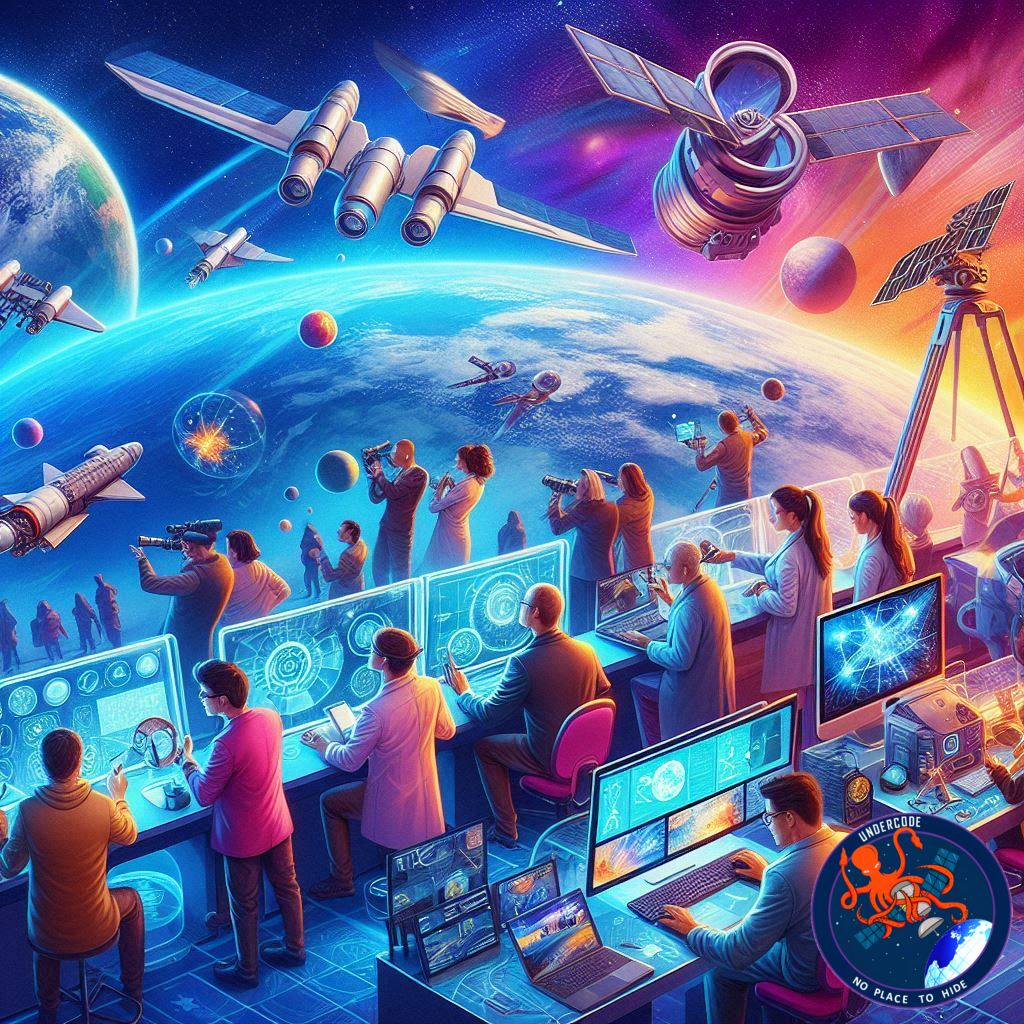
NASA has opened the door to a new generation of public-powered discovery, unveiling ten citizen science projects selected for funding in 2025. These initiatives are more than research grants. They are invitations for ordinary people to become explorers, analysts, and collaborators in missions that stretch from the violent hearts of distant galaxies to the storm-laden skies of Jupiter and Saturn. What emerges is a preview of NASA’s next scientific chapter, one powered by curiosity, data, and unprecedented public involvement.
Main Summary
A New Wave of Citizen-Driven Exploration
NASA’s latest selection of ten citizen science proposals marks a significant increase in public-facing scientific opportunity. These projects, funded through the Citizen Science Seed Funding Program (CSSFP), aim to expand the tools, datasets, and pathways that allow everyday observers to meaningfully contribute to NASA research.
Supporting Science Through Collaboration
The CSSFP supports investigators across four divisions of NASA’s Science Mission Directorate. By equipping scientists to build or enhance citizen science initiatives, the program broadens both scientific participation and the scientific questions that can be tackled through large-scale public collaboration.
Astrophysics Division Projects
Two cutting-edge investigations will empower stargazers to contribute directly to high-energy astrophysics and galactic research.
Tracking Cosmic Cataclysms
The Cosmic Cataclysms and Citizen Science project will enlist backyard astronomers to rapidly observe high-energy cosmic events like gamma-ray bursts, supernova eruptions, and compact object mergers. These fleeting cosmic explosions demand fast follow-up, and citizen observers positioned around the planet can capture early-stage data scientists might otherwise miss.
Mapping Spiral Galaxies Together
The Spiral Graph: Cluster Buster project will bring volunteers into the process of identifying spiral arms in galaxy images. These structures help astronomers infer the masses of supermassive black holes hiding at galactic centers. Public volunteers will help refine these crucial measurements by analyzing sky-survey data.
Planetary Science Division Projects
Citizen scientists are once again being invited into the solar system, this time with more tools and more responsibility.
Hunting New Comets in Rubin Observatory Data
With Rubin Comet Catchers, volunteers will scan fresh images from the Vera C. Rubin Observatory’s LSST survey. Their goal is to spot new comets that may otherwise slip past automated detection.
Storm-Chasing on Gas Giants
Another project invites the public to examine Cassini spacecraft images, looking for thunderstorms on Jupiter and Saturn. These features play a key role in cooling the atmospheres of these gas giants, and citizen contributions may help refine long-standing models.
Mapping Impact Craters Across the Solar System
The project There Are Billions! will crowdsource crater identification from images produced by the MESSENGER, LRO, and Dawn missions. These craters serve as planetary timestamps, revealing the history and frequency of collisions across the solar system.
Observing Unusual Infrared Events
The SPHERExplorer project will focus on detecting infrared changes and unusual sources in data from NASA’s SPHEREx mission. Volunteers may help spot newly active asteroids, interstellar objects, or even the earliest signals from distant cosmic phenomena.
Heliophysics Division Project
The Sun and Earth’s magnetic environment also receive a major injection of public participation.
Machine-Learning-Ready Magnetosheath Mapping
The DEMO-ML investigation will enlist volunteers to classify magnetosheath regions using data from the Magnetospheric Multiscale Mission. These classifications will help scientists train machine-learning models to study turbulence, magnetic reconnection, and the dynamic boundary between the solar wind and Earth’s magnetosphere.
A Gateway to More Opportunities
NASA encourages the public to explore its expanding catalog of citizen science programs, where space enthusiasts, students, and data hobbyists can join missions that continuously evolve with new research priorities and technologies.
What Undercode Say:
The new NASA selections demonstrate a strategic shift toward more diversified, distributed, and data-driven public participation in space science. Citizen science is no longer a supplementary activity. It is becoming a core component of how large datasets are analyzed, how rare cosmic events are captured, and how researchers expand observational coverage across multiple time zones and platforms.
These initiatives reveal several key insights into NASA’s evolving scientific philosophy. First, the agency understands that modern space science often involves more data than small research teams can manually process. Citizen scientists act as an organic processing network, identifying patterns, filtering noise, and flagging anomalies that automated systems might overlook. This is especially powerful in projects involving comet hunting, crater mapping, and spiral arm identification.
Second, NASA is embracing the role of the “global observer.” High-energy astrophysics events occur unpredictably, and no single observatory can capture every moment. By leveraging the global distribution of amateur astronomers, NASA increases its chance of recording early-stage light curves that are scientifically invaluable. Cosmic cataclysm follow-ups demonstrate this perfectly.
Third, the blending of human classification and machine-learning training represents a long-term investment in hybrid scientific workflows. Projects like DEMO-ML highlight how volunteer-generated labels can build the foundation for future automation. This is not just collaboration. It is infrastructure building.
Fourth, planetary science continues to benefit from massive, publicly powered image-inspection tasks. Crater vetting, storm analysis, and infrared event detection require the kind of careful visual judgment that humans excel at. When thousands of volunteers apply that judgment simultaneously, the scientific return becomes exponentially richer.
Finally, the program signals NASA’s ongoing commitment to transparency and public involvement. By inviting the public into cutting-edge missions, the agency reinforces scientific literacy, builds trust, and transforms passive astronomy enthusiasts into active contributors.
What is emerging is not just a collection of science projects. It is a blueprint for how humanity will explore the universe in the decades ahead: collaboratively, inclusively, and with tools that blend the strengths of people and machines.
🔍 Fact Checker Results
NASA formally announced the selection of ten new citizen science proposals for 2025. ✅
These grants guarantee new public participation opportunities in all listed projects. ❌ (Some projects analyze existing data and may not open to the public.)
Four NASA Science Mission Directorate divisions participated in the CSSFP selections. ✅
📊 Prediction
NASA’s citizen science investments will likely lead to larger, more complex public collaborations in the next decade. 🌍
Machine-learning-supported projects will grow quickly as volunteer-classified datasets become critical training material. 🤖
Expect new missions, including SPHEREx and LSST, to spark global communities of space-data hobbyists who reshape how scientific discovery is performed. 🚀
🕵️📝✔️Let’s dive deep and fact‑check.
References:
Reported By: science.nasa.gov
Extra Source Hub (Possible Sources for article):
https://www.twitter.com
Wikipedia
OpenAi & Undercode AI
Image Source:
Unsplash
Undercode AI DI v2
Bing
🔐JOIN OUR CYBER WORLD [ CVE News • HackMonitor • UndercodeNews ]
📢 Follow UndercodeNews & Stay Tuned:
𝕏 formerly Twitter 🐦 | @ Threads | 🔗 Linkedin | 🦋BlueSky | 🐘Mastodon


