
Listen to this Post
🎯 Introduction
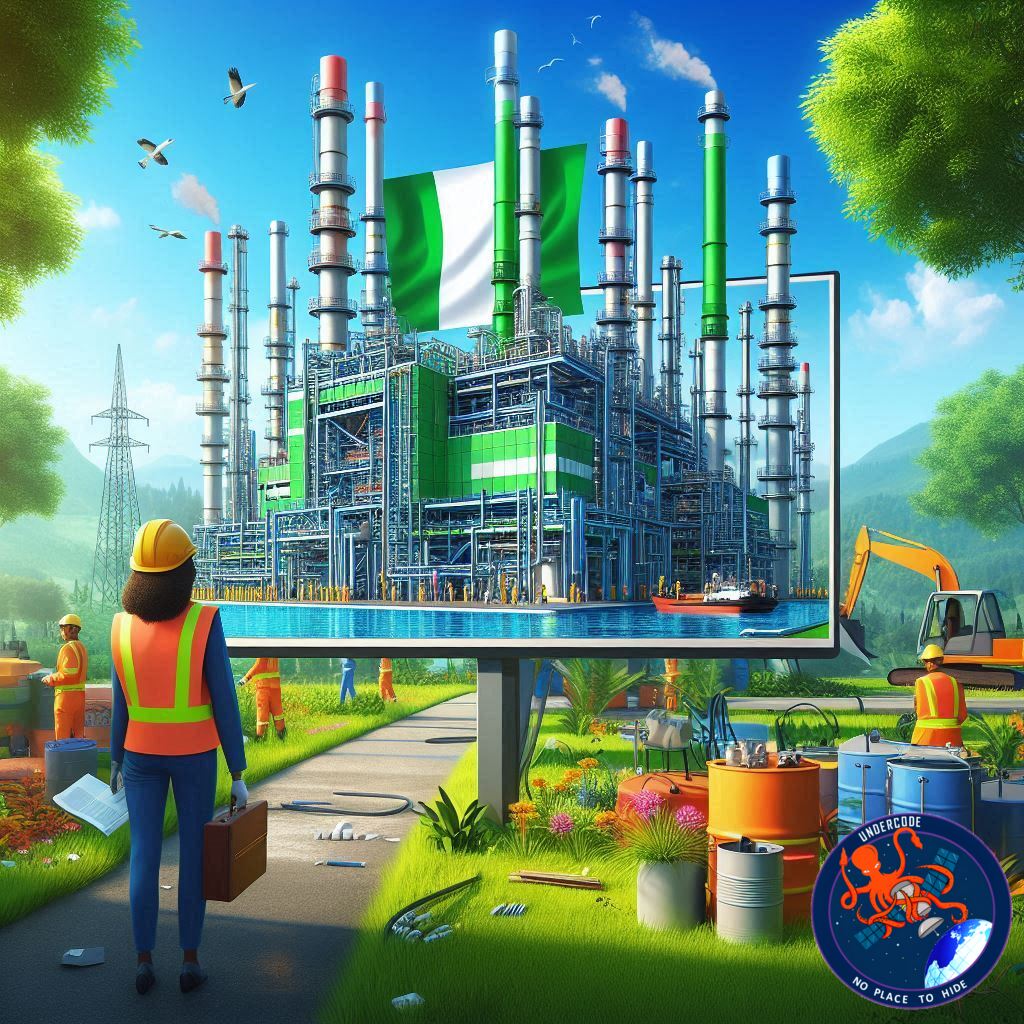
Nigeria is taking bold steps to reclaim control over its oil resources and reduce dependence on imported fuels. The Petroleum Training Institute (PTI) has unveiled plans to construct a state-of-the-art modular refinery, signaling a shift toward local refining and homegrown technological innovation. This project promises to advance Nigeria’s energy self-reliance and strengthen the country’s position in the global oil and gas sector.
PTI Leads Nigeria’s Push for Local Refining
The Petroleum Training Institute (PTI) has confirmed plans to build a modular refinery aimed at boosting Nigeria’s local refining capacity. Announced by Samuel Onoji, PTI’s Principal and Chief Executive Officer, during a press conference in Abuja, the refinery is expected to be a game-changer for the Nigerian oil sector. Scheduled ahead of the 4th Biennial International Conference on Hydrocarbon Science and Technology (ICHST) in October 2025, this initiative reflects Nigeria’s urgent push to advance self-sufficiency in oil and gas.
According to Onoji, PTI is collaborating with industry partners to develop homegrown technologies that enhance oil exploration, drilling, and refining. The modular refinery is designed to be flexible and adaptive, capable of processing crude oil locally and efficiently. “We are not waiting for 2060,” Onoji emphasized, underlining the institute’s commitment to rapid technological advancement in the energy sector.
The institute has already invested heavily in advanced training and simulation facilities, including “Drill 6,000,” to cultivate a new generation of experts in exploration and drilling. This ensures that Nigeria can eventually master the entire oil production and refining value chain, from extraction to finished products.
Africa is home to approximately 125 billion barrels of crude oil and 600 trillion cubic feet of natural gas, yet the continent faces the risk of lagging behind due to limited local fabrication and research capabilities. Onoji stressed the importance of investing in local content development to bridge this knowledge gap and maintain competitiveness in the global energy market.
PTI, established in 1972, has been a pillar of manpower development in Nigeria’s petroleum industry. Its new modular refinery will complement efforts like the Dangote Petroleum Refinery, which has already demonstrated significant economic benefits, including energy security, job creation, reduced import dependence, and lower fuel prices.
This initiative is also aligned with global energy trends. While the world gradually transitions toward cleaner energy, fossil fuels will continue to play a critical role in global supply for decades. By deepening research into cleaner and more efficient production methods, PTI is ensuring that Nigeria remains a competitive player in both conventional and evolving energy markets.
What Undercode Say: Analyzing PTI’s Modular Refinery Impact
PTI’s new modular refinery represents more than just a construction project; it is a strategic move in Nigeria’s energy sovereignty agenda. By investing in adaptable local technology, Nigeria is sending a signal that it intends to control its hydrocarbon resources rather than rely on imported solutions. Modular refineries are particularly advantageous because they allow phased scaling, lower capital expenditure compared to traditional refineries, and flexibility in processing different grades of crude.
The timing of this initiative is critical. With global energy transitions underway, African nations risk being sidelined if they do not modernize local infrastructure and develop technical expertise. PTI’s focus on training through advanced simulation tools ensures that knowledge transfer occurs alongside infrastructure development, effectively preparing Nigeria’s workforce for a technologically advanced oil and gas sector.
Economically, local refining can have ripple effects across Nigeria’s economy. Reduced import dependency decreases foreign exchange outflows, stabilizes domestic fuel prices, and creates high-value employment opportunities. Moreover, the presence of local refineries encourages ancillary industries, from machinery fabrication to logistics and engineering services.
Strategically, Nigeria’s move mirrors global trends where energy self-sufficiency has become a national security issue. Countries that control refining and production gain leverage in pricing, supply negotiations, and geopolitical positioning. The combination of PTI’s modular refinery and existing facilities like Dangote Petroleum Refinery could significantly enhance Nigeria’s bargaining power in the global energy market.
The environmental angle is also notable. By developing cleaner production methods and advanced refining technologies, Nigeria has the potential to align fossil fuel production with global climate commitments while maintaining energy output. This positions Nigeria as a regional leader in responsible hydrocarbon exploitation.
Beyond economics and energy, the project underscores the importance of local content development. For decades, Africa has relied heavily on foreign expertise and imports for oil and gas technology. PTI’s approach addresses this knowledge gap, encouraging innovation, entrepreneurship, and technical mastery within the continent. This can catalyze a broader industrial renaissance in Africa.
In the long term, PTI’s modular refinery sets a precedent for scalable, adaptable, and technologically advanced projects across the continent. It exemplifies a model where education, research, and industrial development are intertwined, ensuring that Nigeria’s energy strategy is sustainable, competitive, and resilient against global market fluctuations.
🔍 Fact Checker Results
✅ PTI officially announced plans for a modular refinery in Nigeria.
✅ Africa holds over 125 billion barrels of crude oil and 600 trillion cubic feet of natural gas.
❌ The project is not yet operational and remains in the development phase.
📊 Prediction
Nigeria’s modular refinery initiative could dramatically reduce fuel import dependency within the next five years, stabilizing domestic prices and creating thousands of skilled jobs. ⚡💼 The focus on homegrown technology may encourage additional investment in local fabrication and training centers. By 2030, Nigeria could emerge as a regional hub for modular refining, boosting its geopolitical leverage in African and global energy markets.
🕵️📝✔️Let’s dive deep and fact‑check.
References:
Reported By: www.legit.ng
Extra Source Hub (Possible Sources for article):
https://www.instagram.com
Wikipedia
OpenAi & Undercode AI
Image Source:
Unsplash
Undercode AI DI v2
Bing
🔐JOIN OUR CYBER WORLD [ CVE News • HackMonitor • UndercodeNews ]
📢 Follow UndercodeNews & Stay Tuned:
𝕏 formerly Twitter 🐦 | @ Threads | 🔗 Linkedin | 🦋BlueSky | 🐘Mastodon


