
Listen to this Post
Introduction
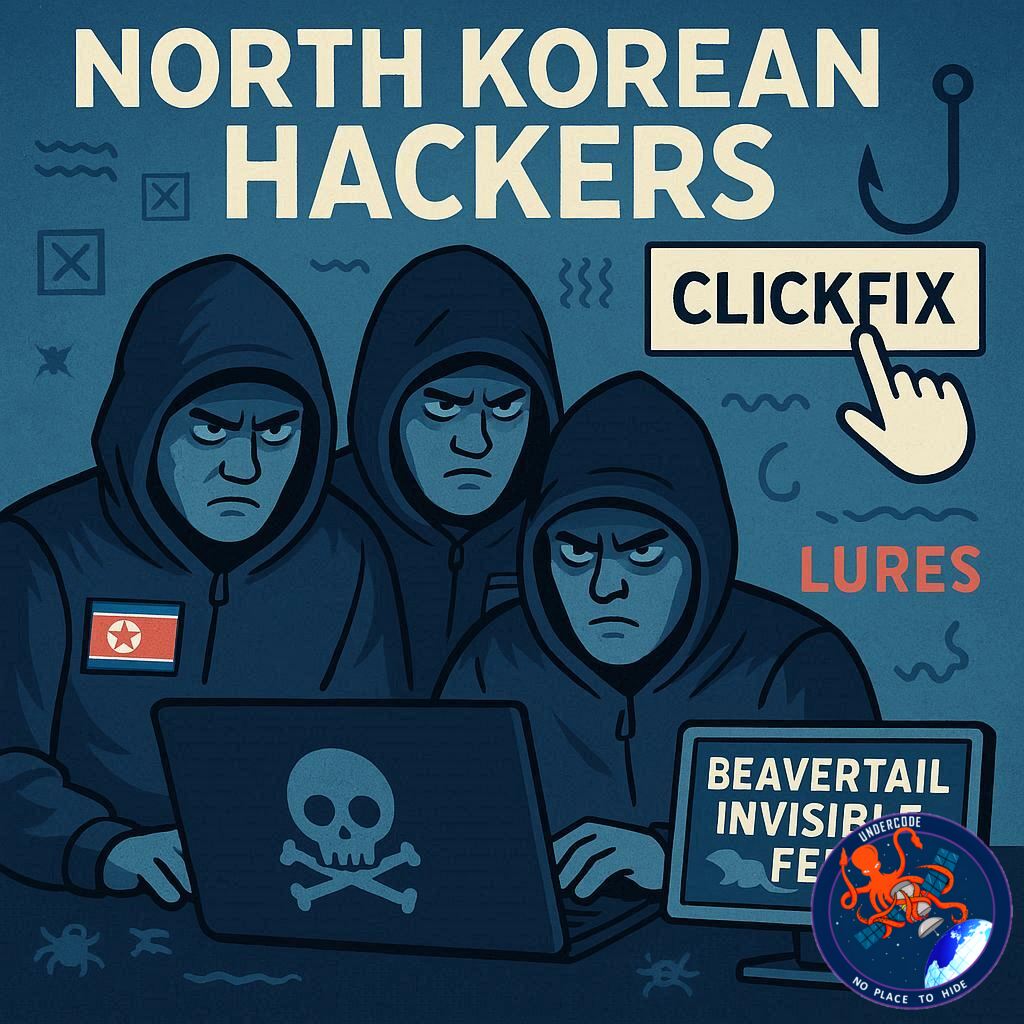
North Korean state-sponsored hackers are intensifying their global cyber operations with a sophisticated campaign that combines fake job interviews, social engineering traps, and malware distribution. Recent investigations reveal that the Democratic People’s Republic of Korea (DPRK) is leveraging a new wave of ClickFix-style lures to spread malicious tools, including BeaverTail and InvisibleFerret. These campaigns, often disguised as hiring assessments in the cryptocurrency and retail sectors, represent a major shift from their traditional focus on software developers. The findings highlight Pyongyang’s evolving cyberwarfare tactics, blending espionage with financial crime and digital deception.
the Campaign
Researchers from GitLab and other cybersecurity firms uncovered that DPRK-linked actors are deploying ClickFix lures to trick victims into downloading malware during fake hiring processes. Unlike earlier strategies that targeted software developers, this campaign zeroed in on marketing and trading applicants within cryptocurrency and retail organizations.
BeaverTail and InvisibleFerret Origins: First exposed in late 2023, BeaverTail (JavaScript-based info stealer) and InvisibleFerret (Python-based backdoor) were primarily distributed to developers. The new twist shows attackers expanding their victim pool.
ClickFix Technique: Victims are asked to fix a fake microphone issue during a job interview, unknowingly executing malicious OS-specific commands. This installs BeaverTail, disguised as troubleshooting code.
Evolving Variants: The latest BeaverTail samples are leaner, focusing mainly on stealing from Google Chrome and targeting fewer browser extensions. They are also distributed as compiled binaries for Windows, macOS, and Linux, using tools like PyInstaller.
Unique Delivery: For the first time, attackers embedded malware dependencies inside password-protected archives, showing ongoing refinement of their attack chains.
Fake Hiring Platforms: The hackers used a Vercel-hosted fake recruitment site advertising Web3 jobs. Applicants were tricked into assessments that secretly deployed malware.
Operational Shift: The move indicates a strategic pivot — targeting less technical users who lack strong cybersecurity defenses. This broadens DPRK’s ability to penetrate new industries.
Contagious Interview Campaign: Between January and March 2025, at least 230 individuals were targeted with fake cryptocurrency job offers impersonating major companies like Robinhood and eToro. Malicious Node.js tools (ContagiousDrop) were disguised as software updates.
Threat Intelligence Monitoring: The attackers constantly monitor services like VirusTotal to check if their tools are detected, showing professional and adaptive strategies.
Strategic Pattern: Instead of securing old infrastructure, they quickly deploy new servers and domains to continue their campaigns after takedowns.
Other DPRK Groups:
ScarCruft (APT37): Transitioned from espionage to ransomware, unveiling tools like CHILLYCHINO (Rust-based malware) and FadeStealer.
Kimsuky (APT43): Exploited GitHub for malware hosting and abused ChatGPT deepfake military ID cards to phish South Korean defense-linked targets.
Together, these campaigns demonstrate how North Korea’s cyber ecosystem is blending financial theft, espionage, and cutting-edge deception — including deepfake technology and Rust-based malware — to maintain its presence in the global cyber battlefield.
What Undercode Say: 🔎
North Korea’s cyber operations show a clear evolution that analysts cannot ignore. Breaking down this campaign reveals multiple layers of intent and strategic adaptation:
Shift in Targeting Strategy: By moving away from developers to marketing and retail job seekers, DPRK demonstrates market adaptability. This ensures they can penetrate less secure endpoints.
ClickFix’s Psychology: Social engineering remains their strongest weapon. Using fake errors (like microphone malfunctions) exploits human trust in technology. This approach bypasses antivirus defenses, relying instead on human error.
Efficiency in Malware Evolution: BeaverTail’s stripped-down version suggests an experimental phase, possibly to avoid detection by focusing only on high-value targets like Chrome extensions.
Infrastructure Replacement Over Repair: Rather than defending compromised infrastructure, DPRK hackers spin up new servers. This reflects high funding and operational resilience.
Deepfake Integration: The use of AI-generated ID cards shows DPRK’s growing interest in synthetic deception. This is no longer limited to code but expands into manipulating human trust at visual and emotional levels.
Rust-Based Malware Emergence: ScarCruft’s adoption of Rust malware signals an effort to build more difficult-to-detect implants, taking advantage of Rust’s growing popularity and complexity.
Financial Motivation vs. Espionage: While earlier campaigns were espionage-heavy, the addition of ransomware and crypto-related schemes highlights Pyongyang’s urgent need for revenue amid global sanctions.
Collaborative Ecosystem: Multiple groups (Lazarus, ScarCruft, Kimsuky) appear to operate in parallel, sometimes overlapping, reflecting a state-backed cybercrime network with semi-independent cells.
Testing Grounds: Limited test runs (like the lighter BeaverTail variant) suggest they are refining techniques before launching full-scale operations against broader targets.
Future Threat Outlook: If these methods prove effective, DPRK could expand to global recruitment platforms like LinkedIn or Indeed, weaponizing job markets to distribute malware globally.
In essence, North Korea is demonstrating hybrid warfare in cyberspace, merging espionage, cybercrime, and psychological deception at a scale few adversaries can match.
Fact Checker Results ✅❌
✅ DPRK hackers are confirmed to use ClickFix tactics in fake job scams.
✅ BeaverTail and InvisibleFerret have been identified in multiple campaigns since 2023.
❌ Claims that the campaign is large-scale are exaggerated — current evidence shows limited test deployments.
Prediction 🔮
Given the sophistication of these campaigns, we can expect DPRK to increasingly weaponize job platforms, AI tools, and deepfake technology. The next stage may involve large-scale LinkedIn recruitment scams, malware-laced resumes, and AI-driven phishing emails. As sanctions tighten, Pyongyang will lean even more on cybercrime — making their hackers not just political operatives but also digital extortionists in the global economy.
🕵️📝✔️Let’s dive deep and fact‑check.
References:
Reported By: thehackernews.com
Extra Source Hub:
https://www.reddit.com/r/AskReddit
Wikipedia
OpenAi & Undercode AI
Image Source:
Unsplash
Undercode AI DI v2
🔐JOIN OUR CYBER WORLD [ CVE News • HackMonitor • UndercodeNews ]
📢 Follow UndercodeNews & Stay Tuned:
𝕏 formerly Twitter 🐦 | @ Threads | 🔗 Linkedin | 🦋BlueSky | 🐘Mastodon


