
Listen to this Post
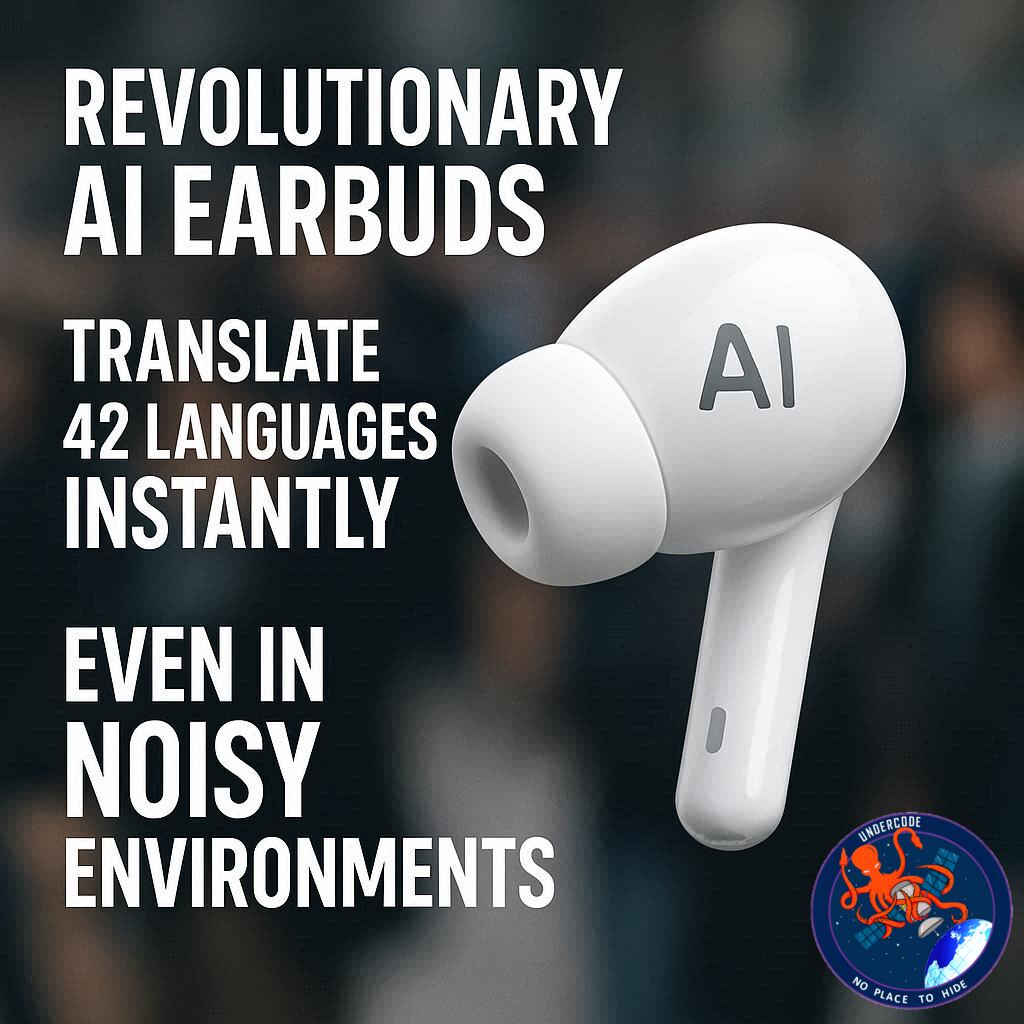
In an era where seamless global communication is becoming a necessity, Timekettle is pushing the boundaries with its latest innovation: the W4 AI Interpreter Earbuds. Announced at IFA 2025, these cutting-edge earbuds aim to break down language barriers in real time, allowing users to converse naturally across continents. Combining AI-powered translation with bone conduction technology, the W4 earbuds promise a translation experience that is both accurate and intuitive. Designed for international professionals, travelers, and multilingual enthusiasts, they could redefine how we communicate in an increasingly interconnected world.
Timekettle W4 AI Interpreter Earbuds
Timekettle has unveiled the W4 AI Interpreter Earbuds at IFA 2025, positioning them as the next step in portable translation technology. Unlike traditional earbuds, the W4 uses bone conduction technology, sending vibrations through the bones of the wearer’s skull to capture speech more precisely. This method reduces interference from background noise and helps the device pick up even quieter voices, making translations more accurate in public or crowded spaces.
The earbuds can translate 42 languages in 95 accents, boasting an impressive 98% accuracy rate and 0.2 seconds of audio latency. This means conversations feel almost instantaneous, without the awkward pauses typical of translation apps. Powered by Timekettle’s Bebl OS 2.0, the W4 leverages AI large language models to predict context and reduce errors from similar-sounding words. Users can also add personalized vocabulary, including slang or colloquial terms, ensuring the translation reflects real-world language usage.
Battery life is designed for practicality: four hours of continuous translation on a single charge, extended to 10 hours with the portable charging case. Consumers can purchase the W4 earbuds for \$349, available in two stylish colors: Midnight Blue and Sandy Gold.
What Undercode Say:
Timekettle’s W4 AI Interpreter Earbuds mark a significant evolution in wearable translation technology, merging hardware innovation with sophisticated AI. Bone conduction has typically been associated with music or hearing aids, but its application here demonstrates its potential for precise communication. By bypassing traditional audio capture, these earbuds reduce environmental interference, which is crucial in noisy settings like airports, conferences, or street markets.
The inclusion of AI large language models is particularly noteworthy. Standard translation tools often struggle with context, idioms, or homophones. W4’s predictive AI, combined with user-customizable vocabulary, addresses these issues, making translations feel more human-like and less robotic. Professionals who frequently engage in international negotiations, journalists covering foreign stories, or travelers navigating unfamiliar regions could find these earbuds indispensable.
However, there are practical considerations. Four hours of continuous use is sufficient for short meetings or conversations, but intensive translation sessions may require frequent recharging. Additionally, while 98% accuracy is impressive, real-world testing in multiple languages, accents, and noisy environments will ultimately determine whether the device lives up to its promises. Comparatively, Google’s real-time translation tools provide a software-based alternative, but lack the tactile, on-ear immediacy and privacy that W4 delivers.
Timekettle’s approach also hints at a broader trend: AI-enhanced wearables are not just for convenience—they are tools for real-world problem solving. By combining contextual AI understanding with hardware optimization, the W4 exemplifies how emerging technologies can create smoother, faster, and more natural communication experiences. The focus on discreet conversations is also clever, targeting users who need privacy without sacrificing translation speed or accuracy.
From a market perspective, priced at \$349, the W4 enters a premium segment. Early adopters are likely tech enthusiasts or global professionals, but if Timekettle scales production and enhances software support, this device could influence mainstream consumer habits. With language diversity and global mobility increasing, the demand for instantaneous translation solutions is only set to grow.
🔍 Fact Checker Results
✅ W4 earbuds translate 42 languages in 95 accents with AI support.
✅ Bone conduction technology is used to improve sound clarity and translation accuracy.
❌ No evidence suggests 100% error-free translation in all real-world environments; real-world performance may vary.
📊 Prediction
As AI and wearable technology converge, devices like the W4 earbuds are likely to become mainstream within 3–5 years, particularly in professional and travel markets. With ongoing improvements in AI context understanding and battery efficiency, we can expect future iterations to deliver longer usage, faster translation speeds, and even more personalized language learning features. Timekettle may also expand into enterprise-focused solutions, potentially integrating W4 with conference systems or real-time multilingual customer service platforms.
The W4 AI Interpreter Earbuds hint at a future where language is no longer a barrier—making global communication faster, smoother, and more intuitive than ever before.
🕵️📝✔️Let’s dive deep and fact‑check.
References:
Reported By: www.zdnet.com
Extra Source Hub:
https://www.digitaltrends.com
Wikipedia
OpenAi & Undercode AI
Image Source:
Unsplash
Undercode AI DI v2
🔐JOIN OUR CYBER WORLD [ CVE News • HackMonitor • UndercodeNews ]
📢 Follow UndercodeNews & Stay Tuned:
𝕏 formerly Twitter 🐦 | @ Threads | 🔗 Linkedin | 🦋BlueSky | 🐘Mastodon


