
Listen to this Post
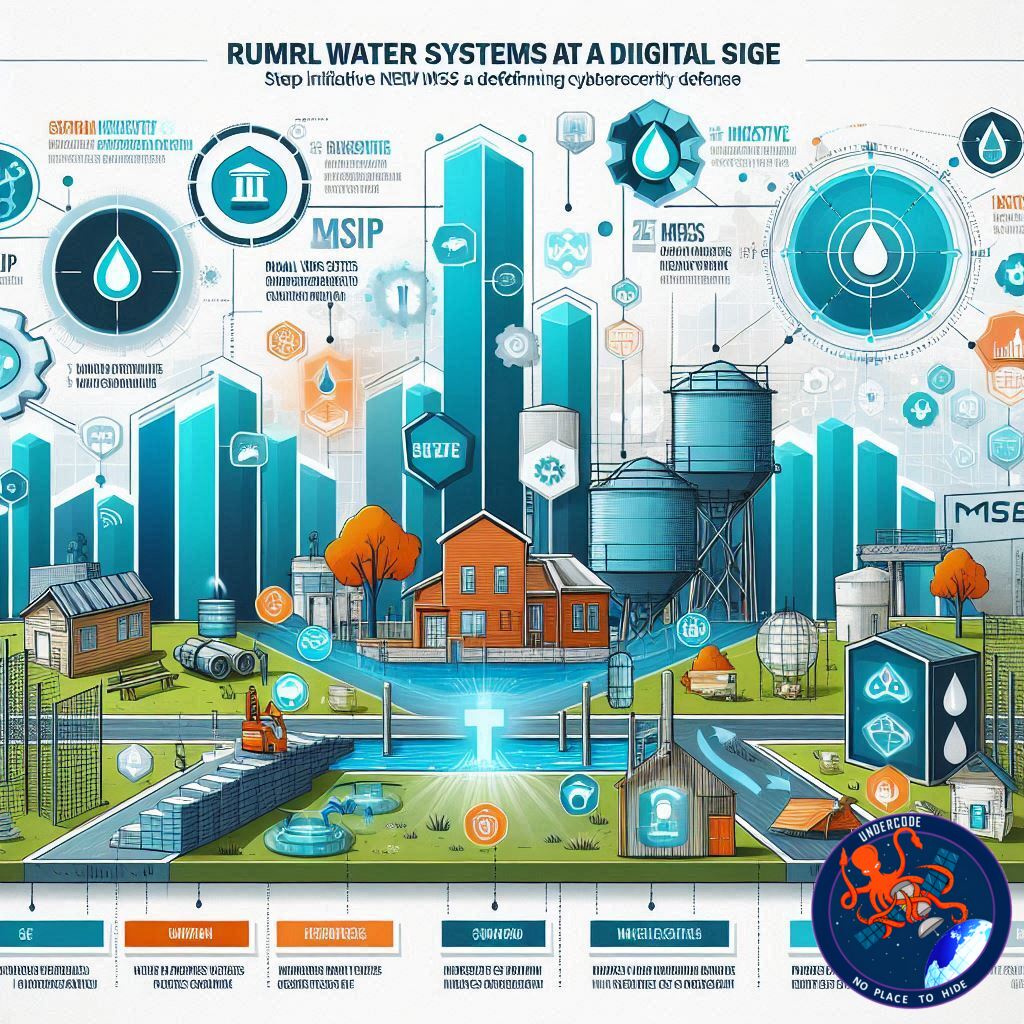
Introduction: When Water Infrastructure Becomes a Cyber Frontline
Across the United States, rural water utilities are quietly becoming one of the most vulnerable pieces of national infrastructure. These systems, often operating with limited budgets, aging technology, and minimal cybersecurity staff, now sit in the crosshairs of increasingly sophisticated threat actors. While major cities invest millions in cyber defense, smaller communities face the same digital dangers with only a fraction of the resources.
A new Managed Security Services Provider (MSSP) initiative aims to change that reality. Through a collaborative effort involving DEF CON Franklin, federal agencies, and the National Rural Water Association, a scalable and tailored cybersecurity framework is being introduced to protect rural water systems from growing digital threats. This initiative represents more than a technical upgrade—it signals a structural shift in how critical infrastructure protection is approached in underserved regions.
the Original Report
The original article highlights a newly launched MSSP initiative designed specifically to strengthen cybersecurity defenses for rural water utilities across the United States. The program brings together DEF CON Franklin, federal agencies, and the National Rural Water Association to offer tailored and scalable security services aligned with the unique operational realities of small water systems.
Unlike traditional enterprise cybersecurity models, which are often expensive and complex, this initiative focuses on adaptability. Rural utilities frequently operate with limited staff, outdated infrastructure, and constrained budgets, making standard security frameworks difficult to implement. The MSSP model aims to remove these barriers by offering managed protection that evolves with operational needs.
The collaboration emphasizes shared intelligence, threat monitoring, incident response planning, and practical security training. By centralizing expertise while allowing local flexibility, the initiative helps rural utilities detect, prevent, and respond to cyber threats more effectively.
The effort also reflects growing federal awareness that water infrastructure is now a strategic cyber target. Disruptions in water treatment or distribution systems could have serious public health consequences, making cybersecurity not just an IT issue but a national safety concern.
Through this program, participating utilities gain access to cybersecurity tools, professional oversight, and best-practice frameworks that were previously out of reach. The initiative positions rural water systems to better withstand ransomware attacks, data breaches, and operational disruptions.
The article ultimately frames this initiative as a model that could be replicated across other critical infrastructure sectors, signaling a shift toward cooperative, community-focused cybersecurity defense.
The Silent Crisis Inside Rural Infrastructure
Rural water utilities rarely make headlines until something goes wrong. Yet behind the scenes, many operate with industrial control systems that were never designed to face modern cyber threats. Some still rely on legacy hardware, unsupported software, and remote access tools configured years ago without security in mind.
Threat actors understand this weakness. Attacks targeting water systems are no longer theoretical. They are deliberate, calculated, and increasingly automated. Even small utilities now face ransomware attempts, credential harvesting, and unauthorized system access.
What makes the situation more dangerous is the lack of visibility. Many rural utilities do not have real-time monitoring or incident detection capabilities. By the time an intrusion is noticed, damage may already be done. This reality transforms cybersecurity from a technical concern into a public safety issue.
Why Traditional Cybersecurity Models Fail Rural Utilities
Enterprise-grade cybersecurity frameworks are often built for large organizations with dedicated security teams and consistent funding. Rural utilities operate under entirely different conditions. Staffing shortages mean one person may handle IT, compliance, and operational technology simultaneously. Budgets prioritize water quality and infrastructure maintenance over digital defense.
Standard security solutions can overwhelm these organizations with complexity. Tools that require constant tuning, advanced expertise, or high subscription costs often go unused or misconfigured. The result is a false sense of security that collapses under real-world pressure.
The MSSP initiative directly addresses this gap by offering simplified, managed protection that adapts to the capacity of each utility. Rather than forcing rural operators to become cybersecurity experts, the program embeds expertise into the service itself.
Collaboration as a Security Multiplier
One of the most significant aspects of this initiative is collaboration. DEF CON Franklin brings technical credibility and community-driven expertise. Federal agencies contribute regulatory insight, intelligence sharing, and strategic coordination. The National Rural Water Association ensures the program aligns with real operational needs rather than theoretical models.
This partnership model transforms cybersecurity from an isolated responsibility into a shared mission. Threat intelligence can be distributed rapidly. Best practices can be standardized without becoming rigid. Most importantly, trust is built between organizations that traditionally operate in silos.
Collaboration also enables scalability. As threats evolve, the MSSP framework can adapt without requiring each utility to reinvent its defenses. This collective approach dramatically improves resilience across the entire sector.
Cybersecurity as Critical Infrastructure Protection
Water systems sit at the intersection of public health, safety, and national stability. A successful cyberattack could contaminate water supplies, disrupt firefighting capabilities, or cause widespread panic. The consequences extend far beyond data loss.
By treating cybersecurity as an essential component of infrastructure protection, this initiative reframes the conversation. It acknowledges that digital resilience is just as vital as physical maintenance. Pumps, pipes, and purification systems are now inseparable from the networks that control them.
This shift also sends a message to adversaries: rural does not mean unprotected. With coordinated defense and professional oversight, even small utilities can present a hardened attack surface.
What Undercode Say:
The significance of this initiative goes beyond cybersecurity policy. It represents a philosophical shift in how digital risk is managed across underserved sectors. For years, rural infrastructure has been expected to defend itself with tools and budgets never designed for modern threat landscapes. This model quietly failed long before attackers noticed.
What stands out is the decision to prioritize accessibility over sophistication. Instead of pushing cutting-edge tools that require elite expertise, this initiative emphasizes reliability, sustainability, and human-centered security design. That approach reflects a deeper understanding of operational reality.
There is also a strategic lesson here. Cyber defense is no longer about building taller walls; it is about building smarter ecosystems. When intelligence, response capabilities, and trust are shared, the entire network becomes stronger than its weakest link.
This model could influence how healthcare, energy co-ops, and municipal services approach cybersecurity. The MSSP framework demonstrates that effective protection does not require massive budgets, only coordinated intent and structured support.
Perhaps most importantly, this initiative restores balance. It recognizes that cybersecurity equity matters. When rural communities are protected, national resilience improves. Threat actors thrive on fragmentation; this model reduces it.
If sustained and expanded, this approach could redefine how the U.S. secures its most overlooked digital frontiers. The challenge will be maintaining long-term funding, engagement, and adaptation as threats evolve. But the foundation now exists, and that alone marks a significant turning point.
Fact Checker Results
✅ The initiative involves collaboration between DEF CON Franklin, federal agencies, and the National Rural Water Association.
✅ The program focuses on scalable cybersecurity services tailored for rural water utilities.
❌ No evidence suggests the initiative replaces existing federal cybersecurity mandates.
Prediction
🔮 Over the next two years, this MSSP model will likely expand beyond water utilities into other rural infrastructure sectors.
🔮 Cyber threat actors will increasingly test these defenses, validating the need for continuous adaptation.
🔮 Community-driven cybersecurity may become a national standard rather than an exception.
🕵️📝✔️Let’s dive deep and fact‑check.
References:
Reported By: x.com
Extra Source Hub (Possible Sources for article):
https://www.stackexchange.com
Wikipedia
OpenAi & Undercode AI
Image Source:
Unsplash
Undercode AI DI v2
Bing
🔐JOIN OUR CYBER WORLD [ CVE News • HackMonitor • UndercodeNews ]
📢 Follow UndercodeNews & Stay Tuned:
𝕏 formerly Twitter 🐦 | @ Threads | 🔗 Linkedin | 🦋BlueSky | 🐘Mastodon


